
美国国立癌症研究所60种细胞系全外显子组测序及药物学细胞挖掘分析
NCI-60 whole exome sequencing and pharmacological CellMiner analyses.
作者信息
Reinhold William C, Varma Sudhir, Sousa Fabricio, Sunshine Margot, Abaan Ogan D, Davis Sean R, Reinhold Spencer W, Kohn Kurt W, Morris Joel, Meltzer Paul S, Doroshow James H, Pommier Yves
机构信息
Developmental Therapeutic Branch, Center for Cancer Research, National Cancer Institute, National Institutes of Health, Bethesda, Maryland, United States of America.
Developmental Therapeutic Branch, Center for Cancer Research, National Cancer Institute, National Institutes of Health, Bethesda, Maryland, United States of America; HiThru Analytics LLC, Laurel, Maryland, United States of America.
出版信息
PLoS One. 2014 Jul 17;9(7):e101670. doi: 10.1371/journal.pone.0101670. eCollection 2014.
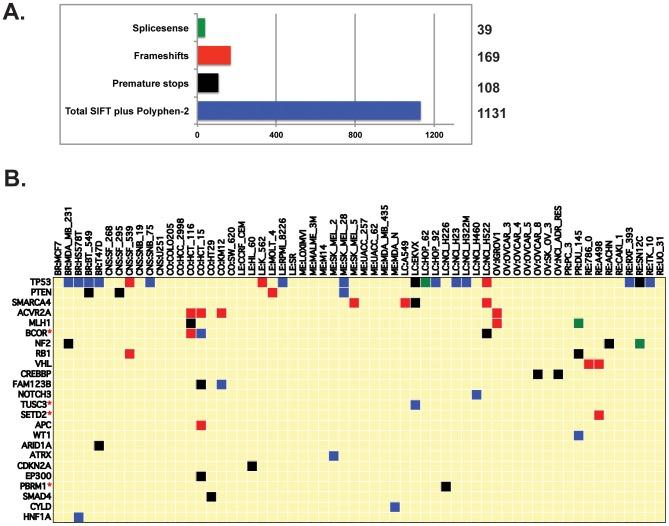
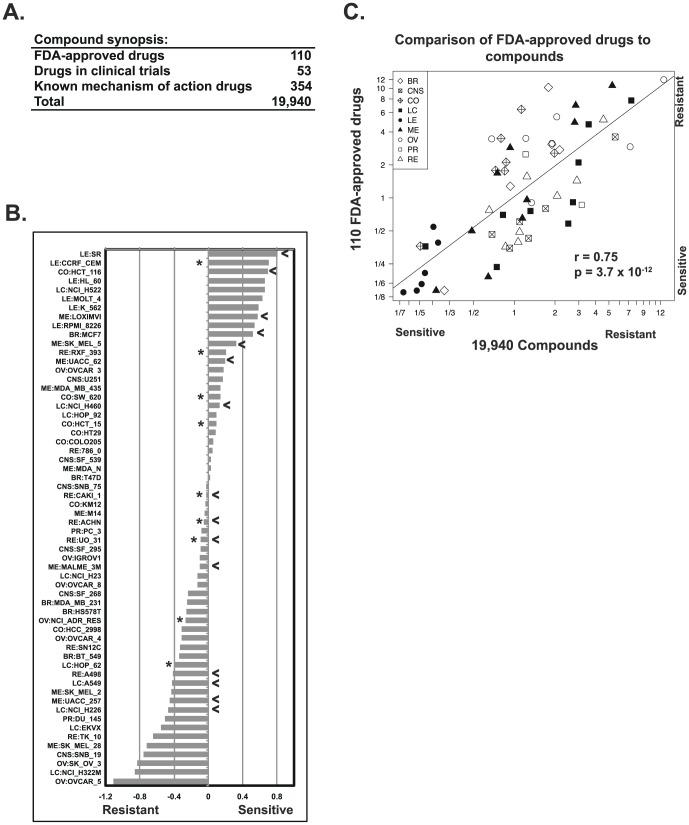
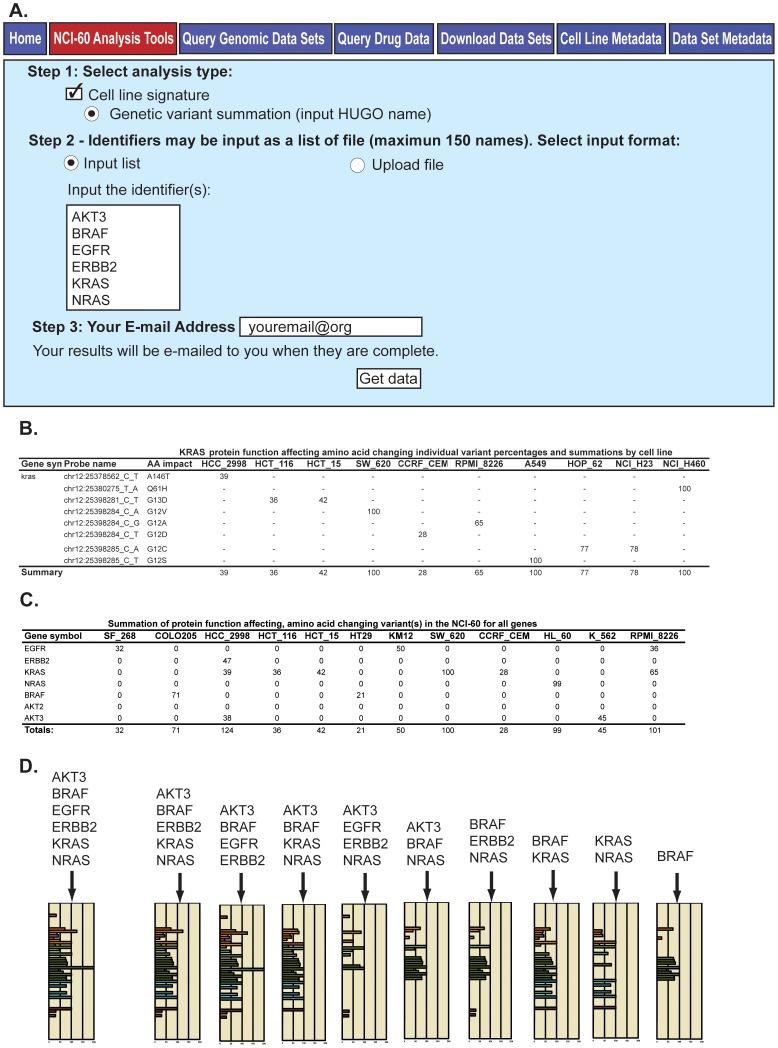
Exome sequencing provides unprecedented insights into cancer biology and pharmacological response. Here we assess these two parameters for the NCI-60, which is among the richest genomic and pharmacological publicly available cancer cell line databases. Homozygous genetic variants that putatively affect protein function were identified in 1,199 genes (approximately 6% of all genes). Variants that are either enriched or depleted compared to non-cancerous genomes, and thus may be influential in cancer progression and differential drug response were identified for 2,546 genes. Potential gene knockouts are made available. Assessment of cell line response to 19,940 compounds, including 110 FDA-approved drugs, reveals ≈80-fold range in resistance versus sensitivity response across cell lines. 103,422 gene variants were significantly correlated with at least one compound (at p<0.0002). These include genes of known pharmacological importance such as IGF1R, BRAF, RAD52, MTOR, STAT2 and TSC2 as well as a large number of candidate genes such as NOM1, TLL2, and XDH. We introduce two new web-based CellMiner applications that enable exploration of variant-to-compound relationships for a broad range of researchers, especially those without bioinformatics support. The first tool, "Genetic variant versus drug visualization", provides a visualization of significant correlations between drug activity-gene variant combinations. Examples are given for the known vemurafenib-BRAF, and novel ifosfamide-RAD52 pairings. The second, "Genetic variant summation" allows an assessment of cumulative genetic variations for up to 150 combined genes together; and is designed to identify the variant burden for molecular pathways or functional grouping of genes. An example of its use is provided for the EGFR-ERBB2 pathway gene variant data and the identification of correlated EGFR, ERBB2, MTOR, BRAF, MEK and ERK inhibitors. The new tools are implemented as an updated web-based CellMiner version, for which the present publication serves as a compendium.
外显子组测序为癌症生物学和药理反应提供了前所未有的见解。在此,我们针对NCI - 60评估了这两个参数,NCI - 60是最丰富的公开可用的基因组和药理癌细胞系数据库之一。在1199个基因(约占所有基因的6%)中鉴定出了可能影响蛋白质功能的纯合基因变异。针对2546个基因鉴定出了与非癌基因组相比富集或缺失的变异,这些变异可能在癌症进展和差异药物反应中具有影响力。提供了潜在的基因敲除信息。对细胞系对19940种化合物(包括110种FDA批准的药物)的反应评估显示,各细胞系之间的耐药性与敏感性反应范围相差约80倍。103422个基因变异与至少一种化合物显著相关(p<0.0002)。这些包括已知具有药理重要性的基因,如IGF1R、BRAF、RAD52、MTOR、STAT2和TSC2,以及大量候选基因,如NOM1、TLL2和XDH。我们引入了两个基于网络的新CellMiner应用程序,使广大研究人员,尤其是那些没有生物信息学支持的研究人员,能够探索变异与化合物之间的关系。第一个工具“基因变异与药物可视化”提供了药物活性 - 基因变异组合之间显著相关性的可视化。给出了已知的维莫非尼 - BRAF以及新的异环磷酰胺 - RAD52配对的示例。第二个工具“基因变异汇总”允许对多达150个组合基因的累积基因变异进行评估;并旨在确定分子途径或基因功能分组的变异负担。提供了其用于表皮生长因子受体 - 人表皮生长因子受体2(EGFR - ERBB2)途径基因变异数据以及鉴定相关的EGFR、ERBB2、MTOR、BRAF、MEK和ERK抑制剂的示例。这些新工具作为基于网络的CellMiner更新版本实现,本出版物作为其纲要。




 Zotero 插件