
NCL1是一种高度选择性的赖氨酸特异性去甲基化酶1抑制剂,可抑制前列腺癌且无不良反应。
NCL1, a highly selective lysine-specific demethylase 1 inhibitor, suppresses prostate cancer without adverse effect.
作者信息
Etani Toshiki, Suzuki Takayoshi, Naiki Taku, Naiki-Ito Aya, Ando Ryosuke, Iida Keitaro, Kawai Noriyasu, Tozawa Keiichi, Miyata Naoki, Kohri Kenjiro, Takahashi Satoru
机构信息
Department of Nephro-Urology, Nagoya City University, Graduate School of Medical Sciences, Nagoya, Japan.
Department of Chemistry, Kyoto Prefectural University of Medicine, Graduate School of Medical Science, Kyoto, Japan.
出版信息
Oncotarget. 2015 Feb 20;6(5):2865-78. doi: 10.18632/oncotarget.3067.
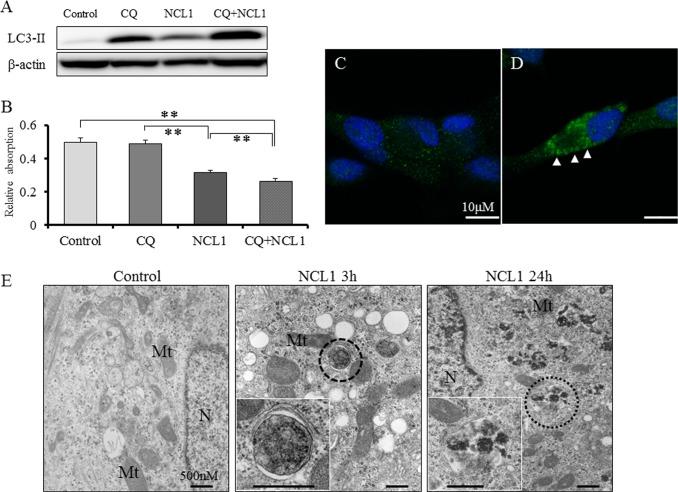
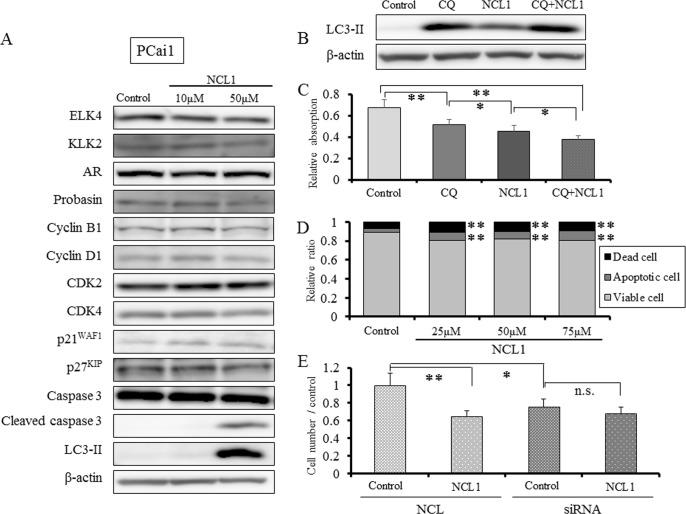
Herein, we investigated therapeutic potential of a novel histone lysine demethylase 1 (LSD1) inhibitor, NCL1, in prostate cancer. Hormone-sensitive prostate cancer cells, (LNCaP) and castration resistant cancer cells (PC3 and PCai1) were treated with NCL1, and LSD1 expression and cell viability were assessed. Prostate cancer cells showed strong LSD1 expression, and cell viability was decreased by NCL1. ChIP analysis showed that NCL1 induced H3K9me2 accumulation at the promoters of androgen-responsive genes. NCL1 also induced G1 cell cycle arrest and apoptosis. In addition, autophagosomes and autolysosomes were induced by NCL1 treatment in LNCaP. Furthermore, LC3-II expression was significantly increased by NCL1 and chloroquine. In mice injected subcutaneously with PCai1 and intraperitoneally with NCL1, tumor volume was reduced with no adverse effects in NCL1-treated mice. Finally, LSD1 expression in human cancer specimens was significantly higher than that in normal prostate glands. In conclusion, NCL1 effectively suppressed prostate cancer growth without adverse events. We suggest that NCL1 is a potential therapeutic agent for hormone-resistant prostate cancer.
在此,我们研究了一种新型组蛋白赖氨酸去甲基化酶1(LSD1)抑制剂NCL1在前列腺癌中的治疗潜力。用NCL1处理激素敏感性前列腺癌细胞(LNCaP)和去势抵抗性癌细胞(PC3和PCai1),并评估LSD1表达和细胞活力。前列腺癌细胞显示出强烈的LSD1表达,NCL1可降低细胞活力。染色质免疫沉淀分析表明,NCL1诱导雄激素反应基因启动子处H3K9me2积累。NCL1还诱导G1期细胞周期阻滞和细胞凋亡。此外,NCL1处理LNCaP可诱导自噬体和自溶酶体形成。此外,NCL1和氯喹可显著增加LC3-II表达。在皮下注射PCai1并腹腔注射NCL1的小鼠中,NCL1处理的小鼠肿瘤体积减小且无不良反应。最后,人类癌症标本中的LSD1表达显著高于正常前列腺组织。总之,NCL1可有效抑制前列腺癌生长且无不良事件。我们认为NCL1是激素抵抗性前列腺癌的潜在治疗药物。




 Zotero 插件