
表没食子儿茶素没食子酸酯通过上调黏附分子、抑制明胶酶活性以及诱导鼻咽癌细胞凋亡来抑制其增殖、侵袭和肿瘤生长。
EGCG inhibits proliferation, invasiveness and tumor growth by up-regulation of adhesion molecules, suppression of gelatinases activity, and induction of apoptosis in nasopharyngeal carcinoma cells.
作者信息
Fang Chih-Yeu, Wu Chung-Chun, Hsu Hui-Yu, Chuang Hsin-Ying, Huang Sheng-Yen, Tsai Ching-Hwa, Chang Yao, Tsao George Sai-Wah, Chen Chi-Long, Chen Jen-Yang
机构信息
Department of Pathology, Wan Fang Hospital, Taipei Medical University, Taipei 116, Taiwan.
National Institute of Cancer Research, National Health Research Institutes, Zhunan Town, Miaoli County 350, Taiwan.
出版信息
Int J Mol Sci. 2015 Jan 23;16(2):2530-58. doi: 10.3390/ijms16022530.
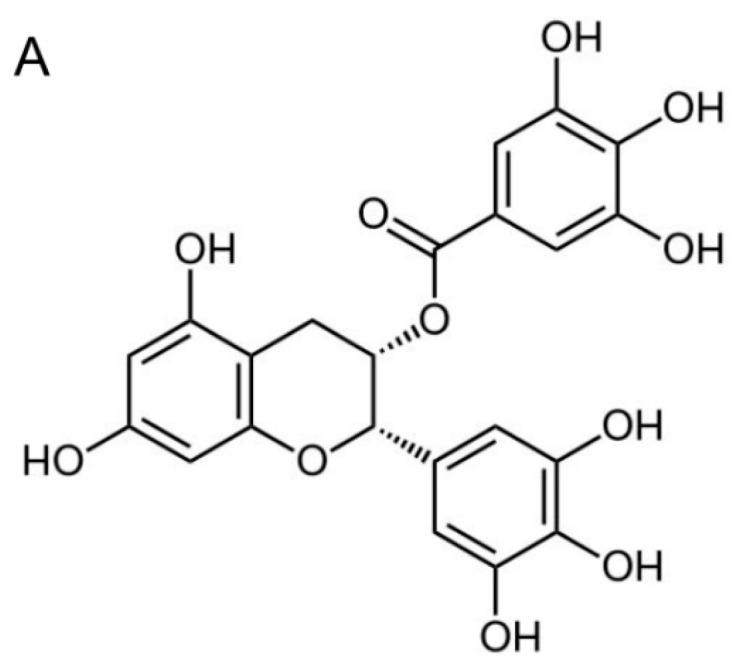
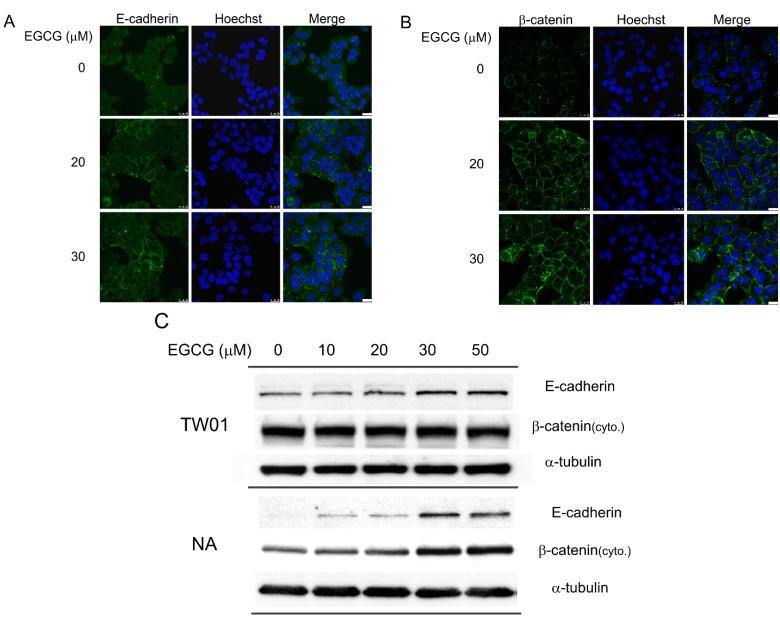
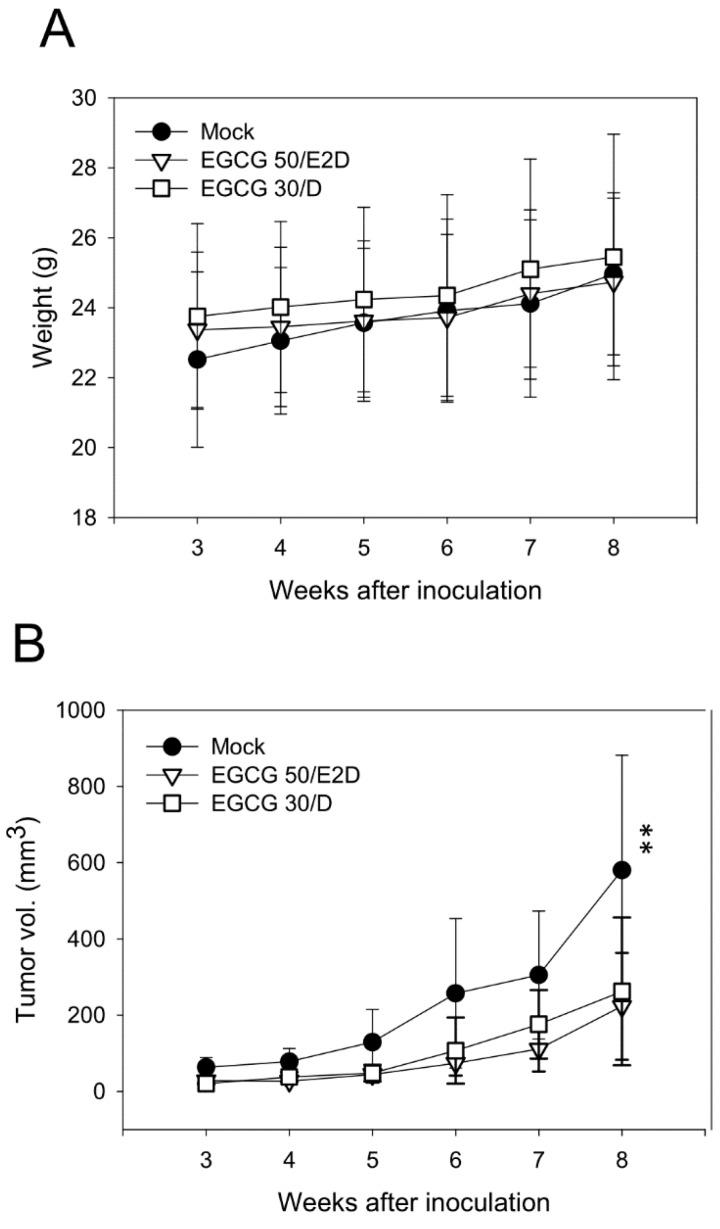
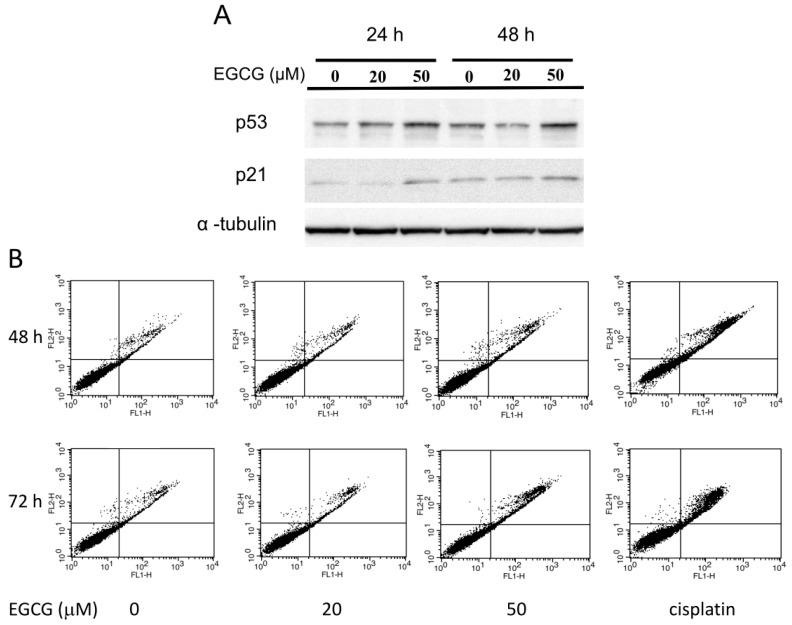
(-)-Epigallocatechin-3-gallate (EGCG), a major green tea polyphenol, has been shown to inhibit the proliferation of a variety of tumor cells. Epidemiological studies have shown that drinking green tea can reduce the incidence of nasopharyngeal carcinoma (NPC), yet the underlying mechanism is not well understood. In this study, the inhibitory effect of EGCG was tested on a set of Epstein Barr virus-negative and -positive NPC cell lines. Treatment with EGCG inhibited the proliferation of NPC cells but did not affect the growth of a non-malignant nasopharyngeal cell line, NP460hTert. Moreover, EGCG treated cells had reduced migration and invasive properties. The expression of the cell adhesion molecules E-cadherin and β-catenin was found to be up-regulated by EGCG treatment, while the down-regulation of matrix metalloproteinases (MMP)-2 and MMP-9 were found to be mediated by suppression of extracellular signal-regulated kinase (ERK) phosphorylation and AP-1 and Sp1 transactivation. Spheroid formation by NPC cells in suspension was significantly inhibited by EGCG. Oral administration of EGCG was capable of suppressing tumor growth in xenografted mice bearing NPC tumors. Treatment with EGCG was found to elevate the expression of p53 and p21, and eventually led to apoptosis of NPC cells via caspase 3 activation. The nuclear translocation of NF-κB and β-catenin was also suppressed by EGCG treatment. These results indicate that EGCG can inhibit the proliferation and invasiveness, and induce apoptosis, of NPC cells, making it a promising agent for chemoprevention or adjuvant therapy of NPC.
(-)-表没食子儿茶素-3-没食子酸酯(EGCG)是绿茶中的一种主要多酚类物质,已被证明能抑制多种肿瘤细胞的增殖。流行病学研究表明,饮用绿茶可降低鼻咽癌(NPC)的发病率,但其潜在机制尚不清楚。在本研究中,测试了EGCG对一组爱泼斯坦-巴尔病毒阴性和阳性NPC细胞系的抑制作用。用EGCG处理可抑制NPC细胞的增殖,但不影响非恶性鼻咽细胞系NP460hTert的生长。此外,经EGCG处理的细胞迁移和侵袭特性降低。发现EGCG处理可上调细胞粘附分子E-钙粘蛋白和β-连环蛋白的表达,而基质金属蛋白酶(MMP)-2和MMP-9的下调是通过抑制细胞外信号调节激酶(ERK)磷酸化以及AP-1和Sp1反式激活介导的。EGCG可显著抑制悬浮培养的NPC细胞形成球体。口服EGCG能够抑制携带NPC肿瘤的异种移植小鼠的肿瘤生长。发现用EGCG处理可提高p53和p21的表达,并最终通过激活半胱天冬酶3导致NPC细胞凋亡。EGCG处理还可抑制NF-κB和β-连环蛋白的核转位。这些结果表明,EGCG可抑制NPC细胞的增殖和侵袭,并诱导其凋亡,使其成为NPC化学预防或辅助治疗的有前景的药物。




 Zotero 插件