
作为纳米医疗设备的脂质体。
Liposomes as nanomedical devices.
作者信息
Bozzuto Giuseppina, Molinari Agnese
机构信息
Chemical Methodology Institute, CNR, Rome, Italy ; Department of Technology and Health, Istituto Superiore di Sanità, Rome, Italy.
Department of Technology and Health, Istituto Superiore di Sanità, Rome, Italy.
出版信息
Int J Nanomedicine. 2015 Feb 2;10:975-99. doi: 10.2147/IJN.S68861. eCollection 2015.
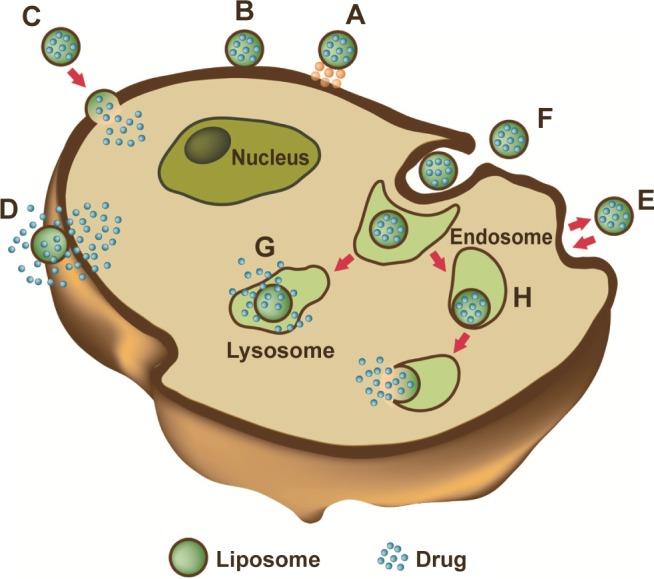
Since their discovery in the 1960s, liposomes have been studied in depth, and they continue to constitute a field of intense research. Liposomes are valued for their biological and technological advantages, and are considered to be the most successful drug-carrier system known to date. Notable progress has been made, and several biomedical applications of liposomes are either in clinical trials, are about to be put on the market, or have already been approved for public use. In this review, we briefly analyze how the efficacy of liposomes depends on the nature of their components and their size, surface charge, and lipidic organization. Moreover, we discuss the influence of the physicochemical properties of liposomes on their interaction with cells, half-life, ability to enter tissues, and final fate in vivo. Finally, we describe some strategies developed to overcome limitations of the "first-generation" liposomes, and liposome-based drugs on the market and in clinical trials.
自20世纪60年代被发现以来,脂质体得到了深入研究,并且仍然是一个研究热点领域。脂质体因其生物学和技术优势而受到重视,被认为是迄今为止最成功的药物载体系统。目前已取得显著进展,脂质体的几种生物医学应用要么正在进行临床试验,即将投放市场,要么已经获批可供公众使用。在这篇综述中,我们简要分析了脂质体的功效如何取决于其成分的性质、大小、表面电荷和脂质组织。此外,我们还讨论了脂质体的物理化学性质对其与细胞相互作用、半衰期、进入组织的能力以及体内最终命运的影响。最后,我们描述了为克服“第一代”脂质体的局限性而开发的一些策略,以及市场上和临床试验中的基于脂质体的药物。

 Zotero 插件