
丝状真菌中基因组规模建模的现状
Current state of genome-scale modeling in filamentous fungi.
作者信息
Brandl Julian, Andersen Mikael R
机构信息
Department of Systems Biology, Technical University of Denmark, Søltofts Plads 223, 2800, Kongens Lyngby, Denmark,
出版信息
Biotechnol Lett. 2015 Jun;37(6):1131-9. doi: 10.1007/s10529-015-1782-8. Epub 2015 Feb 21.
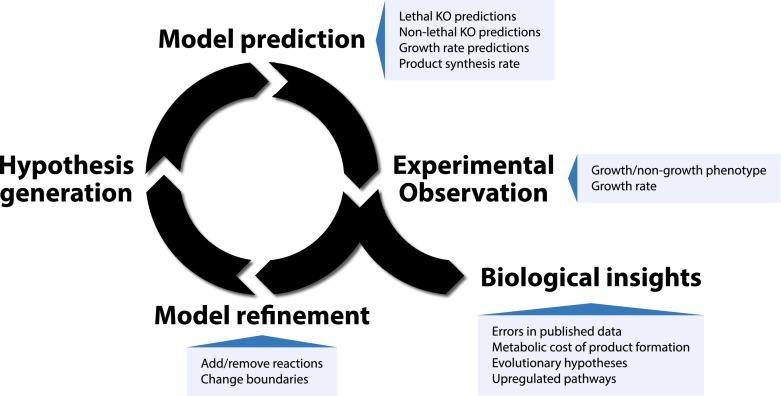
The group of filamentous fungi contains important species used in industrial biotechnology for acid, antibiotics and enzyme production. Their unique lifestyle turns these organisms into a valuable genetic reservoir of new natural products and biomass degrading enzymes that has not been used to full capacity. One of the major bottlenecks in the development of new strains into viable industrial hosts is the alteration of the metabolism towards optimal production. Genome-scale models promise a reduction in the time needed for metabolic engineering by predicting the most potent targets in silico before testing them in vivo. The increasing availability of high quality models and molecular biological tools for manipulating filamentous fungi renders the model-guided engineering of these fungal factories possible with comprehensive metabolic networks. A typical fungal model contains on average 1138 unique metabolic reactions and 1050 ORFs, making them a vast knowledge-base of fungal metabolism. In the present review we focus on the current state as well as potential future applications of genome-scale models in filamentous fungi.
丝状真菌群体包含在工业生物技术中用于产酸、抗生素和酶的重要菌种。它们独特的生活方式使这些生物体成为新天然产物和生物质降解酶的宝贵基因库,但尚未得到充分利用。将新菌株开发成可行的工业宿主的主要瓶颈之一是改变代谢以实现最优生产。基因组规模模型有望通过在体内测试之前在计算机上预测最有效的靶点,从而减少代谢工程所需的时间。用于操纵丝状真菌的高质量模型和分子生物学工具越来越多,使得利用综合代谢网络对这些真菌工厂进行模型指导的工程设计成为可能。一个典型的真菌模型平均包含1138个独特的代谢反应和1050个开放阅读框,使其成为真菌代谢的庞大知识库。在本综述中,我们重点关注基因组规模模型在丝状真菌中的当前状态以及潜在的未来应用。
 Zotero 插件