
鞭毛马达的新成员:FliL 控制马达输出和偏向性。
A new player at the flagellar motor: FliL controls both motor output and bias.
作者信息
Partridge Jonathan D, Nieto Vincent, Harshey Rasika M
机构信息
Department of Molecular Biosciences and Institute of Cellular and Molecular Biology, University of Texas at Austin, Austin, Texas, USA.
Department of Molecular Biosciences and Institute of Cellular and Molecular Biology, University of Texas at Austin, Austin, Texas, USA
出版信息
mBio. 2015 Feb 24;6(2):e02367. doi: 10.1128/mBio.02367-14.
UNLABELLED
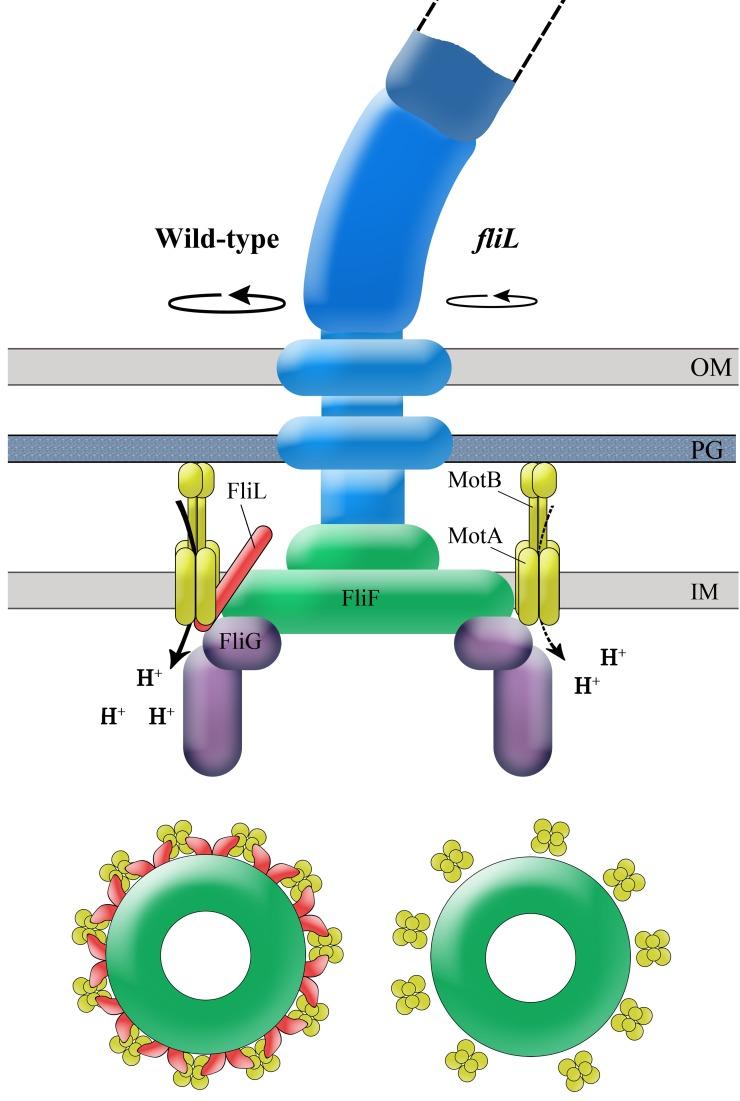
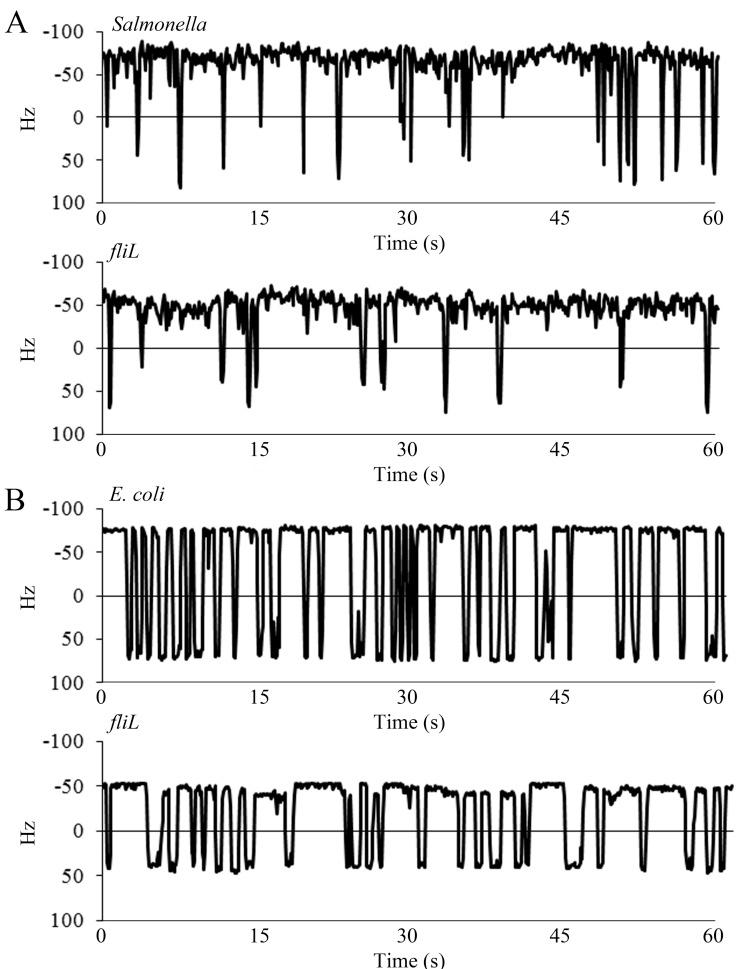
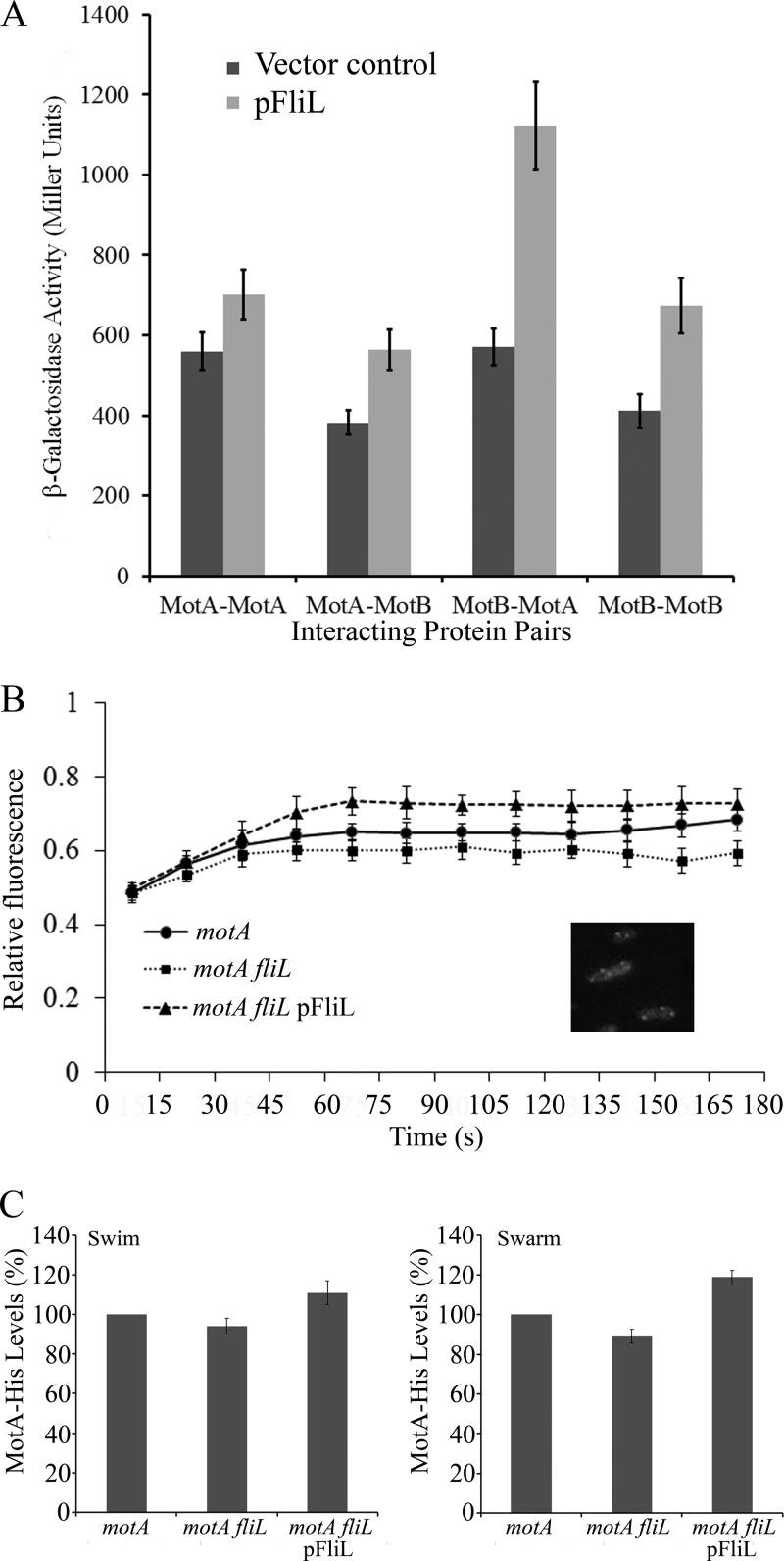
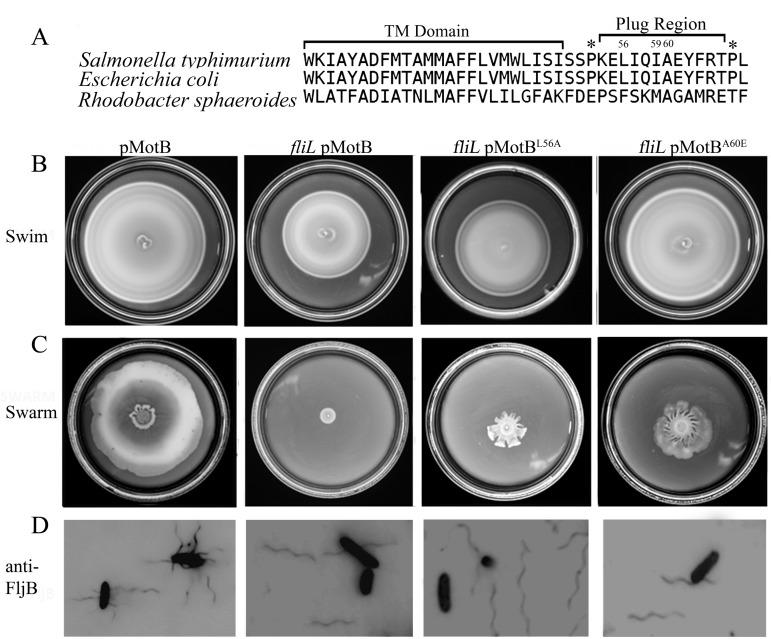
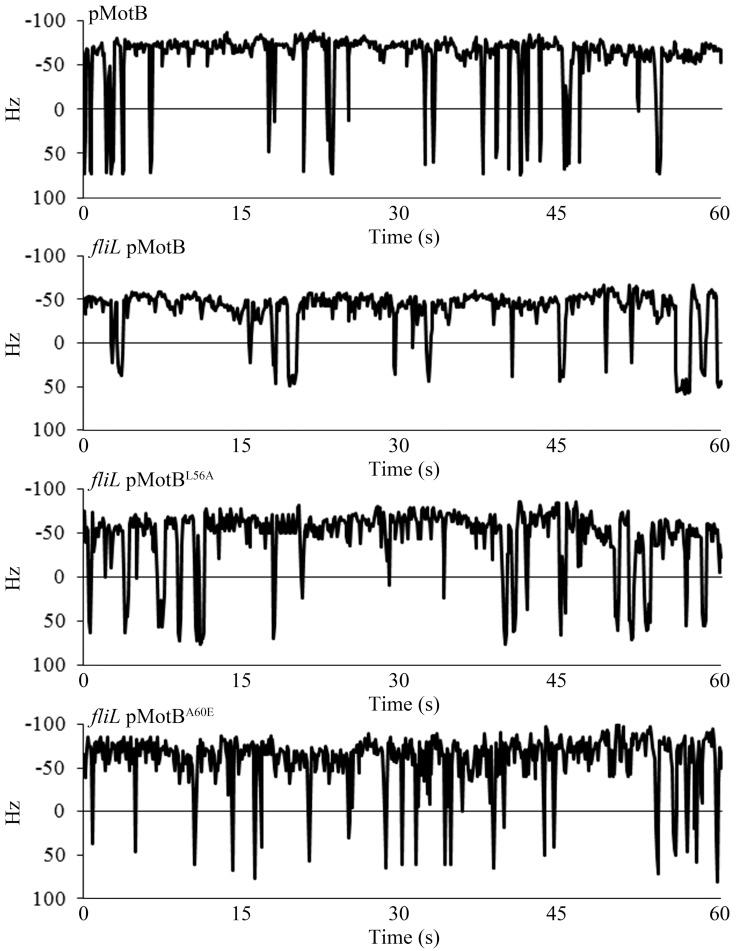
The bacterial flagellum is driven by a bidirectional rotary motor, which propels bacteria to swim through liquids or swarm over surfaces. While the functions of the major structural and regulatory components of the flagellum are known, the function of the well-conserved FliL protein is not. In Salmonella and Escherichia coli, the absence of FliL leads to a small defect in swimming but complete elimination of swarming. Here, we tracked single motors of these bacteria and found that absence of FliL decreases their speed as well as switching frequency. We demonstrate that FliL interacts strongly with itself, with the MS ring protein FliF, and with the stator proteins MotA and MotB and weakly with the rotor switch protein FliG. These and other experiments show that FliL increases motor output either by recruiting or stabilizing the stators or by increasing their efficiency and contributes additionally to torque generation at higher motor loads. The increased torque enabled by FliL explains why this protein is essential for swarming on an agar surface expected to offer increased resistance to bacterial movement.
IMPORTANCE
FliL is a well-conserved bacterial flagellar protein whose absence leads to a variety of motility defects, ranging from moderate to complete inhibition of swimming in some bacterial species, inhibition of swarming in others, structural defects that break the flagellar rod during swarming in E. coli and Salmonella, and failure to eject the flagellar filament during the developmental transition of a swimmer to a stalk cell in Caulobacter crescentus. Despite these many phenotypes, a specific function for FliL has remained elusive. Here, we established a central role for FliL at the Salmonella and E. coli motors, where it interacts with both rotor and stator proteins, increases motor output, and contributes to the normal rotational bias of the motor.
未标注
细菌鞭毛由双向旋转马达驱动,该马达推动细菌在液体中游泳或在表面成群游动。虽然鞭毛主要结构和调节成分的功能已为人所知,但保守性良好的FliL蛋白的功能尚不清楚。在沙门氏菌和大肠杆菌中,缺乏FliL会导致游泳时有小缺陷,但会完全消除群游现象。在这里,我们追踪了这些细菌的单个马达,发现缺乏FliL会降低它们的速度以及切换频率。我们证明FliL与自身、MS环蛋白FliF以及定子蛋白MotA和MotB强烈相互作用,与转子开关蛋白FliG弱相互作用。这些及其他实验表明,FliL通过招募或稳定定子或提高其效率来增加马达输出,并在更高的马达负载下对扭矩产生有额外贡献。FliL使扭矩增加解释了为什么这种蛋白质对于在预计会对细菌运动提供更大阻力的琼脂表面上群游至关重要。
重要性
FliL是一种保守性良好的细菌鞭毛蛋白,其缺失会导致多种运动缺陷,从某些细菌物种中游泳的中度到完全抑制,其他细菌中群游的抑制,大肠杆菌和沙门氏菌在群游过程中破坏鞭毛杆的结构缺陷,以及新月柄杆菌从游动细胞向柄细胞发育转变过程中无法排出鞭毛丝。尽管有这些多种表型,但FliL的具体功能仍然难以捉摸。在这里,我们确定了FliL在沙门氏菌和大肠杆菌马达中的核心作用,它在那里与转子和定子蛋白相互作用,增加马达输出,并有助于马达的正常旋转偏向。


 Zotero 插件