
四跨膜蛋白CD9决定人乳腺癌细胞的侵袭性和致瘤性。
Tetraspanin CD9 determines invasiveness and tumorigenicity of human breast cancer cells.
作者信息
Rappa Germana, Green Toni M, Karbanová Jana, Corbeil Denis, Lorico Aurelio
机构信息
Cancer Research Center, Roseman University of Health Sciences with Roseman University College of Medicine, Las Vegas, Nevada, USA.
Tissue Engineering Laboratories (BIOTEC) and DFG Research Center and Cluster of Excellence for Regenerative Therapies Dresden, Technische Universität Dresden, Tatzberg, Dresden, Germany.
出版信息
Oncotarget. 2015 Apr 10;6(10):7970-91. doi: 10.18632/oncotarget.3419.
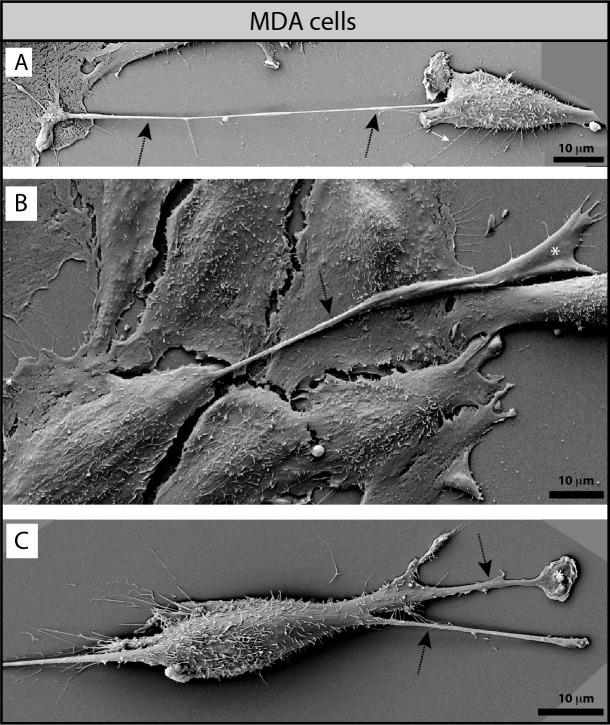
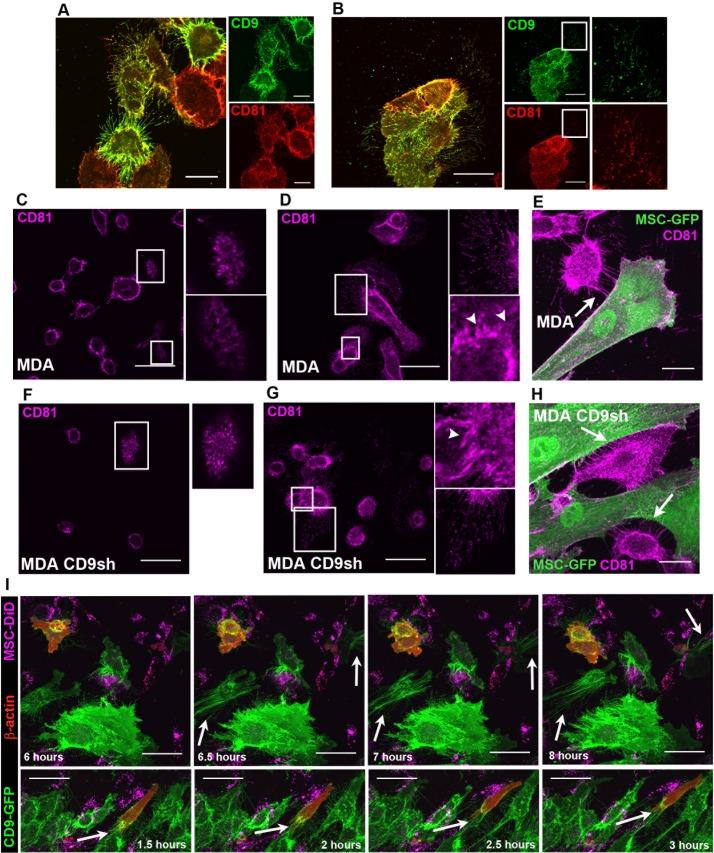
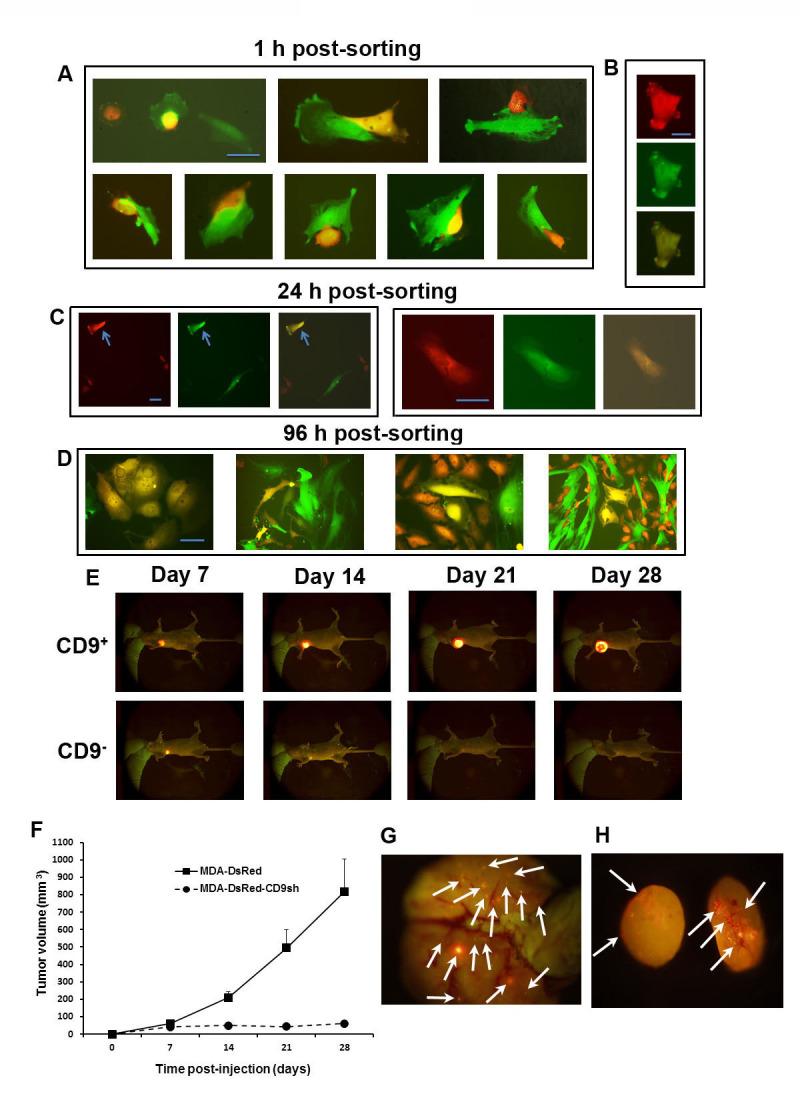
Interaction of breast cancer cells (BCCs) with stromal components is critical for tumor growth and metastasis. Here, we assessed the role of CD9 in adhesion, migration and invasiveness of BCCs. We used co-cultures of BCCs and bone marrow-derived multipotent mesenchymal stromal cells (MSCs), and analyzed their behavior and morphology by dynamic total internal reflection fluorescence, confocal and scanning electron microscopy. 83, 16 and 10% of contacts between MDA-MB-231 (MDA), MA-11 or MCF-7 cells and MSCs, respectively, resulted in MSC invasion. MDA cells developed long magnupodia, lamellipodia and dorsal microvilli, whereas long microvilli emerged from MA-11 cells. MCF-7 cells displayed large dorsal ruffles. CD9 knockdown and antibody blockage in MDA cells inhibited MSC invasion by 95 and 70%, respectively, suggesting that CD9 is required for this process. Remarkably, CD9-deficient MDA cells displayed significant alteration of their plasma membrane, harboring numerous peripheral and dorsal membrane ruffles instead of intact magnupodium/lamellipodium and microvillus, respectively. Such modification might explain the delayed adhesion, and hence MSC invasion. In agreement with this hypothesis, CD9-knockdown suppressed the metastatic capacity of MDA cells in mouse xenografts. Our data indicate that CD9 is implicated in BCC invasiveness and metastases by cellular mechanisms that involve specific CD9+ plasma membrane protrusions of BCCs.
乳腺癌细胞(BCCs)与基质成分的相互作用对肿瘤生长和转移至关重要。在此,我们评估了CD9在BCCs的黏附、迁移和侵袭中的作用。我们使用了BCCs与骨髓来源的多能间充质基质细胞(MSCs)的共培养,并通过动态全内反射荧光、共聚焦和扫描电子显微镜分析了它们的行为和形态。MDA-MB-231(MDA)、MA-11或MCF-7细胞与MSCs之间分别有83%、16%和10%的接触导致了MSCs的侵袭。MDA细胞形成了长的丝状伪足、片状伪足和背侧微绒毛,而MA-11细胞出现了长的微绒毛。MCF-7细胞表现出大的背侧褶皱。MDA细胞中的CD9敲低和抗体阻断分别抑制了MSCs侵袭的95%和70%,表明该过程需要CD9。值得注意的是,CD9缺陷的MDA细胞显示其质膜有显著改变,分别有许多外周和背侧膜褶皱,而不是完整的丝状伪足/片状伪足和微绒毛。这种修饰可能解释了黏附延迟,进而解释了MSCs的侵袭。与该假设一致,CD9敲低抑制了MDA细胞在小鼠异种移植中的转移能力。我们的数据表明,CD9通过涉及BCCs特定CD9 +质膜突起的细胞机制参与BCCs的侵袭和转移。





 Zotero 插件