
大脑中的 SIRT1-与衰老相关疾病和寿命的联系。
SIRT1 in the brain-connections with aging-associated disorders and lifespan.
机构信息
Department of Biochemistry, Yong Loo Lin School of Medicine, National University Health System Singapore, Singapore.
Department of Biochemistry, Yong Loo Lin School of Medicine, National University Health System Singapore, Singapore ; NUS Graduate School for Integrative Sciences and Engineering, National University of Singapore Singapore, Singapore.
出版信息
Front Cell Neurosci. 2015 Mar 9;9:64. doi: 10.3389/fncel.2015.00064. eCollection 2015.
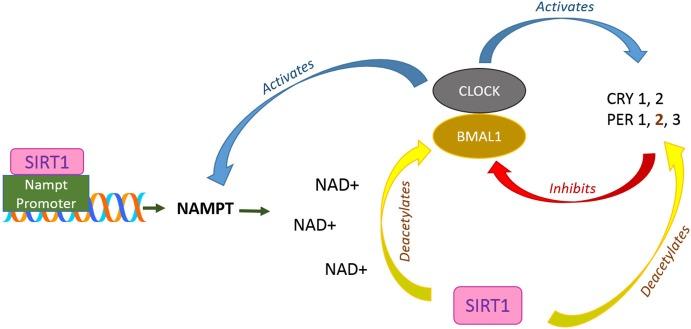
The silent mating type information regulation 2 proteins (sirtuins) 1 of class III histone deacetylases (HDACs) have been associated with health span and longevity. SIRT1, the best studied member of the mammalian sirtuins, has a myriad of roles in multiple tissues and organs. However, a significant part of SIRT1's role that impinges on aging and lifespan may lie in its activities in the central nervous system (CNS) neurons. Systemically, SIRT1 influences energy metabolism and circadian rhythm through its activity in the hypothalamic nuclei. From a cell biological perspective, SIRT1 is a crucial component of multiple interconnected regulatory networks that modulate dendritic and axonal growth, as well as survival against stress. This neuronal cell autonomous activity of SIRT1 is also important for neuronal plasticity, cognitive functions, as well as protection against aging-associated neuronal degeneration and cognitive decline. We discuss recent findings that have shed light on the various activities of SIRT1 in the brain, which collectively impinge on aging-associated disorders and lifespan.
III 类组蛋白去乙酰化酶(HDACs)的沉默交配型信息调节 2 蛋白(sirtuins)1 与健康寿命和长寿有关。SIRT1 是哺乳动物 sirtuins 中研究最充分的成员,它在多种组织和器官中具有多种作用。然而,SIRT1 影响衰老和寿命的一个重要部分可能在于其在中枢神经系统 (CNS) 神经元中的活性。在系统水平上,SIRT1 通过其在下丘脑核中的活性影响能量代谢和昼夜节律。从细胞生物学的角度来看,SIRT1 是多个相互关联的调节网络的关键组成部分,这些网络调节树突和轴突的生长以及对压力的生存能力。SIRT1 的这种神经元自主活性对于神经元可塑性、认知功能以及防止与衰老相关的神经元变性和认知能力下降也很重要。我们讨论了最近的发现,这些发现揭示了 SIRT1 在大脑中的各种活性,这些活性共同影响与衰老相关的疾病和寿命。


 Zotero 插件