
血必净通过下调小鼠高迁移率族蛋白B1和晚期糖基化终末产物受体的表达改善脓毒症诱导的肺损伤。
Xuebijing Ameliorates Sepsis-Induced Lung Injury by Downregulating HMGB1 and RAGE Expressions in Mice.
作者信息
Wang Qiao, Wu Xin, Tong Xiaowen, Zhang Zhiling, Xu Bing, Zhou Wugang
机构信息
Department of Emergency, Shanghai Ninth People's Hospital, School of Medicine, Shanghai Jiao Tong University, Room 210, Building 10, No. 639, Zhi Zao Ju Road, Huang Pu District, Shanghai 200011, China.
出版信息
Evid Based Complement Alternat Med. 2015;2015:860259. doi: 10.1155/2015/860259. Epub 2015 Mar 2.
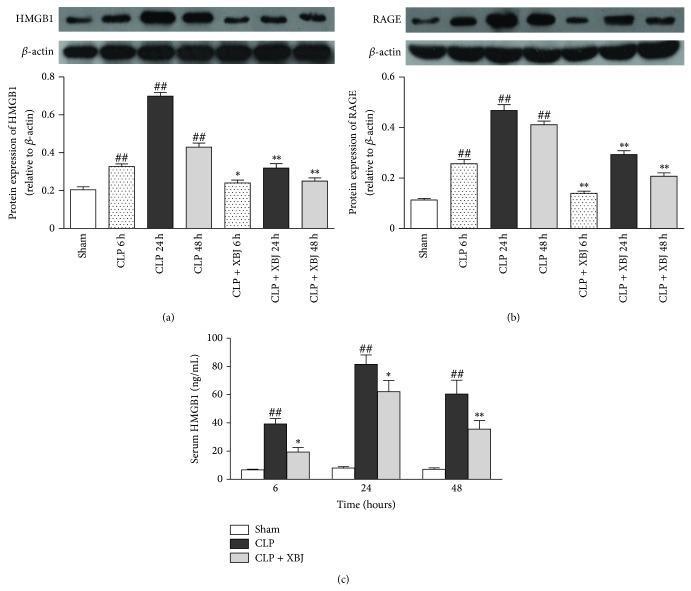
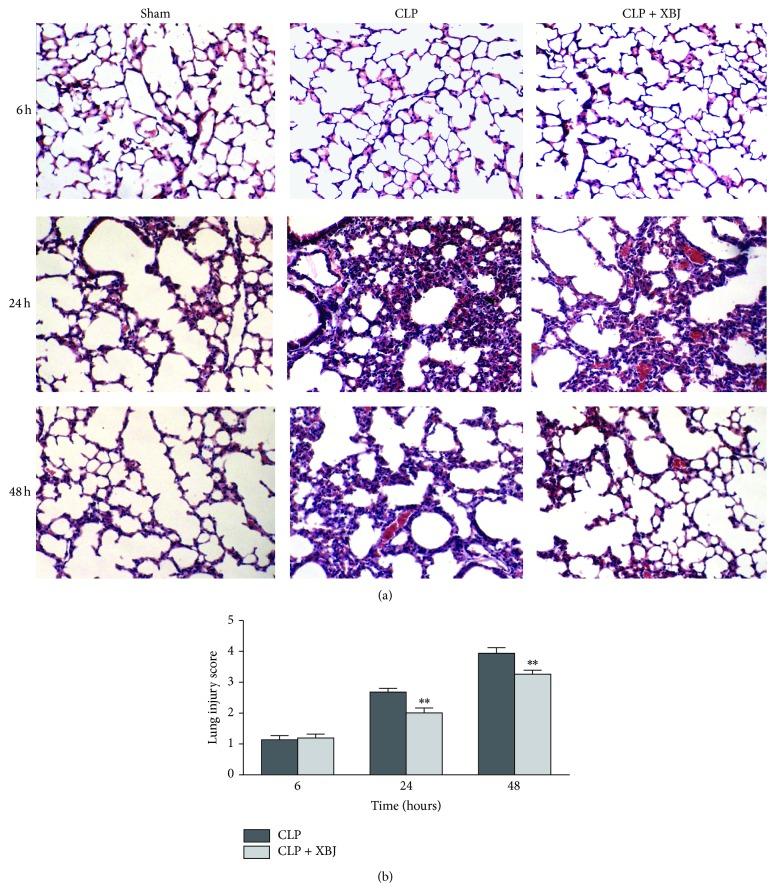
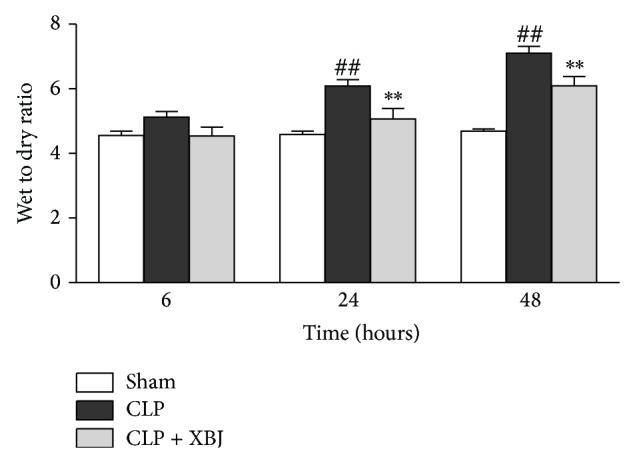
Xuebijing (XBJ) injection, a traditional Chinese medicine, has been reported as a promising approach in the treatment of sepsis in China. However, its actual molecular mechanisms in sepsis-induced lung injury are yet unknown. Therefore, this study aimed to investigate the beneficial effects of XBJ on inflammation and the underlying mechanisms in a model of caecal ligation and puncture-(CLP-) induced lung injury. The mice were divided into CLP group, CLP+XBJ group (XBJ, 4 mL/kg per 12 hours), and sham group. The molecular and histological examinations were performed on the lung, serum, and bronchoalveolar lavage (BAL) fluid samples of mice at the points of 6, 24, and 48 hours after CLP. The results show that XBJ reduces morphological destruction and neutrophil infiltration in the alveolar space and lung wet/dry weight ratio, which improves mortality of CLP-induced lung injury. Meanwhile, XBJ treatment downregulates high mobility group box protein 1 (HMGB1) and the receptor for advanced glycation end products (RAGE) expression, as well as neutrophil counts, production of IL-1β, IL-6, and TNF-α in the BAL fluids. In conclusion, these results indicate that XBJ may reduce the mortality through inhibiting proinflammatory cytokines secretion mediated by HMGB1/RAGE axis.
血必净(XBJ)注射液是一种中药,在中国已被报道为治疗脓毒症的一种有前景的方法。然而,其在脓毒症诱导的肺损伤中的实际分子机制尚不清楚。因此,本研究旨在探讨血必净对盲肠结扎穿孔(CLP)诱导的肺损伤模型中炎症的有益作用及其潜在机制。将小鼠分为CLP组、CLP+XBJ组(血必净,每12小时4 mL/kg)和假手术组。在CLP后6、24和48小时对小鼠的肺、血清和支气管肺泡灌洗(BAL)液样本进行分子和组织学检查。结果表明,血必净减少了肺泡腔的形态破坏和中性粒细胞浸润以及肺湿/干重比,从而提高了CLP诱导的肺损伤的存活率。同时,血必净治疗下调了高迁移率族蛋白B1(HMGB1)和晚期糖基化终产物受体(RAGE)的表达,以及BAL液中的中性粒细胞计数、IL-1β、IL-6和TNF-α的产生。总之,这些结果表明血必净可能通过抑制HMGB1/RAGE轴介导的促炎细胞因子分泌来降低死亡率。


 Zotero 插件