
雏鸡单核吞噬细胞系统的发育和维持受巨噬细胞集落刺激因子受体发出的信号控制。
The development and maintenance of the mononuclear phagocyte system of the chick is controlled by signals from the macrophage colony-stimulating factor receptor.
作者信息
Garceau Valerie, Balic Adam, Garcia-Morales Carla, Sauter Kristin A, McGrew Mike J, Smith Jacqueline, Vervelde Lonneke, Sherman Adrian, Fuller Troy E, Oliphant Theodore, Shelley John A, Tiwari Raksha, Wilson Thomas L, Chintoan-Uta Cosmin, Burt Dave W, Stevens Mark P, Sang Helen M, Hume David A
出版信息
BMC Biol. 2015 Feb 19;13:12. doi: 10.1186/s12915-015-0121-9.
BACKGROUND
Macrophages have many functions in development and homeostasis as well as innate immunity. Recent studies in mammals suggest that cells arising in the yolk sac give rise to self-renewing macrophage populations that persist in adult tissues. Macrophage proliferation and differentiation is controlled by macrophage colony-stimulating factor (CSF1) and interleukin 34 (IL34), both agonists of the CSF1 receptor (CSF1R). In the current manuscript we describe the origin, function and regulation of macrophages, and the role of CSF1R signaling during embryonic development, using the chick as a model.
RESULTS
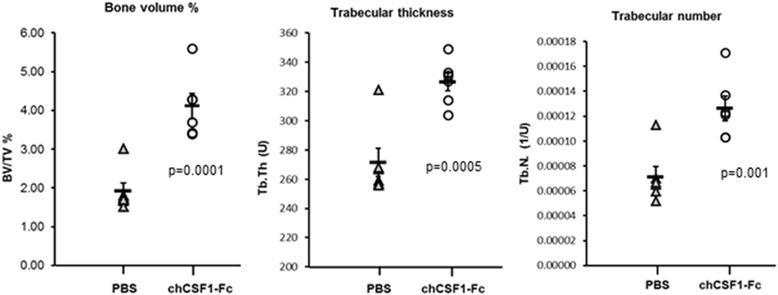
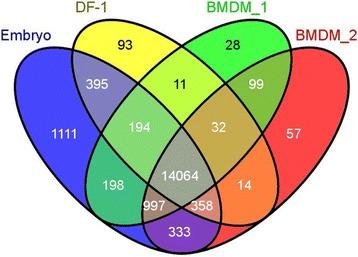
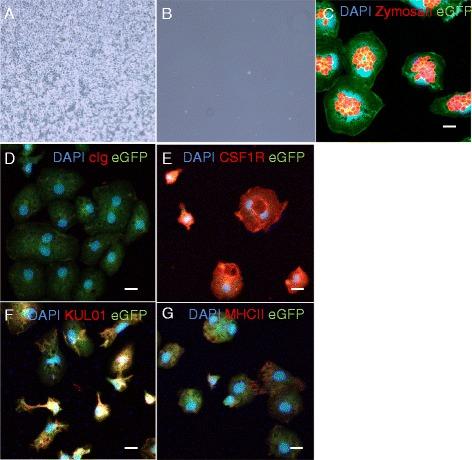
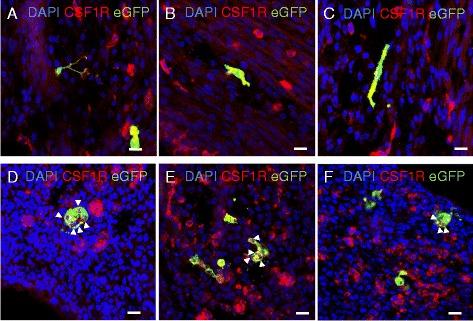
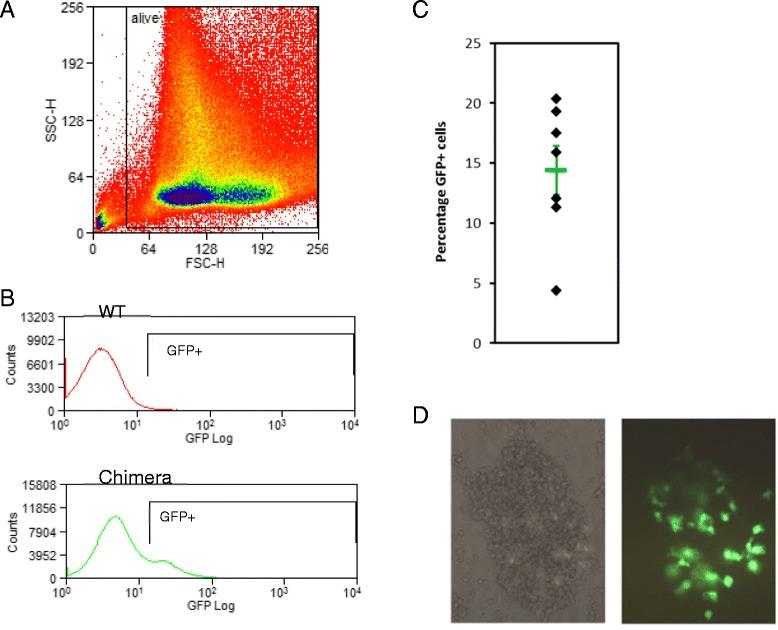
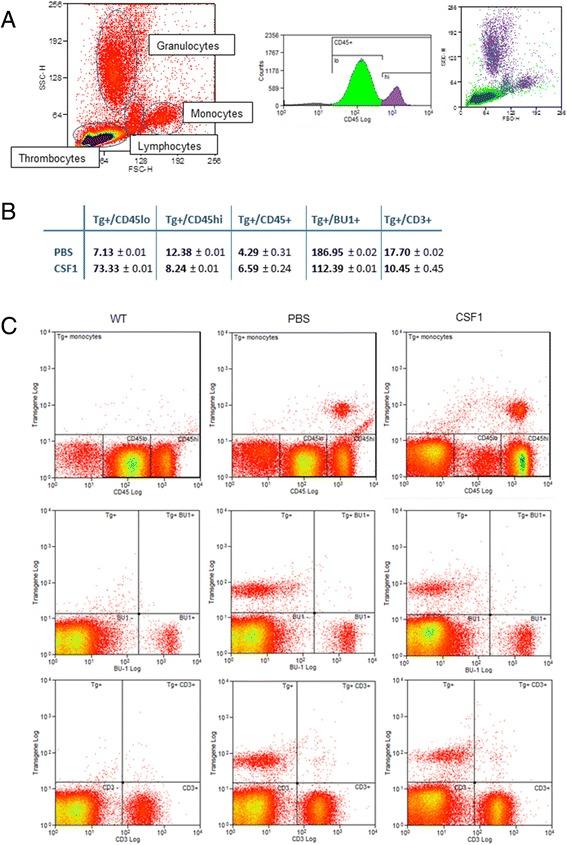
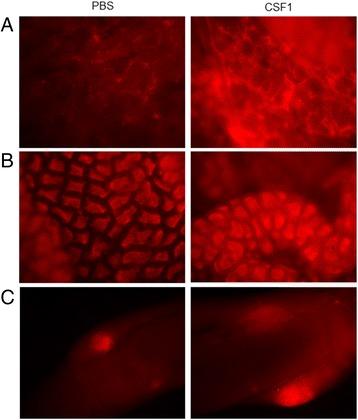
Based upon RNA-sequencing comparison to bone marrow-derived macrophages grown in CSF1, we show that embryonic macrophages contribute around 2% of the total embryo RNA in day 7 chick embryos, and have similar gene expression profiles to bone marrow-derived macrophages. To explore the origins of embryonic and adult macrophages, we injected Hamburger-Hamilton stage 16 to 17 chick embryos with either yolk sac-derived blood cells, or bone marrow cells from EGFP+ donors. In both cases, the transferred cells gave rise to large numbers of EGFP+ tissue macrophages in the embryo. In the case of the yolk sac, these cells were not retained in hatched birds. Conversely, bone marrow EGFP+ cells gave rise to tissue macrophages in all organs of adult birds, and regenerated CSF1-responsive marrow macrophage progenitors. Surprisingly, they did not contribute to any other hematopoietic lineage. To explore the role of CSF1 further, we injected embryonic or hatchling CSF1R-reporter transgenic birds with a novel chicken CSF1-Fc conjugate. In both cases, the treatment produced a large increase in macrophage numbers in all tissues examined. There were no apparent adverse effects of chicken CSF1-Fc on embryonic or post-hatch development, but there was an unexpected increase in bone density in the treated hatchlings.
CONCLUSIONS
The data indicate that the yolk sac is not the major source of macrophages in adult birds, and that there is a macrophage-restricted, self-renewing progenitor cell in bone marrow. CSF1R is demonstrated to be limiting for macrophage development during development in ovo and post-hatch. The chicken provides a novel and tractable model to study the development of the mononuclear phagocyte system and CSF1R signaling.
背景
巨噬细胞在发育、体内平衡以及固有免疫中具有多种功能。近期在哺乳动物中的研究表明,卵黄囊中产生的细胞可形成自我更新的巨噬细胞群体,并持续存在于成体组织中。巨噬细胞的增殖和分化受巨噬细胞集落刺激因子(CSF1)和白细胞介素34(IL34)调控,二者均为CSF1受体(CSF1R)的激动剂。在本论文中,我们以鸡为模型,描述巨噬细胞的起源、功能和调控,以及CSF1R信号在胚胎发育过程中的作用。
结果
通过与在CSF1中培养的骨髓来源巨噬细胞进行RNA测序比较,我们发现胚胎巨噬细胞在孵化第7天的鸡胚中贡献了约2%的胚胎总RNA,并且其基因表达谱与骨髓来源巨噬细胞相似。为探究胚胎和成年巨噬细胞的起源,我们向处于汉密尔顿-汉堡第16至17期的鸡胚注射卵黄囊来源的血细胞或来自增强绿色荧光蛋白(EGFP)阳性供体的骨髓细胞。在这两种情况下,转移的细胞在胚胎中都产生了大量的EGFP阳性组织巨噬细胞。就卵黄囊而言,这些细胞在孵化出的雏鸡中未被保留。相反,骨髓来源的EGFP阳性细胞在成年鸡的所有器官中产生组织巨噬细胞,并再生出对CSF1有反应的骨髓巨噬细胞祖细胞。令人惊讶的是,它们未对任何其他造血谱系产生贡献。为进一步探究CSF1的作用,我们向胚胎期或幼雏期的CSF1R报告基因转基因鸡注射一种新型的鸡CSF1-Fc融合蛋白。在这两种情况下,该处理均使所有检测组织中的巨噬细胞数量大幅增加。鸡CSF1-Fc对胚胎期或孵化后发育没有明显的不良影响,但在处理后的幼雏中骨密度意外增加。
结论
数据表明卵黄囊并非成年鸡巨噬细胞的主要来源,并且骨髓中存在一种巨噬细胞限制性的自我更新祖细胞。CSF1R被证明在胚胎发育和孵化后巨噬细胞发育过程中是限制性因素。鸡为研究单核吞噬细胞系统的发育和CSF1R信号提供了一个新颖且易于处理的模型。


 Zotero 插件