
氧化应激对运动骨骼肌的影响。
Impact of oxidative stress on exercising skeletal muscle.
作者信息
Steinbacher Peter, Eckl Peter
机构信息
Department of Cell Biology, University of Salzburg, A-5020 Salzburg, Austria.
出版信息
Biomolecules. 2015 Apr 10;5(2):356-77. doi: 10.3390/biom5020356.
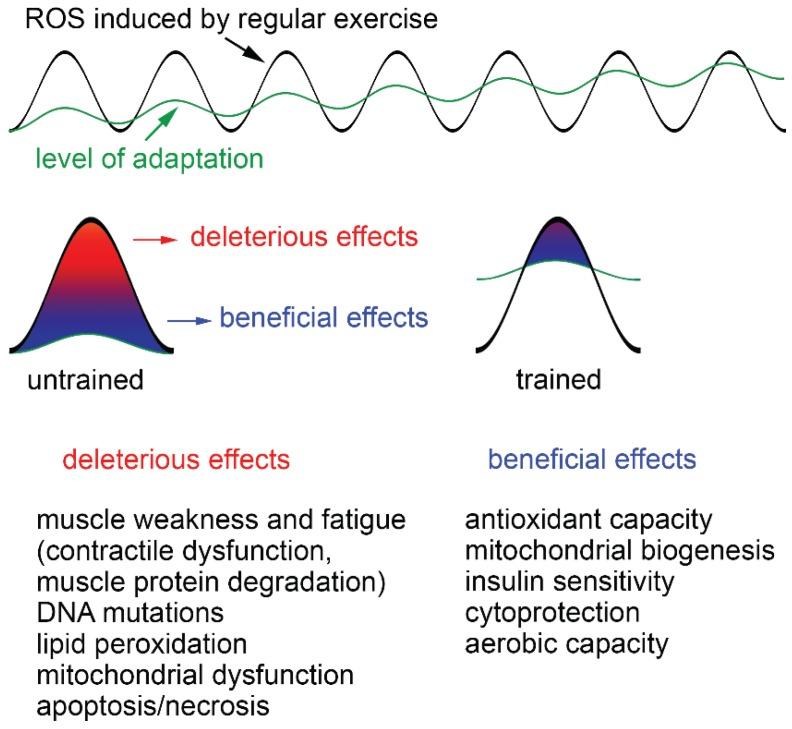
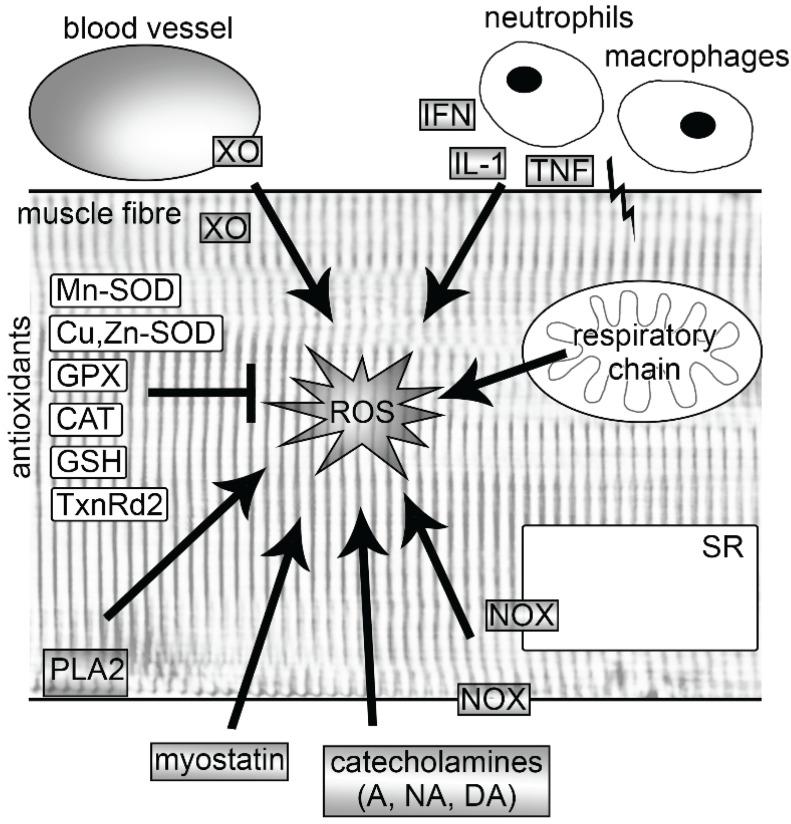
It is well established that muscle contractions during exercise lead to elevated levels of reactive oxygen species (ROS) in skeletal muscle. These highly reactive molecules have many deleterious effects, such as a reduction of force generation and increased muscle atrophy. Since the discovery of exercise-induced oxidative stress several decades ago, evidence has accumulated that ROS produced during exercise also have positive effects by influencing cellular processes that lead to increased expression of antioxidants. These molecules are particularly elevated in regularly exercising muscle to prevent the negative effects of ROS by neutralizing the free radicals. In addition, ROS also seem to be involved in the exercise-induced adaptation of the muscle phenotype. This review provides an overview of the evidences to date on the effects of ROS in exercising muscle. These aspects include the sources of ROS, their positive and negative cellular effects, the role of antioxidants, and the present evidence on ROS-dependent adaptations of muscle cells in response to physical exercise.
众所周知,运动期间的肌肉收缩会导致骨骼肌中活性氧(ROS)水平升高。这些高反应性分子具有许多有害影响,例如力量产生减少和肌肉萎缩加剧。自几十年前发现运动诱导的氧化应激以来,已有证据表明运动期间产生的ROS通过影响导致抗氧化剂表达增加的细胞过程也具有积极作用。这些分子在经常运动的肌肉中尤其升高,以通过中和自由基来预防ROS的负面影响。此外,ROS似乎也参与了运动诱导的肌肉表型适应。本综述概述了迄今为止关于ROS在运动肌肉中的作用的证据。这些方面包括ROS的来源、它们对细胞的正负影响、抗氧化剂的作用以及目前关于肌肉细胞对体育锻炼的ROS依赖性适应的证据。
 Zotero 插件