
基于互联网的认知行为疗法治疗近期心肌梗死患者的抑郁和焦虑(U-CARE心脏研究):一项随机对照试验的研究方案
Treatment of depression and anxiety with internet-based cognitive behavior therapy in patients with a recent myocardial infarction (U-CARE Heart): study protocol for a randomized controlled trial.
作者信息
Norlund Fredrika, Olsson Erik M G, Burell Gunilla, Wallin Emma, Held Claes
机构信息
Department of Public Health and Caring Sciences, Uppsala University, Box 564, Uppsala, SE-751 22, Sweden.
Department of Psychology, Uppsala University, Box 562 S-75122, Uppsala, Sweden.
出版信息
Trials. 2015 Apr 11;16:154. doi: 10.1186/s13063-015-0689-y.
BACKGROUND
Major depression and depressive symptoms are common in patients with a recent myocardial infarction (MI), and depression is associated with adverse cardiovascular outcomes. Anxiety post-MI is less studied, but occurs commonly in patients with heart disease, and is also considered a risk factor for recurrence of cardiac events. Cognitive behavior therapy (CBT) is an established therapy for depression and anxiety disorders. To the best of our knowledge, there have not been any studies to determine if internet-based CBT (iCBT) can reduce the symptoms of depression and anxiety in patients with a recent MI. The main aim of the U-CARE Heart trial is to evaluate an iCBT intervention for patients with a recent MI.
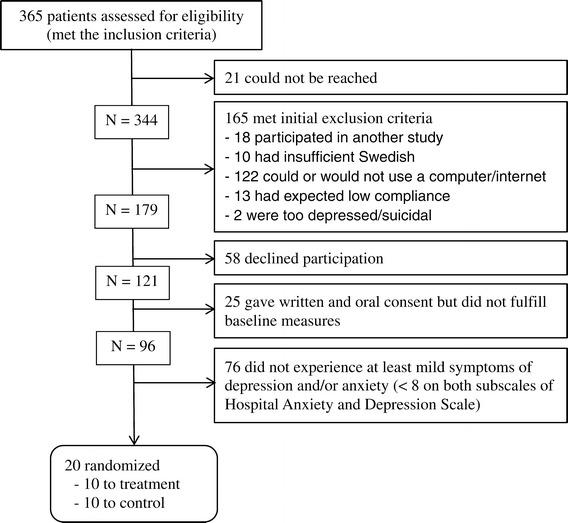
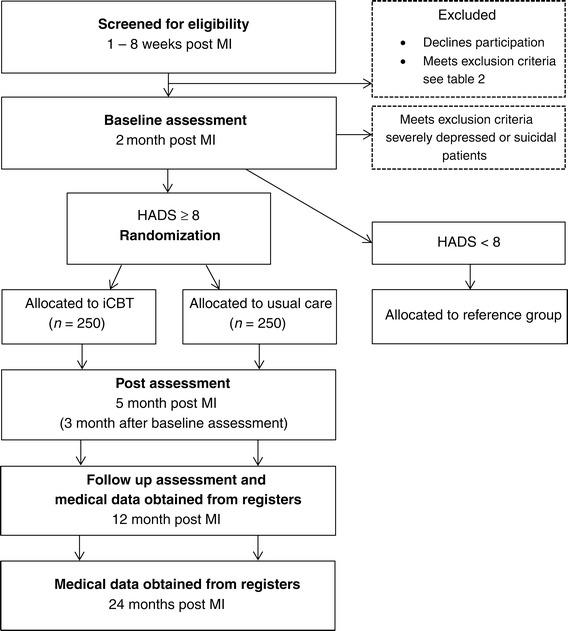
METHODS/DESIGN: This is a randomized, controlled, prospective study with a multicenter design. A total of 500 participants will be randomized at a 1:1 ratio, around two months after an acute MI, to either iCBT or to a control group. Both groups will receive an optimal standard of care according to guidelines. The intervention consists of a self-help program delivered via the internet with individual online support from a psychologist. Treatment duration is 14 weeks. The primary outcome is change in patients' self-rated anxiety and depression symptoms from baseline to end of treatment. An internal pilot study was conducted indicating sufficient levels of study acceptability and engagement in treatment.
DISCUSSION
The present study is designed to evaluate an iCBT intervention targeting symptoms of depression and anxiety in a post-MI population. If effective, iCBT has several advantages, and will potentially be implemented as an easily accessible treatment option added to modern standard of care.
TRIAL REGISTRATION
This trial was registered with Clinicaltrials.gov (identifier: NCT01504191 ) on 19 December 2011.
背景
重度抑郁症和抑郁症状在近期发生心肌梗死(MI)的患者中很常见,且抑郁症与不良心血管结局相关。心肌梗死后焦虑症的研究较少,但在心脏病患者中普遍存在,并且也被认为是心脏事件复发的危险因素。认知行为疗法(CBT)是治疗抑郁症和焦虑症的既定疗法。据我们所知,尚无任何研究确定基于互联网的认知行为疗法(iCBT)是否能减轻近期心肌梗死患者的抑郁和焦虑症状。U-CARE Heart试验的主要目的是评估针对近期心肌梗死患者的iCBT干预措施。
方法/设计:这是一项采用多中心设计的随机、对照、前瞻性研究。总共500名参与者将在急性心肌梗死后约两个月以1:1的比例随机分为iCBT组或对照组。两组都将根据指南接受最佳标准治疗。干预措施包括通过互联网提供的自助计划,并由心理学家提供个人在线支持。治疗持续时间为14周。主要结局是患者从基线到治疗结束时自评焦虑和抑郁症状的变化。进行了一项内部预试验,结果表明该研究具有足够的可接受性水平和治疗参与度。
讨论
本研究旨在评估针对心肌梗死后人群抑郁和焦虑症状的iCBT干预措施。如果有效,iCBT有几个优点,并有可能作为一种易于获得的治疗选择纳入现代标准治疗方案中。
试验注册
该试验于2011年12月19日在Clinicaltrials.gov(标识符:NCT01504191)注册。
 Zotero 插件