
+37 kb 的 Cebpa 增强子对 Cebpa 髓系基因表达至关重要,且包含与 SCL、GATA2、C/EBPα、PU.1 及其他 Ets 因子结合的功能位点。
The +37 kb Cebpa Enhancer Is Critical for Cebpa Myeloid Gene Expression and Contains Functional Sites that Bind SCL, GATA2, C/EBPα, PU.1, and Additional Ets Factors.
作者信息
Cooper Stacy, Guo Hong, Friedman Alan D
机构信息
Division of Pediatric Oncology, Johns Hopkins University School of Medicine, Baltimore, Maryland, United States of America.
出版信息
PLoS One. 2015 May 4;10(5):e0126385. doi: 10.1371/journal.pone.0126385. eCollection 2015.
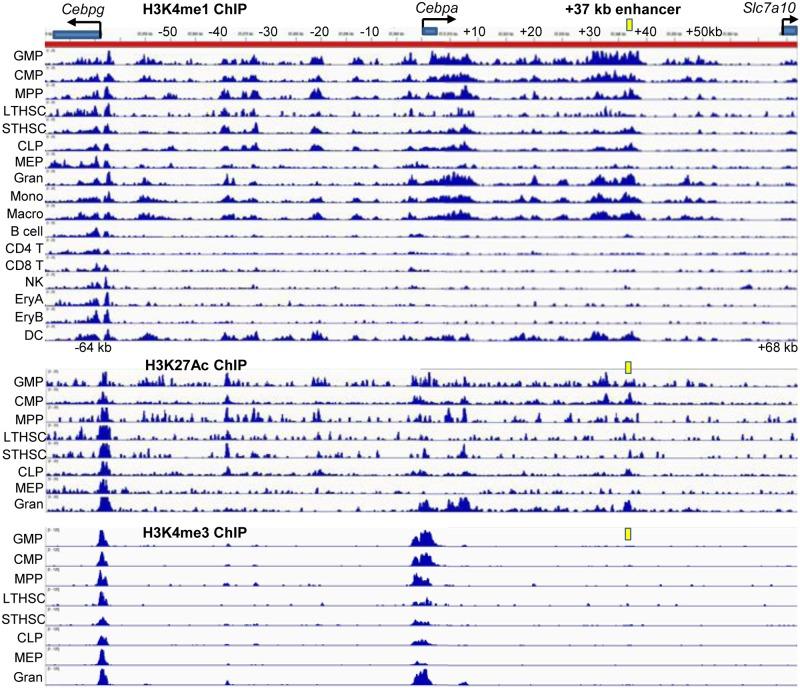
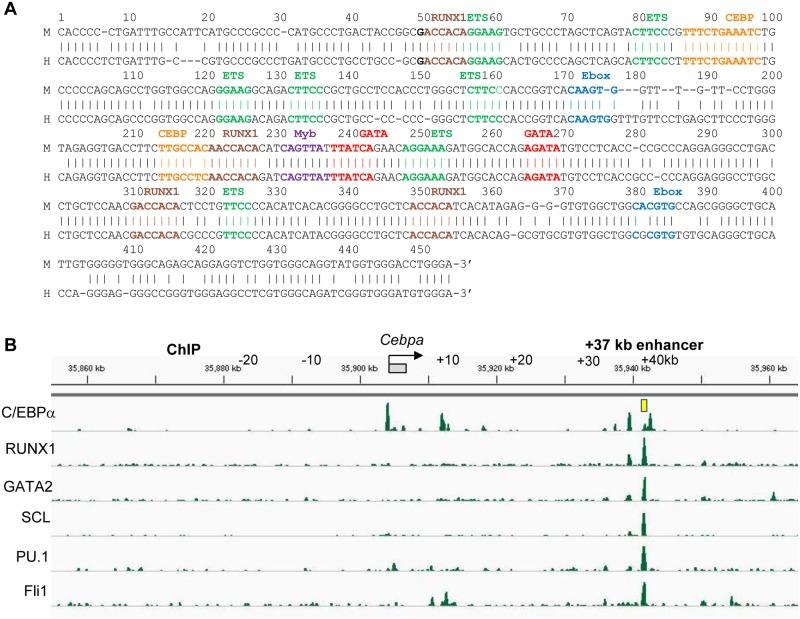
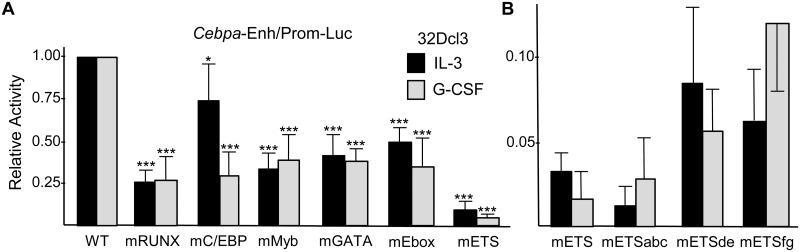
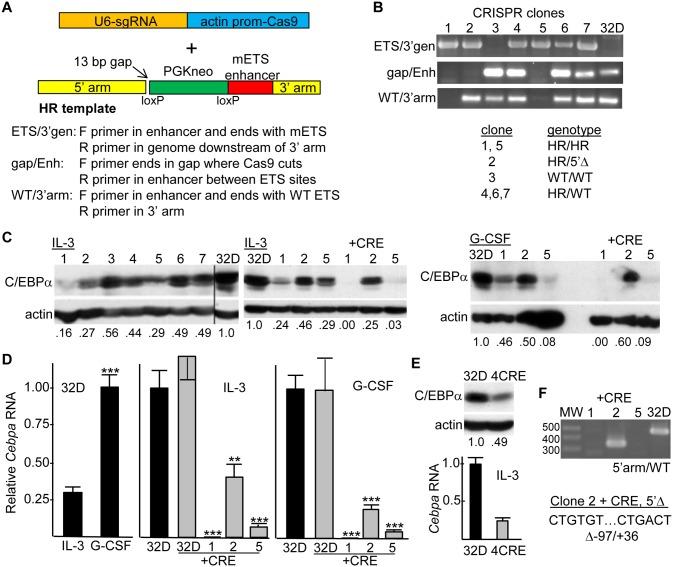
The murine Cebpa gene contains an evolutionarily conserved 453 bp enhancer located at +37 kb that, together with its promoter, directs expression to myeloid progenitors and to long-term hematopoietic stem cells in transgenic mice. In human acute myeloid leukemia cases, the enhancer lacks point mutations but binds the RUNX1-ETO oncoprotein. The enhancer contains the H3K4me1 and H3K27Ac histone modifications, denoting an active enhancer, at progressively increasing levels as long-term hematopoietic stem cells transition to granulocyte-monocyte progenitors. We previously identified four enhancer sites that bind RUNX1 and demonstrated that their integrity is required for maximal enhancer activity in 32Dcl3 myeloid cells. The +37 kb Cebpa enhancer also contains C/EBP, Ets factor, Myb, GATA, and E-box consensus sites conserved in the human +42 kb CEBPA enhancer. Mutation of the two C/EBP, seven Ets, one Myb, two GATA, or two E-box sites reduces activity of an enhancer-promoter reporter in 32Dcl3 cells. In 293T gel shift assays, exogenous C/EBPα binds both C/EBP sites, c-Myb binds the Myb site, PU.1 binds the second Ets site, PU.1, Fli-1, ERG, and Ets1 bind the sixth Ets site, GATA2 binds both GATA sites, and SCL binds the second E-box. Endogenous hematopoietic RUNX1, PU.1, Fli-1, ERG, C/EBPα, GATA2, and SCL were previously shown to bind the enhancer, and we find that endogenous PU.1 binds the second Ets site in 32Dcl3 cells. Using CRISPR/Cas9, we developed 32Dcl3 lines in which the wild-type enhancer alleles are replaced with a variant mutant in the seven Ets sites. These lines have 20-fold reduced Cebpa mRNA when cultured in IL-3 or G-CSF, demonstrating a critical requirement for enhancer integrity for optimal Cebpa expression. In addition, these results indicate that the +37 kb Cebpa enhancer is the focus of multiple regulatory transcriptional pathways that impact its expression during normal hematopoiesis and potentially during myeloid transformation.
小鼠Cebpa基因包含一个位于+37 kb处的进化保守的453 bp增强子,该增强子与其启动子一起,在转基因小鼠中指导向髓系祖细胞和长期造血干细胞的表达。在人类急性髓系白血病病例中,该增强子没有点突变,但能结合RUNX1-ETO癌蛋白。随着长期造血干细胞向粒细胞-单核细胞祖细胞转变,该增强子含有H3K4me1和H3K27Ac组蛋白修饰,表明其为活性增强子,且修饰水平逐渐增加。我们之前鉴定出四个结合RUNX1的增强子位点,并证明它们的完整性是32Dcl3髓系细胞中最大增强子活性所必需的。+37 kb的Cebpa增强子还包含在人类+42 kb CEBPA增强子中保守的C/EBP、Ets因子、Myb、GATA和E-box共有位点。两个C/EBP、七个Ets、一个Myb、两个GATA或两个E-box位点的突变会降低32Dcl3细胞中增强子-启动子报告基因的活性。在293T凝胶迁移实验中,外源性C/EBPα结合两个C/EBP位点,c-Myb结合Myb位点,PU.1结合第二个Ets位点,PU.1、Fli-1、ERG和Ets1结合第六个Ets位点,GATA2结合两个GATA位点,SCL结合第二个E-box。先前已证明内源性造血RUNX1、PU.1、Fli-1、ERG、C/EBPα、GATA2和SCL能结合该增强子,并且我们发现内源性PU.1在32Dcl3细胞中结合第二个Ets位点。使用CRISPR/Cas9,我们构建了32Dcl3细胞系,其中野生型增强子等位基因被七个Ets位点的变体突变体取代。当在IL-3或G-CSF中培养时,这些细胞系的Cebpa mRNA减少了20倍,这表明增强子完整性对于最佳Cebpa表达至关重要。此外,这些结果表明+37 kb的Cebpa增强子是多个调控转录途径的焦点,这些途径在正常造血过程中以及潜在的髓系转化过程中影响其表达。


 Zotero 插件