
通过氧化光氧化还原催化实现胺功能化:方法学发展与复杂分子合成
Amine Functionalization via Oxidative Photoredox Catalysis: Methodology Development and Complex Molecule Synthesis.
作者信息
Beatty Joel W, Stephenson Corey R J
机构信息
Department of Chemistry, University of Michigan, Ann Arbor, Michigan 48109, United States.
出版信息
Acc Chem Res. 2015 May 19;48(5):1474-84. doi: 10.1021/acs.accounts.5b00068. Epub 2015 May 7.
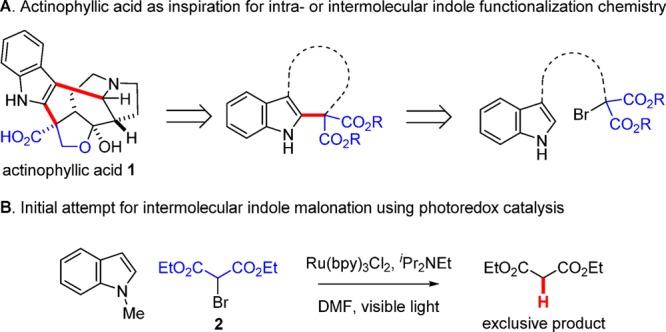
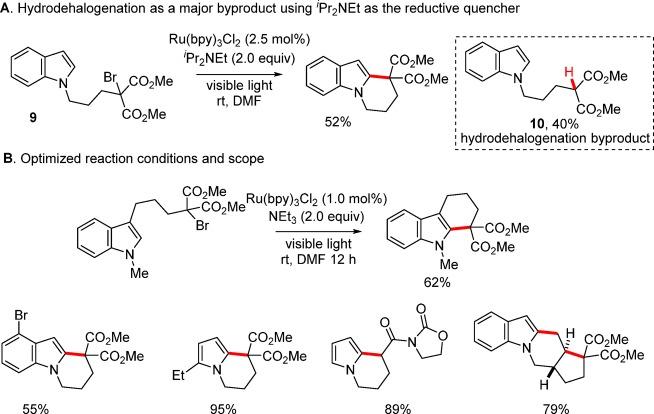
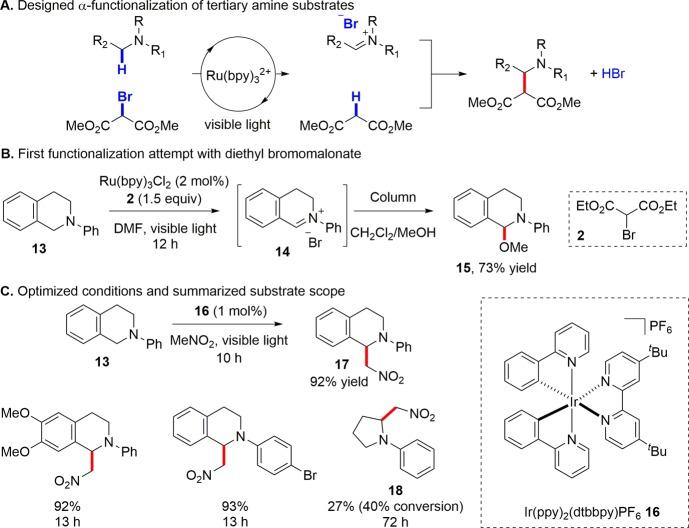
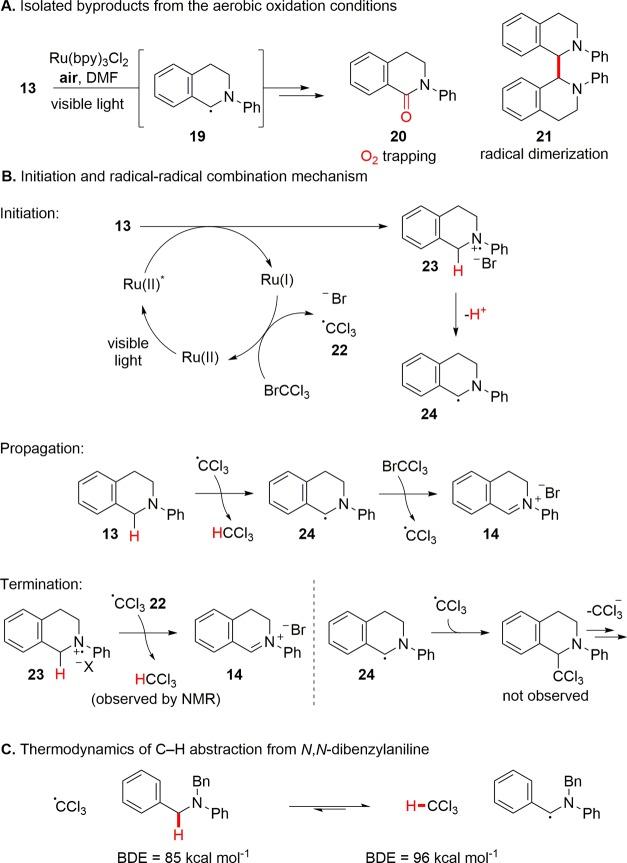
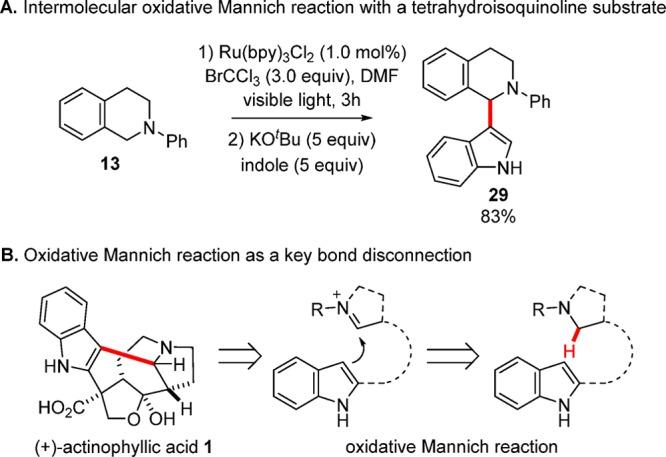
While the use of visible light to drive chemical reactivity is of high importance to the development of environmentally benign chemical transformations, the concomitant use of a stoichiometric electron donor or acceptor is often required to steer the desired redox behavior of these systems. The low-cost and ubiquity of tertiary amine bases has led to their widespread use as reductive additives in photoredox catalysis. Early use of trialkylamines in this context was focused on their role as reductive excited state quenchers of the photocatalyst, which in turn provides a more highly reducing catalytic intermediate. In this Account, we discuss some of the observations and thought processes that have led from our use of amines as reductive additives to their use as complex substrates and intermediates for natural product synthesis. Early attempts by our group to construct key carbon-carbon bonds via free-radical intermediates led to the observation that some trialkylamines readily behave as efficient hydrogen atom donors under redox-active photochemical conditions. In the wake of in-depth mechanistic studies published in the 1970s, 1980s and 1990s, this understanding has in turn allowed for a systematic approach to the design of a number of photochemical methodologies through rational tuning of the amine component. Minimization of the C-H donicity of the amine additive was found to promote desired C-C bond formation in a number of contexts, and subsequent elucidation of the amine's redox fate has sparked a reevaluation of the amine's role from that of reagent to that of substrate. The reactivity of tertiary amines in these photochemical systems is complex, and allows for a number of mechanistic possibilities that are not necessarily mutually exclusive. A variety of combinations of single-electron oxidation, C-H abstraction, deprotonation, and β-scission result in the formation of reactive intermediates such as α-amino radicals and iminium ions. These processes have been explored in depth in the photochemical literature and have resulted in a firm mechanistic grasp of the behavior of amine radical cations in fundamental systems. Harnessing the synthetic potential of these transient species represents an ongoing challenge for the controlled functionalization of amine substrates, because these mechanistic possibilities may result in undesired byproduct formation or substrate decomposition. The presence of tertiary amines in numerous alkaloids, pharmaceuticals, and agrochemicals lends credence to the potential utility of this chemistry in natural product synthesis, and herein we will discuss how these transformations might be controlled for synthetic purposes.
虽然利用可见光驱动化学反应对于环境友好型化学转化的发展至关重要,但通常需要同时使用化学计量的电子供体或受体来引导这些体系所需的氧化还原行为。叔胺碱的低成本和普遍性导致它们在光氧化还原催化中作为还原添加剂被广泛使用。在这种情况下,早期使用三烷基胺主要关注它们作为光催化剂的还原激发态猝灭剂的作用,这反过来又提供了一种还原性更强的催化中间体。在本综述中,我们讨论了一些观察结果和思考过程,这些观察结果和思考过程促使我们从将胺用作还原添加剂,转变为将其用作天然产物合成的复杂底物和中间体。我们小组早期试图通过自由基中间体构建关键碳 - 碳键的尝试,导致观察到一些三烷基胺在氧化还原活性光化学条件下很容易表现为有效的氢原子供体。在20世纪70年代、80年代和90年代发表的深入机理研究之后,这种认识反过来又使得通过合理调整胺组分,系统地设计多种光化学方法成为可能。发现在许多情况下,使胺添加剂的C - H给体能力最小化有助于促进所需的C - C键形成,随后对胺的氧化还原命运的阐明引发了对胺从试剂角色到底物角色的重新评估。叔胺在这些光化学体系中的反应性很复杂,并且存在多种不一定相互排斥的机理可能性。单电子氧化、C - H抽象、去质子化和β - 断裂的各种组合导致形成反应性中间体,如α - 氨基自由基和亚胺离子。这些过程在光化学文献中已被深入探讨,并使我们对基础体系中胺自由基阳离子的行为有了坚实的机理理解。利用这些瞬态物种的合成潜力对于胺底物的可控官能化来说仍然是一个持续的挑战,因为这些机理可能性可能导致不需要的副产物形成或底物分解。许多生物碱、药物和农用化学品中存在叔胺,这证明了这种化学方法在天然产物合成中的潜在效用,在此我们将讨论如何为了合成目的控制这些转化过程。








 Zotero 插件