
等热量高脂饮食的脂肪酸组成差异改变雄性C57BL/6JOlaHsd小鼠的代谢灵活性。
A Difference in Fatty Acid Composition of Isocaloric High-Fat Diets Alters Metabolic Flexibility in Male C57BL/6JOlaHsd Mice.
作者信息
Duivenvoorde Loes P M, van Schothorst Evert M, Swarts Hans M, Kuda Ondrej, Steenbergh Esther, Termeulen Sander, Kopecky Jan, Keijer Jaap
机构信息
Human and Animal Physiology, Wageningen University, Wageningen, The Netherlands.
Department of Adipose Tissue Biology, Institute of Physiology of the Academy of Sciences of the Czech Republic v.v.i., Prague, Czech Republic.
出版信息
PLoS One. 2015 Jun 22;10(6):e0128515. doi: 10.1371/journal.pone.0128515. eCollection 2015.
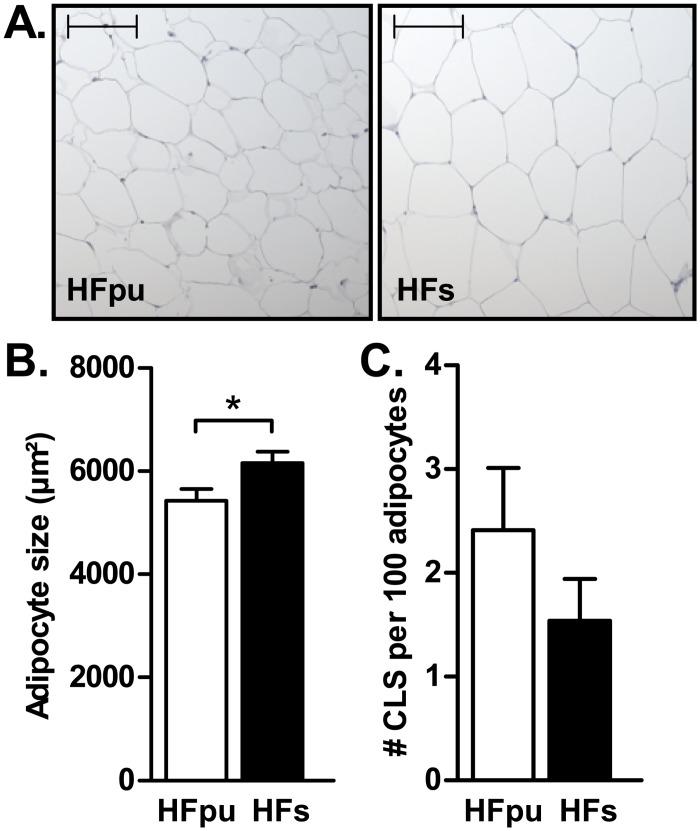
Poly-unsaturated fatty acids (PUFAs) are considered to be healthier than saturated fatty acids (SFAs), but others postulate that especially the ratio of omega-6 to omega-3 PUFAs (n6/n3 ratio) determines health. Health can be determined with biomarkers, but functional health status is likely better reflected by challenge tests that assess metabolic flexibility. The aim of this study was to determine the effect of high-fat diets with different fatty acid compositions, but similar n6/n3 ratio, on metabolic flexibility. Therefore, adult male mice received isocaloric high-fat diets with either predominantly PUFAs (HFpu diet) or predominantly SFAs (HFs diet) but similar n6/n3 ratio for six months, during and after which several biomarkers for health were measured. Metabolic flexibility was assessed by the response to an oral glucose tolerance test, a fasting and re-feeding test and an oxygen restriction test (OxR; normobaric hypoxia). The latter two are non-invasive, indirect calorimetry-based tests that measure the adaptive capacity of the body as a whole. We found that the HFs diet, compared to the HFpu diet, increased mean adipocyte size, liver damage, and ectopic lipid storage in liver and muscle; although, we did not find differences in body weight, total adiposity, adipose tissue health, serum adipokines, whole body energy balance, or circadian rhythm between HFs and HFpu mice. HFs mice were, furthermore, less flexible in their response to both fasting- re-feeding and OxR, while glucose tolerance was indistinguishable. To conclude, the HFs versus the HFpu diet increased ectopic fat storage, liver damage, and mean adipocyte size and reduced metabolic flexibility in male mice. This study underscores the physiological relevance of indirect calorimetry-based challenge tests.
多不饱和脂肪酸(PUFAs)被认为比饱和脂肪酸(SFAs)更健康,但也有人提出,特别是ω-6与ω-3多不饱和脂肪酸的比例(n6/n3比例)决定健康状况。健康状况可以通过生物标志物来确定,但功能健康状况可能通过评估代谢灵活性的激发试验能得到更好的反映。本研究的目的是确定具有不同脂肪酸组成但n6/n3比例相似的高脂饮食对代谢灵活性的影响。因此,成年雄性小鼠接受了等热量的高脂饮食,一种主要是多不饱和脂肪酸的饮食(HFpu饮食)或主要是饱和脂肪酸的饮食(HFs饮食),但n6/n3比例相似,持续六个月,在此期间及之后测量了几种健康生物标志物。通过口服葡萄糖耐量试验、禁食和再喂养试验以及氧限制试验(OxR;常压缺氧)的反应来评估代谢灵活性。后两种是基于非侵入性间接量热法的试验,可测量整个身体的适应能力。我们发现,与HFpu饮食相比,HFs饮食增加了平均脂肪细胞大小、肝损伤以及肝脏和肌肉中的异位脂质储存;尽管如此,我们并未发现HFs小鼠和HFpu小鼠在体重、总脂肪量、脂肪组织健康、血清脂肪因子、全身能量平衡或昼夜节律方面存在差异。此外,HFs小鼠对禁食-再喂养和OxR的反应灵活性较低,而葡萄糖耐量没有差异。总之,与HFpu饮食相比,HFs饮食增加了雄性小鼠的异位脂肪储存、肝损伤和平均脂肪细胞大小,并降低了代谢灵活性。本研究强调了基于间接量热法的激发试验的生理相关性。




 Zotero 插件