
大鼠模型中的连续几代对恒定的致肥胖环境反应不同。
Successive Generations in a Rat Model Respond Differently to a Constant Obesogenic Environment.
作者信息
Tait Alice H, Raubenheimer David, Green Mark P, Cupido Cinda L, Gluckman Peter D, Vickers Mark H
机构信息
Liggins Institute and Gravida: National Centre for Growth and Development, University of Auckland, Auckland, New Zealand; Institute of Natural and Mathematical Sciences, Massey University, Albany, Auckland, New Zealand.
Institute of Natural and Mathematical Sciences, Massey University, Albany, Auckland, New Zealand; The Charles Perkins Centre and Faculty of Veterinary Science and School of Biological Sciences, The University of Sydney, Sydney, New South Wales, Australia.
出版信息
PLoS One. 2015 Jul 1;10(7):e0129779. doi: 10.1371/journal.pone.0129779. eCollection 2015.
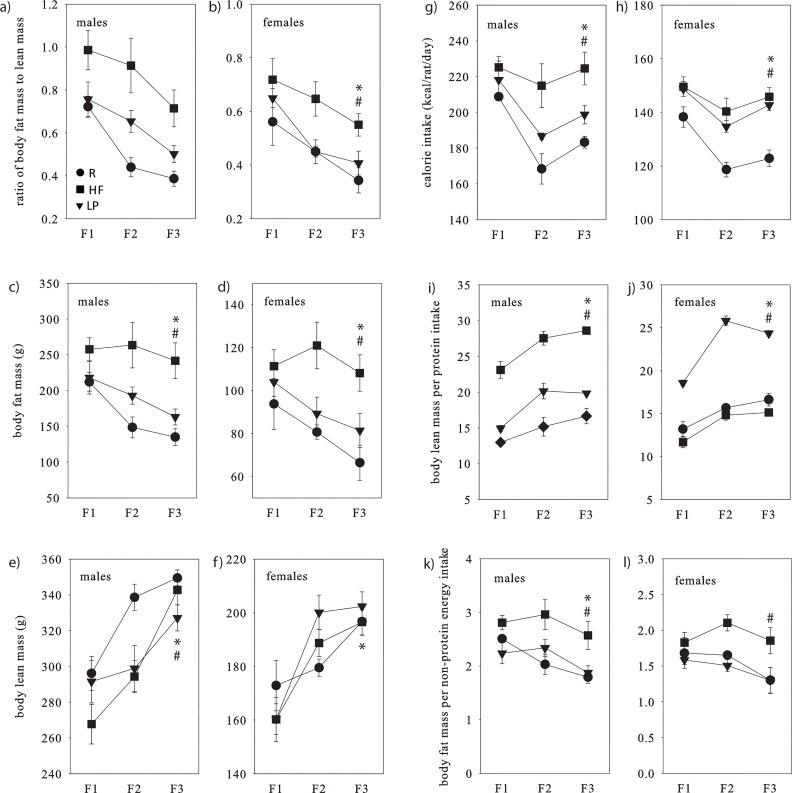
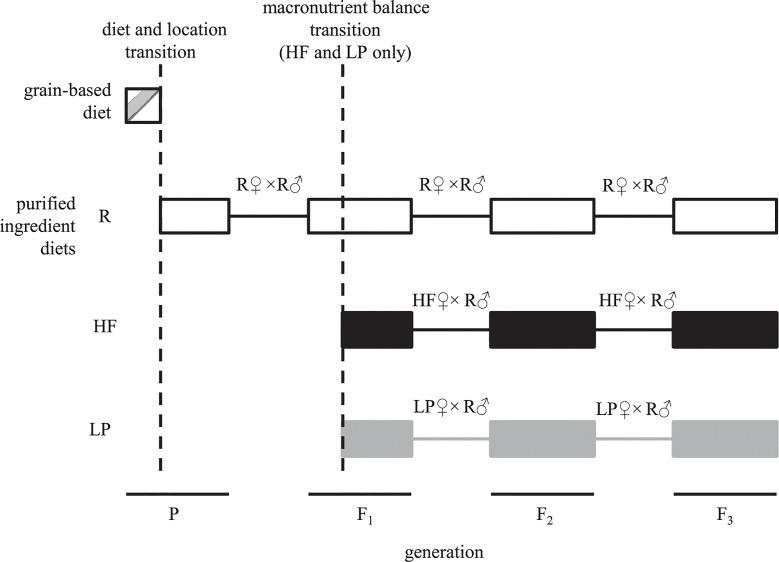
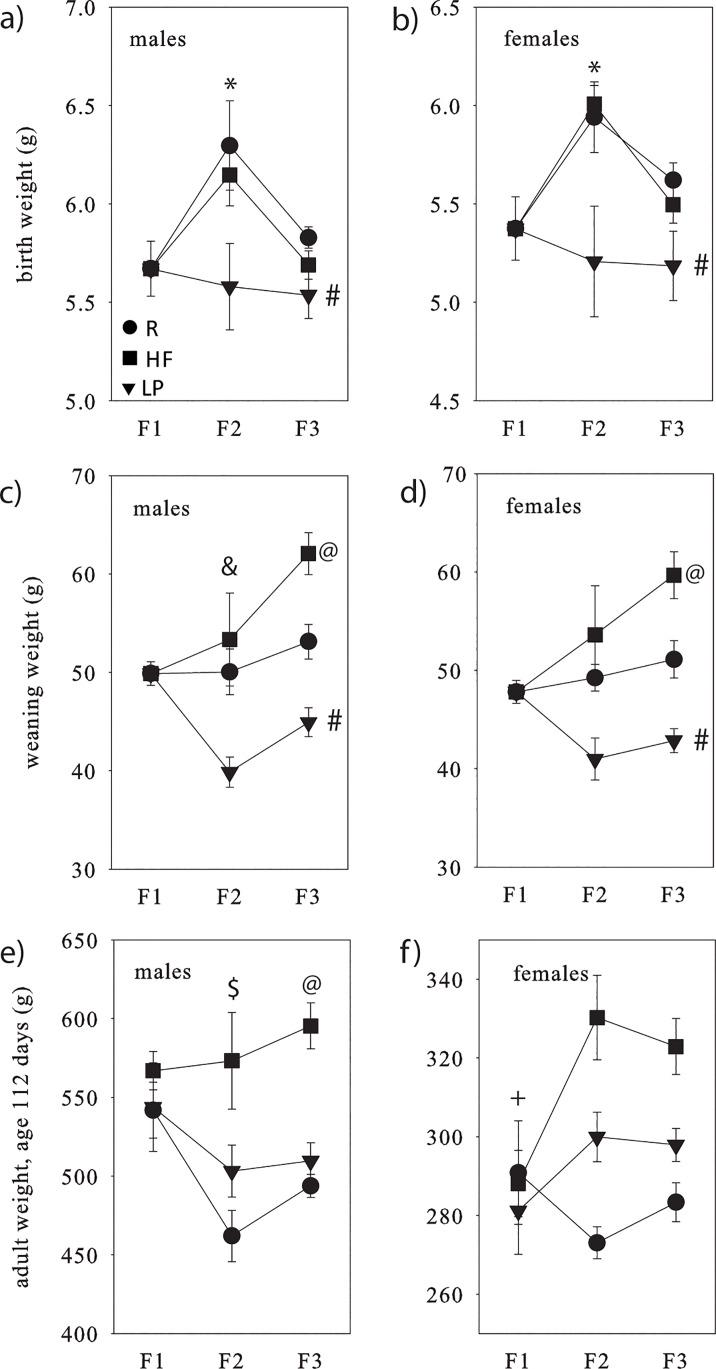
Research has shown that if a mother experiences a transitory perturbation to her environment during pregnancy or lactation, there are transgenerational consequences often involving a disordered metabolic phenotype in first generation offspring with recovery across subsequent generations. In contrast, little is known about the nature of the transgenerational response of offspring when a mother experiences a perturbation that is not transitory but instead persists across generations. Our study, using a rat model, subjected the parental generation to a change in environment and concomitant shift from a grain-based to obesogenic diets to generate an adipose phenotype in first generation offspring emulating a common scenario in human urbanisation and migration. We then investigated whether the obese phenotype was stable across generations when maintained in the transitioned environment, and whether dietary macronutrient balance affected the response. We found that second and third generation offspring had a reduced body fat to lean mass ratio and a reduced appetite relative to first generation offspring, irrespective of dietary macronutrient balance. The trajectory of this response is suggestive of a reduction in chronic disease risk across generations. This is one of the first studies, to our knowledge, to investigate the transgenerational response following parental transition to a persistent obesogenic environment, and to demonstrate that successive generations respond differently to this constant environment.
研究表明,如果母亲在怀孕或哺乳期间经历环境的短暂扰动,会产生跨代影响,通常涉及第一代后代的代谢表型紊乱,且在后续几代中恢复正常。相比之下,当母亲经历的扰动不是短暂的而是跨代持续时,后代跨代反应的本质却鲜为人知。我们的研究使用大鼠模型,使亲代经历环境变化以及从基于谷物的饮食向致肥胖饮食的同步转变,从而在第一代后代中产生脂肪表型,模拟人类城市化和迁移中的常见情况。然后,我们研究了在转变后的环境中维持肥胖表型时,其是否在各代间保持稳定,以及膳食常量营养素平衡是否会影响这种反应。我们发现,与第一代后代相比,第二代和第三代后代的体脂与瘦体重比降低,食欲也降低,且与膳食常量营养素平衡无关。这种反应轨迹表明各代患慢性病的风险在降低。据我们所知,这是首批研究亲代转变到持续致肥胖环境后的跨代反应,并证明连续几代对这种恒定环境反应不同的研究之一。
 Zotero 插件