
抑制有氧糖酵解可抑制Akt/mTOR/HIF-1α轴并恢复抗雌激素耐药乳腺癌细胞对他莫昔芬的敏感性。
Inhibition of Aerobic Glycolysis Represses Akt/mTOR/HIF-1α Axis and Restores Tamoxifen Sensitivity in Antiestrogen-Resistant Breast Cancer Cells.
作者信息
Woo Yu Mi, Shin Yubin, Lee Eun Ji, Lee Sunyoung, Jeong Seung Hun, Kong Hyun Kyung, Park Eun Young, Kim Hyoung Kyu, Han Jin, Chang Minsun, Park Jong-Hoon
机构信息
Department of Life Systems, Sookmyung Women's University, 52 Hyochangwon Road, Yongsan-gu, Seoul, Republic of Korea.
National Research Laboratory for Mitochondrial Signaling Laboratory, Cardiovascular and Metabolic Disease Center, Department of Physiology, College of Medicine, Department of Health Sciences and Technology, Graduate School, Inje University, Gaegume 2 dong, Busanjin-gu, Busan.
出版信息
PLoS One. 2015 Jul 9;10(7):e0132285. doi: 10.1371/journal.pone.0132285. eCollection 2015.
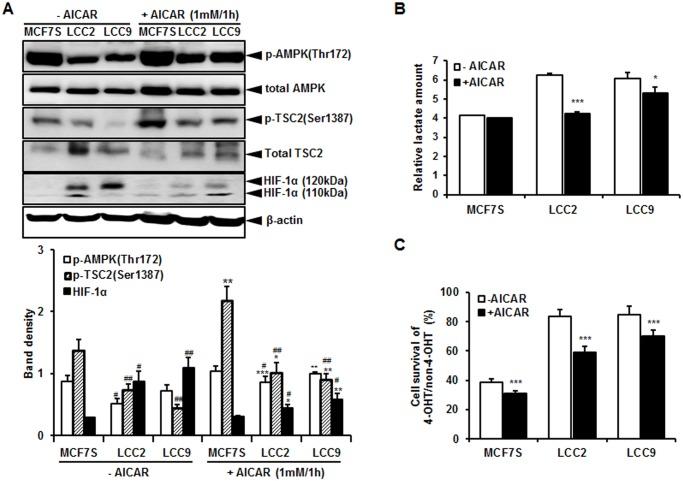
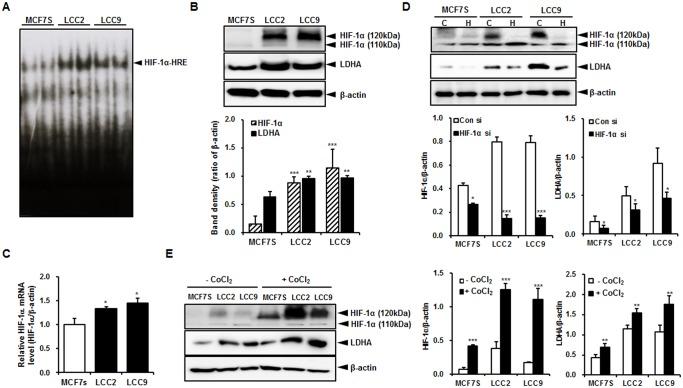
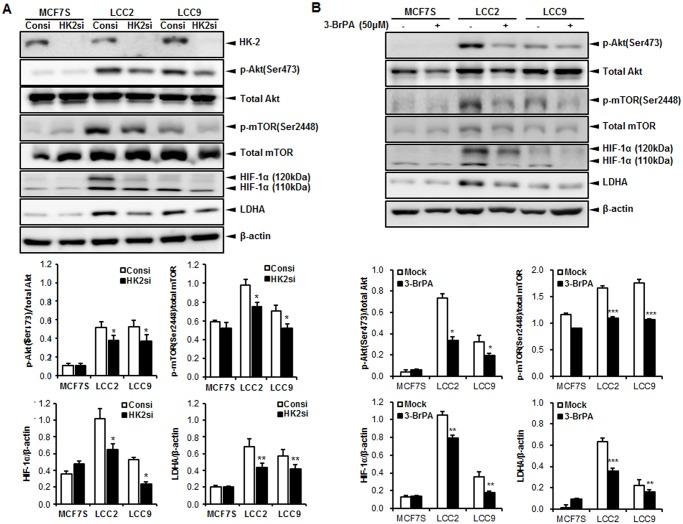
Tamoxifen resistance is often observed in the majority of estrogen receptor-positive breast cancers and it remains as a serious clinical problem in breast cancer management. Increased aerobic glycolysis has been proposed as one of the mechanisms for acquired resistance to chemotherapeutic agents in breast cancer cells such as adriamycin. Herein, we report that the glycolysis rates in LCC2 and LCC9--tamoxifen-resistant human breast cancer cell lines derived from MCF7--are higher than those in MCF7S, which is the parent MCF7 subline. Inhibition of key glycolytic enzyme such as hexokinase-2 resulted in cell growth retardation at higher degree in LCC2 and LCC9 than that in MCF7S. This implies that increased aerobic glycolysis even under O2-rich conditions, a phenomenon known as the Warburg effect, is closely associated with tamoxifen resistance. We found that HIF-1α is activated via an Akt/mTOR signaling pathway in LCC2 and LCC9 cells without hypoxic condition. Importantly, specific inhibition of hexokinase-2 suppressed the activity of Akt/mTOR/HIF-1α axis in LCC2 and LCC9 cells. In addition, the phosphorylated AMPK which is a negative regulator of mTOR was decreased in LCC2 and LCC9 cells compared to MCF7S. Interestingly, either the inhibition of mTOR activity or increase in AMPK activity induced a reduction in lactate accumulation and cell survival in the LCC2 and LCC9 cells. Taken together, our data provide evidence that development of tamoxifen resistance may be driven by HIF-1α hyperactivation via modulation of Akt/mTOR and/or AMPK signaling pathways. Therefore, we suggest that the HIF-1α hyperactivation is a critical marker of increased aerobic glycolysis in accordance with tamoxifen resistance and thus restoration of aerobic glycolysis may be novel therapeutic target for treatment of tamoxifen-resistant breast cancer.
在大多数雌激素受体阳性乳腺癌中常观察到他莫昔芬耐药现象,这仍然是乳腺癌治疗中的一个严重临床问题。有氧糖酵解增加被认为是乳腺癌细胞(如阿霉素)对化疗药物获得性耐药的机制之一。在此,我们报告,源自MCF7的LCC2和LCC9——他莫昔芬耐药人乳腺癌细胞系——的糖酵解速率高于其亲本MCF7亚系MCF7S。抑制关键糖酵解酶如己糖激酶-2导致LCC2和LCC9细胞生长阻滞的程度高于MCF7S。这意味着即使在富氧条件下有氧糖酵解增加,即所谓的瓦伯格效应,也与他莫昔芬耐药密切相关。我们发现,在无缺氧条件下,LCC2和LCC9细胞中HIF-1α通过Akt/mTOR信号通路被激活。重要的是,特异性抑制己糖激酶-2可抑制LCC2和LCC9细胞中Akt/mTOR/HIF-1α轴的活性。此外,与MCF7S相比,LCC2和LCC9细胞中作为mTOR负调节因子的磷酸化AMPK减少。有趣的是,抑制mTOR活性或增加AMPK活性均可导致LCC2和LCC9细胞中乳酸积累减少和细胞存活能力下降。综上所述,我们的数据表明,他莫昔芬耐药的发生可能是由HIF-1α通过调节Akt/mTOR和/或AMPK信号通路过度激活所致。因此,我们认为HIF-1α过度激活是与他莫昔芬耐药相关的有氧糖酵解增加的关键标志物,因此恢复有氧糖酵解可能是治疗他莫昔芬耐药乳腺癌的新治疗靶点。


 Zotero 插件