
用于检测和表征食管癌、肝细胞癌、甲状腺癌和卵巢癌患者循环肿瘤细胞的高分辨率成像。
High-resolution imaging for the detection and characterisation of circulating tumour cells from patients with oesophageal, hepatocellular, thyroid and ovarian cancers.
作者信息
Dent Barry M, Ogle Laura F, O'Donnell Rachel L, Hayes Nicholas, Malik Ujjal, Curtin Nicola J, Boddy Alan V, Plummer E Ruth, Edmondson Richard J, Reeves Helen L, May Felicity E B, Jamieson David
机构信息
Northern Institute for Cancer Research, Newcastle University, Newcastle upon Tyne, United Kingdom.
Newcastle upon Tyne Hospitals NHS Foundation Trust, Northern Oesophago-Gastric Cancer Unit, Newcastle upon Tyne, United Kingdom.
出版信息
Int J Cancer. 2016 Jan 1;138(1):206-16. doi: 10.1002/ijc.29680. Epub 2015 Aug 19.
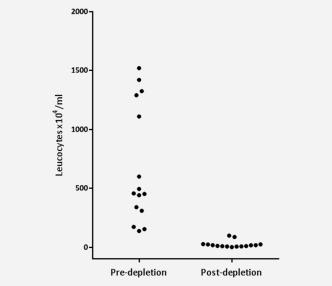
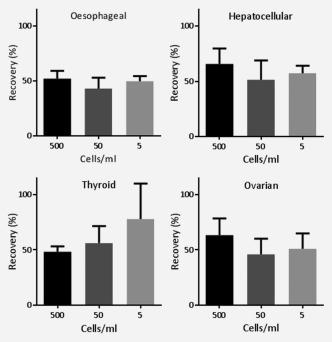
Interest has increased in the potential role of circulating tumour cells in cancer management. Most cell-based studies have been designed to determine the number of circulating tumour cells in a given volume of blood. Ability to understand the biology of the cancer cells would increase the clinical potential. The purpose of this study was to develop and validate a novel, widely applicable method for detection and characterisation of circulating tumour cells. Cells were imaged with an ImageStream(X) imaging flow cytometer which allows detection of expression of multiple biomarkers on each cell and produces high-resolution images. Depletion of haematopoietic cells was by red cell lysis, leukocyte common antigen CD45 depletion and differential centrifugation. Expression of epithelial cell adhesion molecule, cytokeratins, tumour-type-specific biomarkers and CD45 was detected by immunofluorescence. Nuclei were identified with DAPI or DRAQ5 and brightfield images of cells were collected. The method is notable for the dearth of cell damage, recoveries greater than 50%, speed and absence of reliance on the expression of a single biomarker by the tumour cells. The high-quality images obtained ensure confidence in the specificity of the method. Validation of the methodology on samples from patients with oesophageal, hepatocellular, thyroid and ovarian cancers confirms its utility and specificity. Importantly, this adaptable method is applicable to all tumour types including those of nonepithelial origin. The ability to measure simultaneously the expression of multiple biomarkers will facilitate analysis of the cancer cell biology of individual circulating tumour cells.
循环肿瘤细胞在癌症管理中的潜在作用已引发越来越多的关注。大多数基于细胞的研究旨在确定给定体积血液中循环肿瘤细胞的数量。了解癌细胞生物学特性的能力将增加其临床应用潜力。本研究的目的是开发并验证一种新型的、广泛适用的循环肿瘤细胞检测及表征方法。使用ImageStream(X)成像流式细胞仪对细胞进行成像,该仪器能够检测每个细胞上多种生物标志物的表达并生成高分辨率图像。通过红细胞裂解、白细胞共同抗原CD45去除和差速离心来去除造血细胞。通过免疫荧光检测上皮细胞粘附分子、细胞角蛋白、肿瘤类型特异性生物标志物和CD45的表达。用DAPI或DRAQ5鉴定细胞核,并收集细胞的明场图像。该方法的显著特点是细胞损伤少、回收率大于50%、速度快且不依赖肿瘤细胞单一生物标志物的表达。所获得的高质量图像确保了对该方法特异性的信心。对来自食管癌、肝细胞癌、甲状腺癌和卵巢癌患者样本的方法验证证实了其实用性和特异性。重要的是,这种适应性方法适用于所有肿瘤类型,包括非上皮来源的肿瘤。同时测量多种生物标志物表达的能力将有助于分析单个循环肿瘤细胞的癌细胞生物学特性。



 Zotero 插件