
在各种体外和离体HIV-1潜伏模型中对潜伏期逆转剂组合进行的深入比较发现,苔藓抑素-1+JQ1和 ingenol-B+JQ1能有效重新激活病毒基因表达。
An In-Depth Comparison of Latency-Reversing Agent Combinations in Various In Vitro and Ex Vivo HIV-1 Latency Models Identified Bryostatin-1+JQ1 and Ingenol-B+JQ1 to Potently Reactivate Viral Gene Expression.
作者信息
Darcis Gilles, Kula Anna, Bouchat Sophie, Fujinaga Koh, Corazza Francis, Ait-Ammar Amina, Delacourt Nadège, Melard Adeline, Kabeya Kabamba, Vanhulle Caroline, Van Driessche Benoit, Gatot Jean-Stéphane, Cherrier Thomas, Pianowski Luiz F, Gama Lucio, Schwartz Christian, Vila Jorge, Burny Arsène, Clumeck Nathan, Moutschen Michel, De Wit Stéphane, Peterlin B Matija, Rouzioux Christine, Rohr Olivier, Van Lint Carine
机构信息
Service of Molecular Virology, Institut de Biologie et de Médecine Moléculaires (IBMM), Université Libre de Bruxelles (ULB), Gosselies, Belgium; Service des Maladies Infectieuses, Université de Liège, Centre Hospitalier Universitaire (CHU) de Liège, Domaine Universitaire du Sart-Tilman, Liège, Belgium.
Service of Molecular Virology, Institut de Biologie et de Médecine Moléculaires (IBMM), Université Libre de Bruxelles (ULB), Gosselies, Belgium.
出版信息
PLoS Pathog. 2015 Jul 30;11(7):e1005063. doi: 10.1371/journal.ppat.1005063. eCollection 2015 Jul.
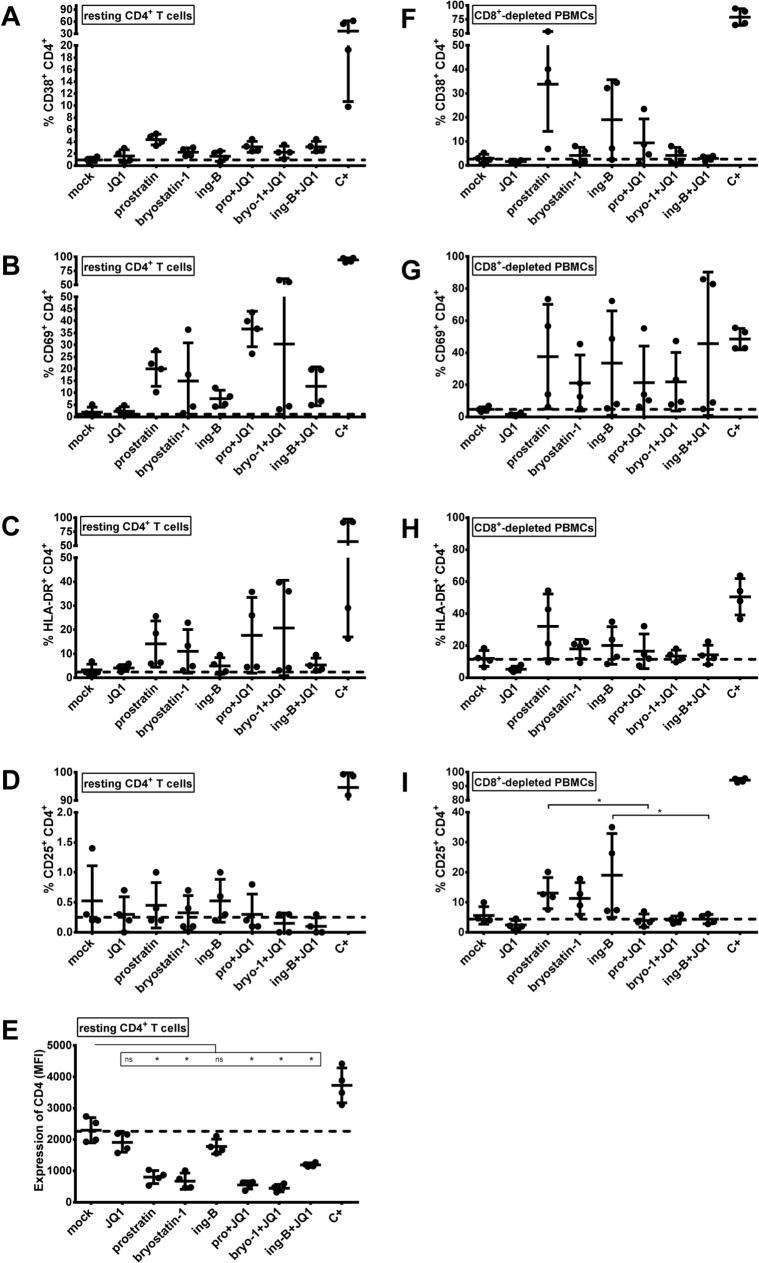
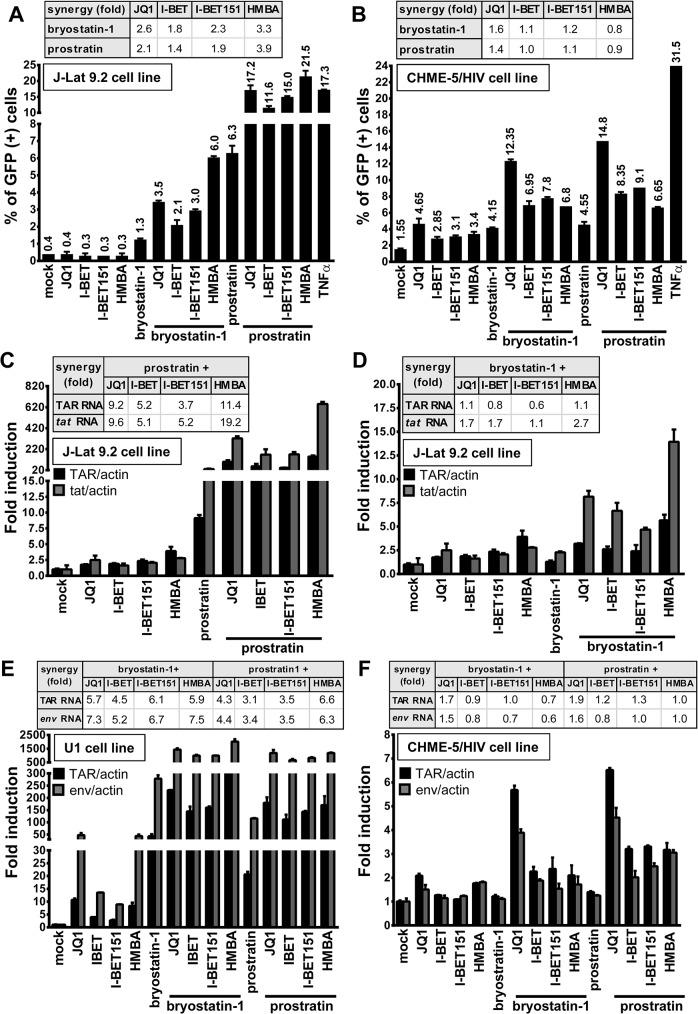
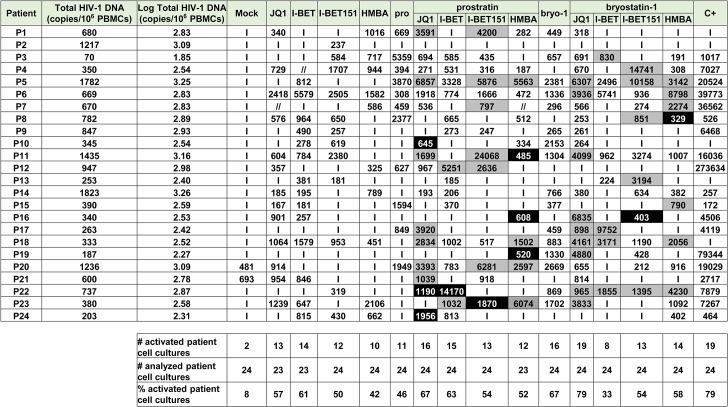
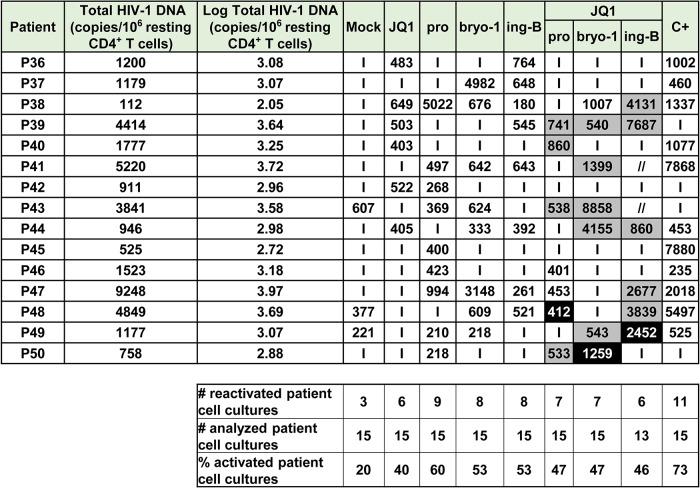
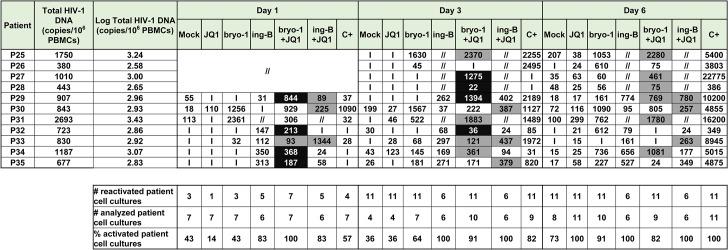
The persistence of latently infected cells in patients under combinatory antiretroviral therapy (cART) is a major hurdle to HIV-1 eradication. Strategies to purge these reservoirs are needed and activation of viral gene expression in latently infected cells is one promising strategy. Bromodomain and Extraterminal (BET) bromodomain inhibitors (BETi) are compounds able to reactivate latent proviruses in a positive transcription elongation factor b (P-TEFb)-dependent manner. In this study, we tested the reactivation potential of protein kinase C (PKC) agonists (prostratin, bryostatin-1 and ingenol-B), which are known to activate NF-κB signaling pathway as well as P-TEFb, used alone or in combination with P-TEFb-releasing agents (HMBA and BETi (JQ1, I-BET, I-BET151)). Using in vitro HIV-1 post-integration latency model cell lines of T-lymphoid and myeloid lineages, we demonstrated that PKC agonists and P-TEFb-releasing agents alone acted as potent latency-reversing agents (LRAs) and that their combinations led to synergistic activation of HIV-1 expression at the viral mRNA and protein levels. Mechanistically, combined treatments led to higher activations of P-TEFb and NF-κB than the corresponding individual drug treatments. Importantly, we observed in ex vivo cultures of CD8+-depleted PBMCs from 35 cART-treated HIV-1+ aviremic patients that the percentage of reactivated cultures following combinatory bryostatin-1+JQ1 treatment was identical to the percentage observed with anti-CD3+anti-CD28 antibodies positive control stimulation. Remarkably, in ex vivo cultures of resting CD4+ T cells isolated from 15 HIV-1+ cART-treated aviremic patients, the combinations bryostatin-1+JQ1 and ingenol-B+JQ1 released infectious viruses to levels similar to that obtained with the positive control stimulation. The potent effects of these two combination treatments were already detected 24 hours post-stimulation. These results constitute the first demonstration of LRA combinations exhibiting such a potent effect and represent a proof-of-concept for the co-administration of two different types of LRAs as a potential strategy to reduce the size of the latent HIV-1 reservoirs.
在接受联合抗逆转录病毒疗法(cART)的患者中,潜伏感染细胞的持续存在是根除HIV-1的主要障碍。需要清除这些病毒库的策略,而激活潜伏感染细胞中的病毒基因表达是一种有前景的策略。溴结构域和额外末端(BET)溴结构域抑制剂(BETi)是能够以依赖正性转录延伸因子b(P-TEFb)的方式重新激活潜伏前病毒的化合物。在本研究中,我们测试了蛋白激酶C(PKC)激动剂(prostratin、苔藓抑素-1和ingenol-B)的重新激活潜力,已知这些激动剂可激活NF-κB信号通路以及P-TEFb,单独使用或与释放P-TEFb的试剂(六亚甲基双乙酰胺和BETi(JQ1、I-BET、I-BET151))联合使用。使用T淋巴细胞和髓细胞系的体外HIV-1整合后潜伏模型细胞系,我们证明单独的PKC激动剂和释放P-TEFb的试剂可作为有效的潜伏逆转剂(LRA),并且它们的组合在病毒mRNA和蛋白质水平上导致HIV-1表达的协同激活。从机制上讲,联合治疗比相应的单一药物治疗导致P-TEFb和NF-κB的激活更高。重要的是,我们在来自35名接受cART治疗的HIV-1血清阴性患者经CD8+细胞耗竭的外周血单核细胞(PBMC)的体外培养物中观察到,联合苔藓抑素-1+JQ1治疗后重新激活的培养物百分比与抗CD3+抗CD28抗体阳性对照刺激所观察到的百分比相同。值得注意的是,在从15名接受cART治疗的HIV-1血清阴性患者中分离出的静息CD4+T细胞的体外培养物中,苔藓抑素-1+JQ1和ingenol-B+JQ1的组合释放出的感染性病毒水平与阳性对照刺激所获得的水平相似。在刺激后24小时就已检测到这两种联合治疗的强效作用。这些结果首次证明了LRA组合具有如此强效的作用,并代表了联合施用两种不同类型的LRA作为减少潜伏HIV-1病毒库大小的潜在策略的概念验证。




 Zotero 插件