
禽传染性支气管炎病毒S1糖蛋白区域的系统发育分析揭示了摩洛哥肉鸡群中一种新基因型的出现。
Phylogenetic analysis of avian infectious bronchitis virus S1 glycoprotein regions reveals emergence of a new genotype in Moroccan broiler chicken flocks.
作者信息
Fellahi Siham, El Harrak Mehdi, Ducatez Mariette, Loutfi Chafiqa, Koraichi Saad Ibn Souda, Kuhn Jens H, Khayi Slimane, El Houadfi Mohammed, Ennaji My Mustapha
机构信息
Unité de Pathologie Aviaire, Département de Pathologie et Santé Publique Vétérinaire, Institut Agronomique et Vétérinaire Hassan II, Rabat, 10000, Morocco.
Société de Produits Biologiques et Pharmaceutiques Vétérinaires, Rabat, 10000, Morocco.
出版信息
Virol J. 2015 Aug 4;12:116. doi: 10.1186/s12985-015-0347-8.
BACKGROUND
Infectious bronchitis virus (IBV), a major pathogen of commercial poultry flocks, circulates in the form of several serotypes/genotypes. Only a few amino-acid changes in the S1 subunit of wild-type IBVS proteins may result in mutants unaffected by current vaccines.
METHODS
Partial S1 gene sequences of 3 IBV isolates of the Moroccan Italy 02 genotype from vaccinated and unvaccinated broiler chicken flocks, located in southern and central regions of Morocco, were amplified by RT-PCR, sequenced, and aligned for phylogenetic and amino-acid similarity analyses.
RESULTS
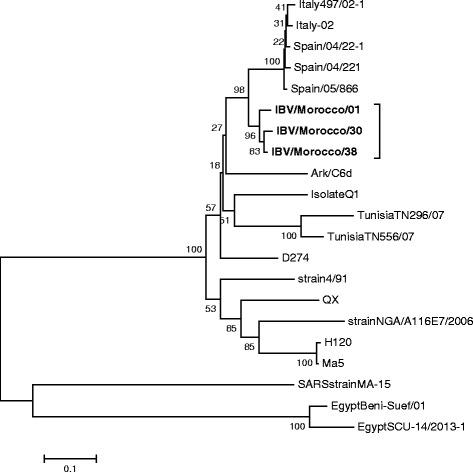
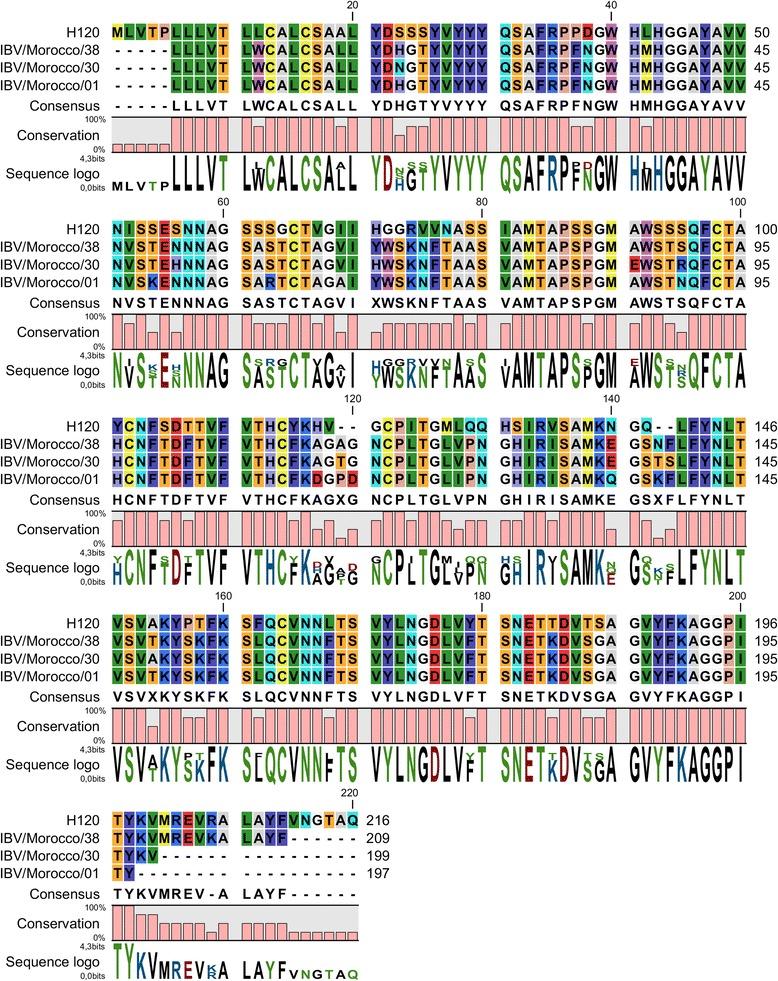
The three isolates were found genetically highly distant from known avian IBV based on partial sequences of their S1 genes: gammaCoV/chicken/Morocco/I01/2011(IBV/Morocco/01), gammaCoV/chicken/Morocco/I30/2010 (IBV/Morocco/30), and gammaCoV/chicken/Morocco/I38/2013 (IBV/Morocco/38), nucleotide sequence identities reached 89.5 % to 90.9 % among the three isolates. The deduced protein sequence identities ranged from 29.7 % (between IBV/Morocco/38 and Egypt SCU-14/2013-1) to 78.2 % (between IBV/Morocco/01 and Spain/05/866). Amino acid sequence comparison and phylogenetic analysis indicated the emergence of a new Moroccan genotype, clustering with regionally related isolates from Spain (Spain/05/866) and belonging to a new sub-genotype.
CONCLUSION
Our sequencing results demonstrate a co-circulation of wild-type infectious bronchitis viruses in broiler chickens. These results justify permanent monitoring of circulating strains in order to rationally modify vaccination strategies to make them appropriate to the evolving field situation.
背景
传染性支气管炎病毒(IBV)是商品家禽群的主要病原体,以几种血清型/基因型的形式传播。野生型IBV S蛋白S1亚基中只有少数氨基酸变化可能导致不受当前疫苗影响的突变体。
方法
通过RT-PCR扩增、测序并比对来自摩洛哥南部和中部地区接种和未接种疫苗的肉鸡群中3株意大利02基因型IBV分离株的部分S1基因序列,进行系统发育和氨基酸相似性分析。
结果
根据其S1基因的部分序列,发现这三株分离株在遗传上与已知禽IBV有很大差异:γ冠状病毒/鸡/摩洛哥/I01/2011(IBV/摩洛哥/01)、γ冠状病毒/鸡/摩洛哥/I30/2010(IBV/摩洛哥/30)和γ冠状病毒/鸡/摩洛哥/I38/2013(IBV/摩洛哥/38),三株分离株之间的核苷酸序列同一性达到89.5%至90.9%。推导的蛋白质序列同一性范围从29.7%(在IBV/摩洛哥/38和埃及SCU-14/2013-1之间)到78.2%(在IBV/摩洛哥/01和西班牙/05/866之间)。氨基酸序列比较和系统发育分析表明出现了一种新的摩洛哥基因型,与来自西班牙的区域相关分离株(西班牙/05/866)聚类,属于一个新的亚基因型。
结论
我们的测序结果表明野生型传染性支气管炎病毒在肉鸡中共同传播。这些结果证明有必要对流行毒株进行持续监测,以便合理修改疫苗接种策略,使其适应不断变化的现场情况。
 Zotero 插件