
膳食果胶可提高辐射损伤后肠道隐窝干细胞的存活率。
Dietary Pectin Increases Intestinal Crypt Stem Cell Survival following Radiation Injury.
作者信息
Sureban Sripathi M, May Randal, Qu Dongfeng, Chandrakesan Parthasarathy, Weygant Nathaniel, Ali Naushad, Lightfoot Stan A, Ding Kai, Umar Shahid, Schlosser Michael J, Houchen Courtney W
机构信息
Department of Medicine, The University of Oklahoma Health Sciences Center, Oklahoma City, Oklahoma, United States of America; Department of Veterans Affairs Medical Center, Oklahoma City, Oklahoma, United States of America; The Peggy and Charles Stephenson Cancer Center, Oklahoma City, Oklahoma, United States of America.
Department of Medicine, The University of Oklahoma Health Sciences Center, Oklahoma City, Oklahoma, United States of America; Department of Veterans Affairs Medical Center, Oklahoma City, Oklahoma, United States of America.
出版信息
PLoS One. 2015 Aug 13;10(8):e0135561. doi: 10.1371/journal.pone.0135561. eCollection 2015.
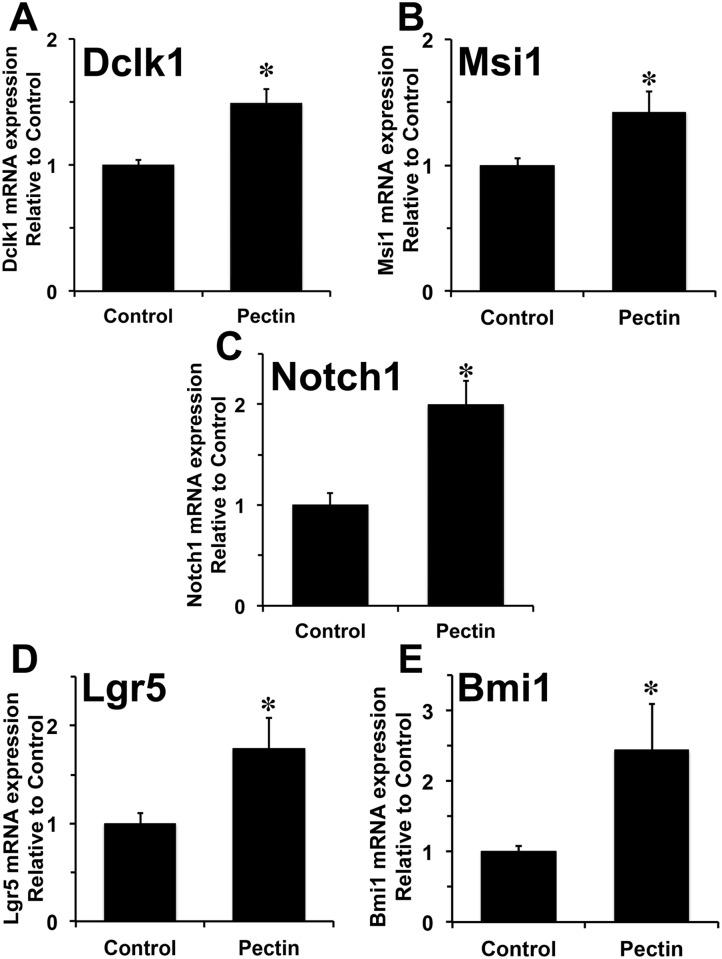
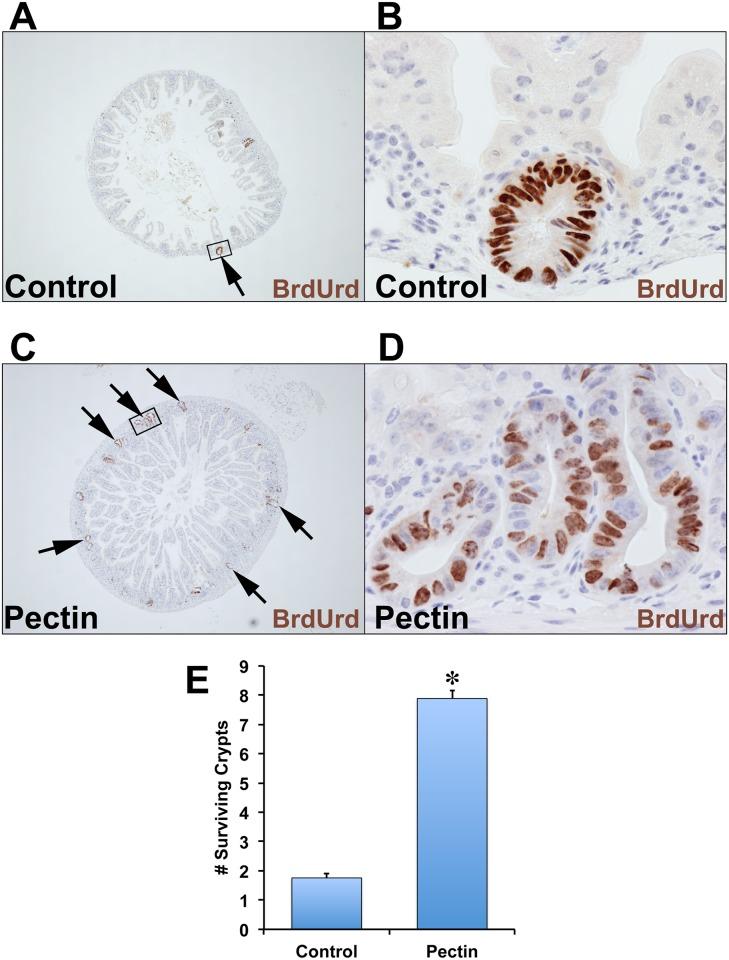
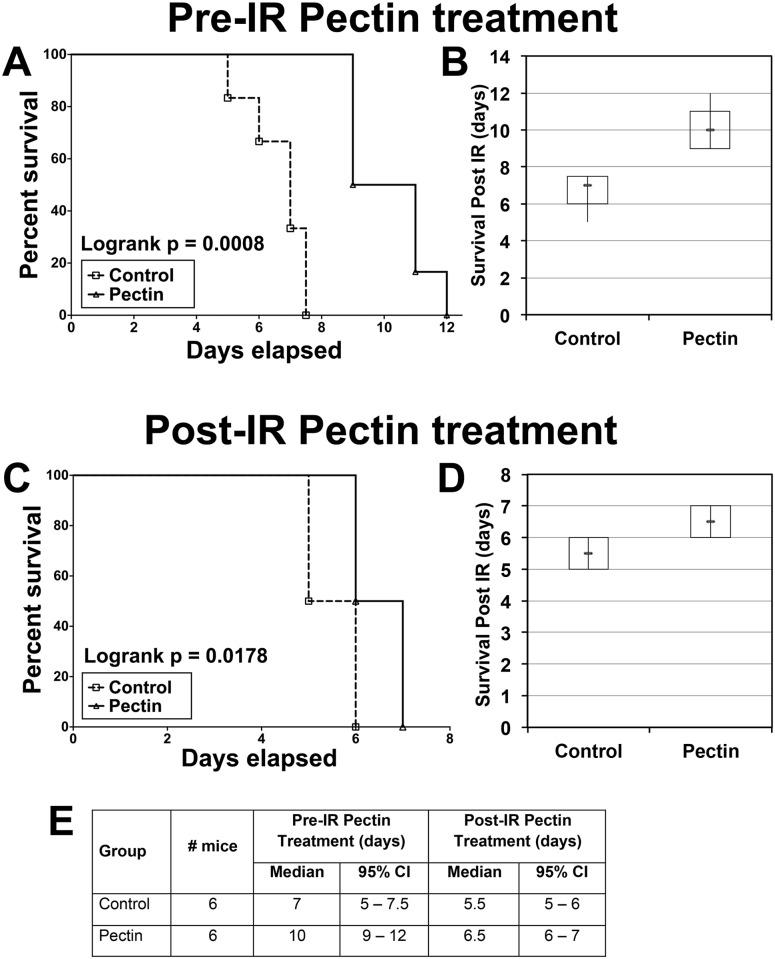
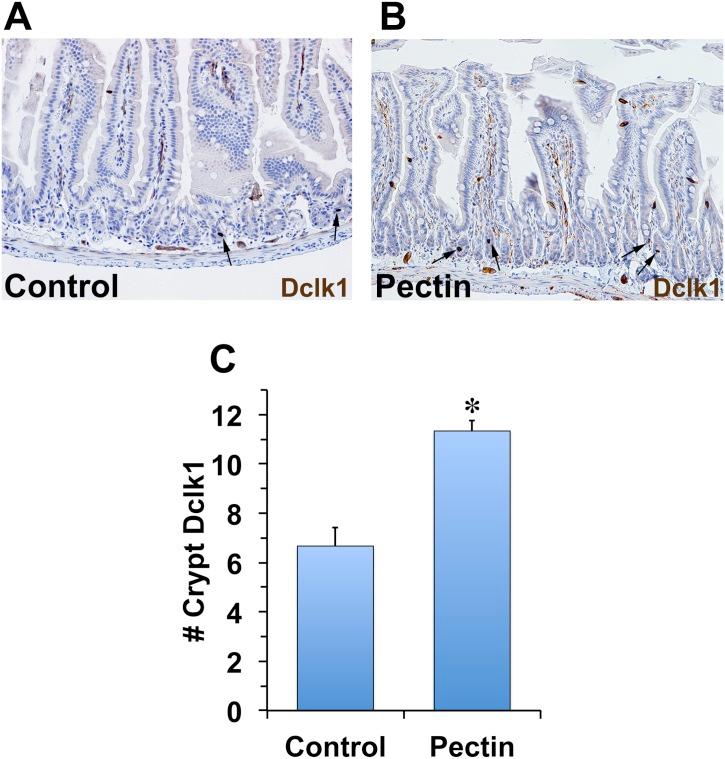
Gastrointestinal (GI) mucosal damage is a devastating adverse effect of radiation therapy. We have recently reported that expression of Dclk1, a Tuft cell and tumor stem cell (TSC) marker, 24h after high dose total-body gamma-IR (TBI) can be used as a surrogate marker for crypt survival. Dietary pectin has been demonstrated to possess chemopreventive properties, whereas its radioprotective property has not been studied. The aim of this study was to determine the effects of dietary pectin on ionizing radiation (IR)-induced intestinal stem cell (ISC) deletion, crypt and overall survival following lethal TBI. C57BL/6 mice received a 6% pectin diet and 0.5% pectin drinking water (pre-IR mice received pectin one week before TBI until death; post-IR mice received pectin after TBI until death). Animals were exposed to TBI (14 Gy) and euthanized at 24 and 84h post-IR to assess ISC deletion and crypt survival respectively. Animals were also subjected to overall survival studies following TBI. In pre-IR treatment group, we observed a three-fold increase in ISC/crypt survival, a two-fold increase in Dclk1+ stem cells, increased overall survival (median 10d vs. 7d), and increased expression of Dclk1, Msi1, Lgr5, Bmi1, and Notch1 (in small intestine) post-TBI in pectin treated mice compared to controls. We also observed increased survival of mice treated with pectin (post-IR) compared to controls. Dietary pectin is a radioprotective agent; prevents IR-induced deletion of potential reserve ISCs; facilitates crypt regeneration; and ultimately promotes overall survival. Given the anti-cancer activity of pectin, our data support a potential role for dietary pectin as an agent that can be administered to patients receiving radiation therapy to protect against radiation-induces mucositis.
胃肠道(GI)黏膜损伤是放射治疗的一种严重不良反应。我们最近报道,高剂量全身γ射线照射(TBI)24小时后,Tuft细胞和肿瘤干细胞(TSC)标志物Dclk1的表达可作为隐窝存活的替代标志物。膳食果胶已被证明具有化学预防特性,但其辐射防护特性尚未得到研究。本研究的目的是确定膳食果胶对致死性TBI后电离辐射(IR)诱导的肠干细胞(ISC)缺失、隐窝和总体存活的影响。C57BL/6小鼠接受6%果胶饮食和0.5%果胶饮用水(IR前小鼠在TBI前一周接受果胶直至死亡;IR后小鼠在TBI后接受果胶直至死亡)。动物接受TBI(14 Gy),并在IR后24小时和84小时安乐死,分别评估ISC缺失和隐窝存活。动物在TBI后也进行总体存活研究。在IR前治疗组中,我们观察到果胶处理的小鼠与对照组相比,TBI后ISC/隐窝存活率增加了三倍,Dclk1+干细胞增加了两倍,总体存活率增加(中位数10天对7天),并且Dclk1、Msi1、Lgr5、Bmi1和Notch1(在小肠中)的表达增加。我们还观察到,与对照组相比,果胶处理(IR后)的小鼠存活率增加。膳食果胶是一种辐射防护剂;可防止IR诱导的潜在储备ISC缺失;促进隐窝再生;并最终提高总体存活率。鉴于果胶的抗癌活性,我们的数据支持膳食果胶作为一种可用于接受放射治疗的患者以预防辐射诱导的粘膜炎的药物的潜在作用。

 Zotero 插件