
孕产妇保健提供者与服务对象互动中的态度和行为:一项系统综述
Attitudes and behaviours of maternal health care providers in interactions with clients: a systematic review.
作者信息
Mannava P, Durrant K, Fisher J, Chersich M, Luchters S
机构信息
Centre for International Health, Burnet Institute, Melbourne, VIC, Australia.
Jean Hailes Research Unit, School of Public Health & Preventive Medicine, Monash University, Melbourne, Australia.
出版信息
Global Health. 2015 Aug 15;11:36. doi: 10.1186/s12992-015-0117-9.
BACKGROUND
High maternal mortality and morbidity persist, in large part due to inadequate access to timely and quality health care. Attitudes and behaviours of maternal health care providers (MHCPs) influence health care seeking and quality of care.
METHODS
Five electronic databases were searched for studies from January 1990 to December 2014. Included studies report on types or impacts of MHCP attitudes and behaviours towards their clients, or the factors influencing these attitudes and behaviours. Attitudes and behaviours mentioned in relation to HIV infection, and studies of health providers outside the formal health system, such as traditional birth attendants, were excluded.
FINDINGS
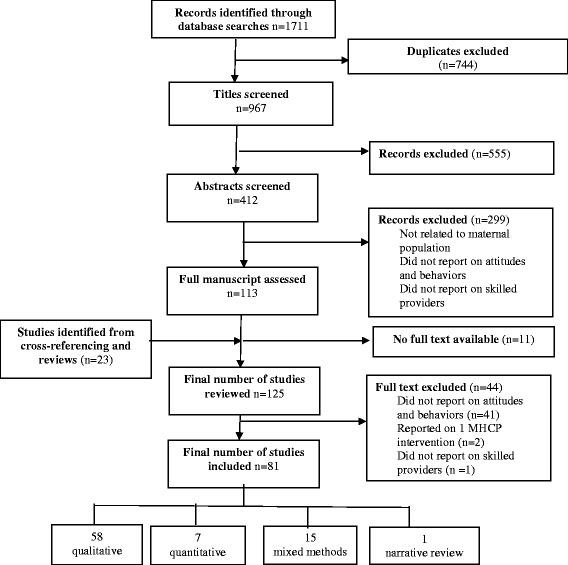
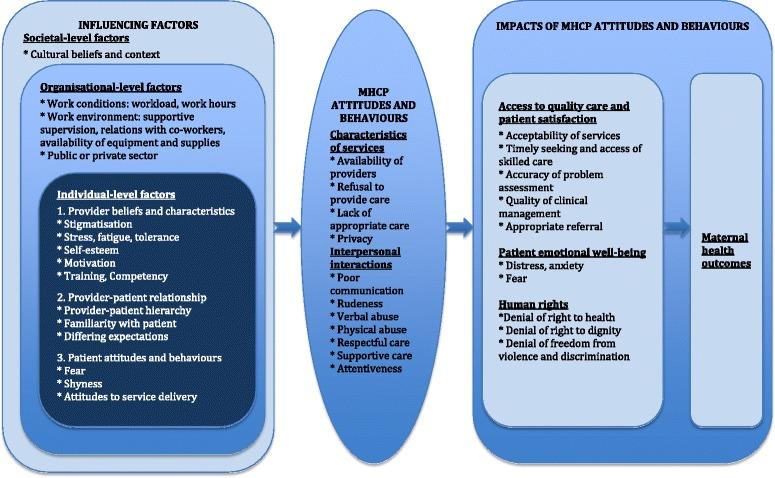
Of 967 titles and 412 abstracts screened, 125 full-text papers were reviewed and 81 included. Around two-thirds used qualitative methods and over half studied public-sector facilities. Most studies were in Africa (n = 55), followed by Asia and the Pacific (n = 17). Fifty-eight studies covered only negative attitudes or behaviours, with a minority describing positive provider behaviours, such as being caring, respectful, sympathetic and helpful. Negative attitudes and behaviours commonly entailed verbal abuse (n = 45), rudeness such as ignoring or ridiculing patients (n = 35), or neglect (n = 32). Studies also documented physical abuse towards women, absenteeism or unavailability of providers, corruption, lack of regard for privacy, poor communication, unwillingness to accommodate traditional practices, and authoritarian or frightening attitudes. These behaviours were influenced by provider workload, patients' attitudes and behaviours, provider beliefs and prejudices, and feelings of superiority among MHCPs. Overall, negative attitudes and behaviours undermined health care seeking and affected patient well-being.
CONCLUSIONS
The review documented a broad range of negative MHCP attitudes and behaviours affecting patient well-being, satisfaction with care and care seeking. Reported negative patient interactions far outweigh positive ones. The nature of the factors which influence health worker attitudes and behaviours suggests that strengthening health systems, and workforce development, including in communication and counselling skills, are important. Greater attention is required to the attitudes and behaviours of MHCPs within efforts to improve maternal health, for the sake of both women and health care providers.
背景
孕产妇死亡率和发病率居高不下,很大程度上是由于难以获得及时且高质量的医疗保健服务。孕产妇保健服务提供者(MHCPs)的态度和行为会影响就医行为和医疗服务质量。
方法
检索了五个电子数据库,查找1990年1月至2014年12月期间的研究。纳入的研究报告了MHCPs对其服务对象的态度和行为类型或影响,或影响这些态度和行为的因素。排除了与艾滋病毒感染相关的态度和行为的研究,以及正规卫生系统之外的卫生服务提供者(如传统接生员)的研究。
结果
在筛选的967篇标题和412篇摘要中,对125篇全文进行了审查,其中81篇被纳入。约三分之二的研究采用定性方法,超过一半的研究针对公共部门设施。大多数研究在非洲(n = 55),其次是亚洲和太平洋地区(n = 17)。58项研究仅涵盖负面态度或行为,少数研究描述了服务提供者的积极行为,如关心、尊重、同情和乐于助人。负面态度和行为通常包括言语辱骂(n = 45)、忽视或嘲笑患者等无礼行为(n = 35)或疏忽(n = 32)。研究还记录了对妇女的身体虐待、服务提供者旷工或无法提供服务、腐败、无视隐私、沟通不畅、不愿接纳传统做法以及专制或恐吓态度。这些行为受到服务提供者工作量、患者态度和行为、服务提供者的信念和偏见以及MHCPs的优越感的影响。总体而言,负面态度和行为破坏了就医行为并影响了患者的福祉。
结论
该综述记录了一系列影响患者福祉、护理满意度和就医行为的负面MHCP态度和行为。报告的负面医患互动远远超过正面互动。影响卫生工作者态度和行为的因素的性质表明,加强卫生系统以及劳动力发展,包括沟通和咨询技能方面的发展,很重要。为了妇女和卫生服务提供者的利益,在改善孕产妇健康方面需要更多关注MHCPs的态度和行为。
 Zotero 插件