
印度6至59个月大儿童缺铁性贫血的社会成本
Social Costs of Iron Deficiency Anemia in 6-59-Month-Old Children in India.
作者信息
Plessow Rafael, Arora Narendra Kumar, Brunner Beatrice, Tzogiou Christina, Eichler Klaus, Brügger Urs, Wieser Simon
机构信息
Winterthur Institute of Health Economics, Zurich University of Applied Sciences, Winterthur, Switzerland.
International Clinical Epidemiology Network, INCLEN, New Delhi, India.
出版信息
PLoS One. 2015 Aug 27;10(8):e0136581. doi: 10.1371/journal.pone.0136581. eCollection 2015.
INTRODUCTION
Inadequate nutrition has a severe impact on health in India. According to the WHO, iron deficiency is the single most important nutritional risk factor in India, accounting for more than 3% of all disability-adjusted life years (DALYs) lost. We estimate the social costs of iron deficiency anemia (IDA) in 6-59-month-old children in India in terms of intangible costs and production losses.
MATERIALS AND METHODS
We build a health economic model estimating the life-time costs of a birth cohort suffering from IDA between the ages of 6 and 59 months. The model is stratified by 2 age groups (6-23 and 24-59-months), 2 geographical areas (urban and rural), 10 socio-economic strata and 3 degrees of severity of IDA (mild, moderate and severe). Prevalence of anemia is calculated with the last available National Family Health Survey. Information on the health consequences of IDA is extracted from the literature.
RESULTS
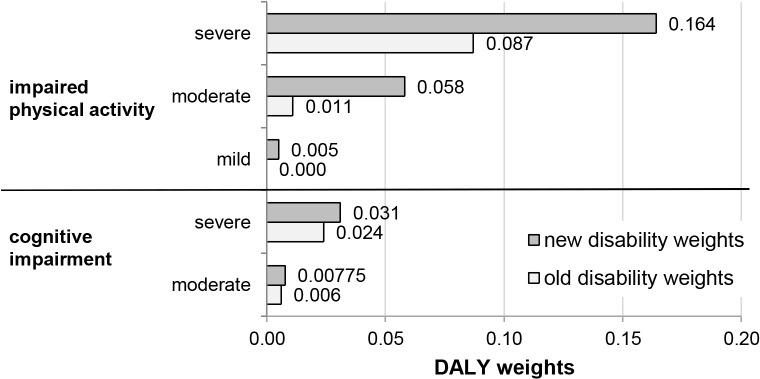
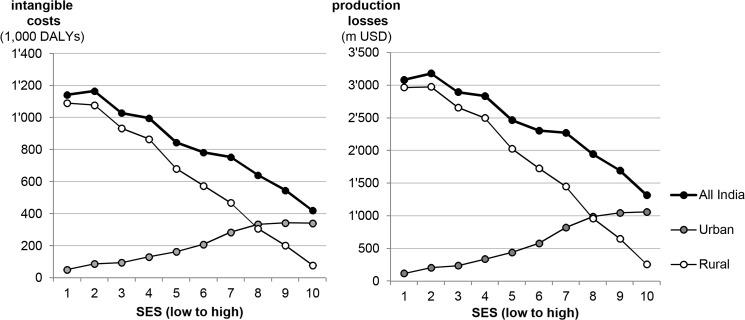
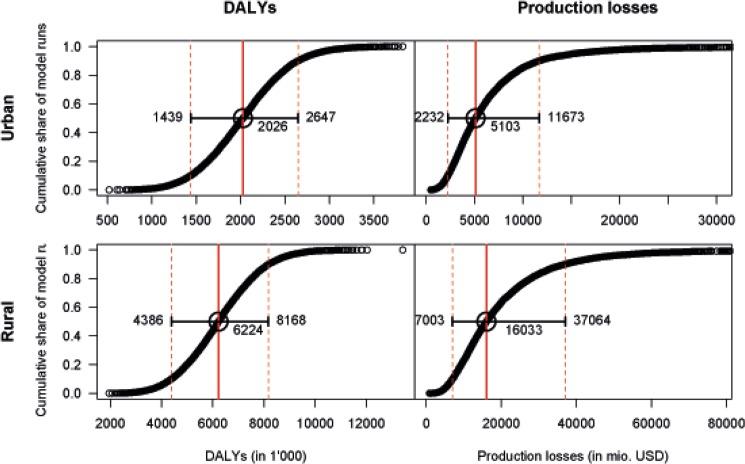
IDA prevalence is 49.5% in 6-23-month-old and 39.9% in 24-58-month-old children. Children living in poor households in rural areas are particularly affected but prevalence is high even in wealthy urban households. The estimated yearly costs of IDA in 6-59-month-old children amount to intangible costs of 8.3 m DALYs and production losses of 24,001 m USD, equal to 1.3% of gross domestic product. Previous calculations have considerably underestimated the intangible costs of IDA as the improved WHO methodology leads to a threefold increase of DALYs due to IDA.
CONCLUSION
Despite years of iron supplementation programs and substantial economic growth, IDA remains a crucial public health issue in India and an obstacle to the economic advancement of the poor. Young children are especially vulnerable due to the irreversible effects of IDA on cognitive development. Our research may contribute to the design of new effective interventions aiming to reduce IDA in early childhood.
引言
营养不良对印度的健康产生了严重影响。根据世界卫生组织的数据,缺铁是印度最重要的单一营养风险因素,占所有伤残调整生命年(DALYs)损失的3%以上。我们从无形成本和生产损失方面估算了印度6至59个月大儿童缺铁性贫血(IDA)的社会成本。
材料与方法
我们构建了一个健康经济模型,估算了一个出生队列在6至59个月大时患IDA的终身成本。该模型按2个年龄组(6至23个月和24至59个月)、2个地理区域(城市和农村)、10个社会经济阶层以及3种IDA严重程度(轻度、中度和重度)进行分层。贫血患病率根据最新的全国家庭健康调查进行计算。有关IDA健康后果的信息从文献中提取。
结果
6至23个月大儿童的IDA患病率为49.5%,24至58个月大儿童的患病率为39.9%。农村贫困家庭的儿童受影响尤为严重,但即使在富裕的城市家庭中患病率也很高。估算得出,6至59个月大儿童的IDA年度成本为无形成本830万个DALYs和生产损失240.01亿美元,相当于国内生产总值的1.3%。先前的计算大大低估了IDA的无形成本,因为世界卫生组织改进后的方法导致因IDA造成的DALYs增加了两倍。
结论
尽管多年来实施了补铁计划且经济大幅增长,但IDA在印度仍是一个关键的公共卫生问题,也是贫困人口经济发展的障碍。幼儿尤其脆弱,因为IDA对认知发展有不可逆转的影响。我们的研究可能有助于设计新的有效干预措施,以减少幼儿期的IDA。


 Zotero 插件