
杏仁核神经肽Y系统的结构与功能:神经肽Y Y2受体调节中央内侧杏仁核中的兴奋性和抑制性突触传递。
Structure and function of the amygdaloid NPY system: NPY Y2 receptors regulate excitatory and inhibitory synaptic transmission in the centromedial amygdala.
作者信息
Wood J, Verma D, Lach G, Bonaventure P, Herzog H, Sperk G, Tasan R O
机构信息
Department of Pharmacology, Medical University Innsbruck, Peter-Mayr-Strasse 1a, 6020, Innsbruck, Austria.
Institute of Physiology I (Neurophysiology), Westfälische Wilhelms-Universität, Munster, Germany.
出版信息
Brain Struct Funct. 2016 Sep;221(7):3373-91. doi: 10.1007/s00429-015-1107-7. Epub 2015 Sep 13.
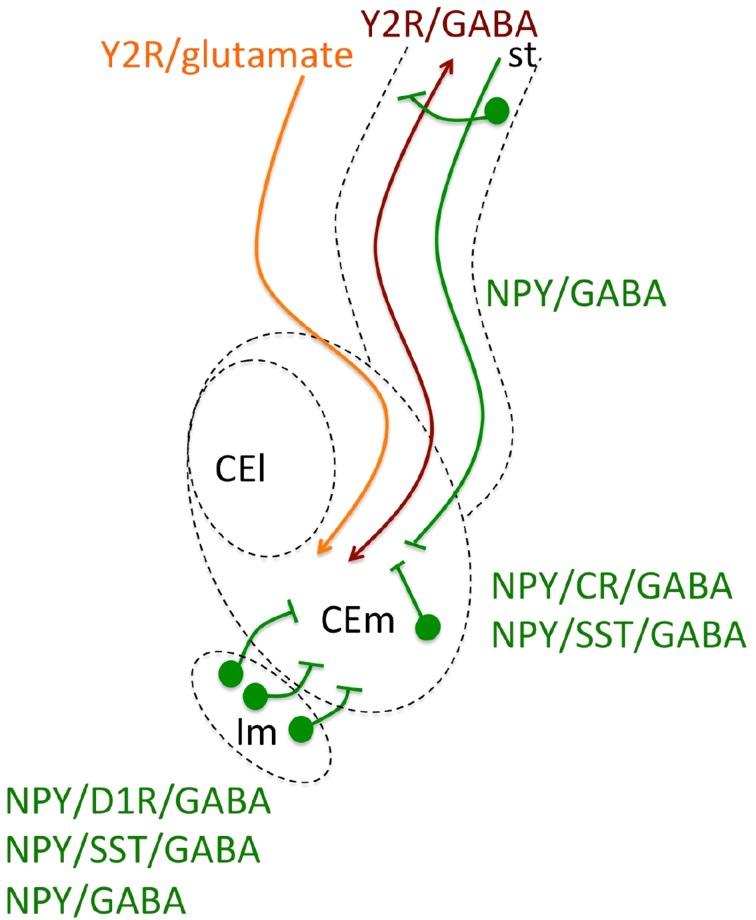
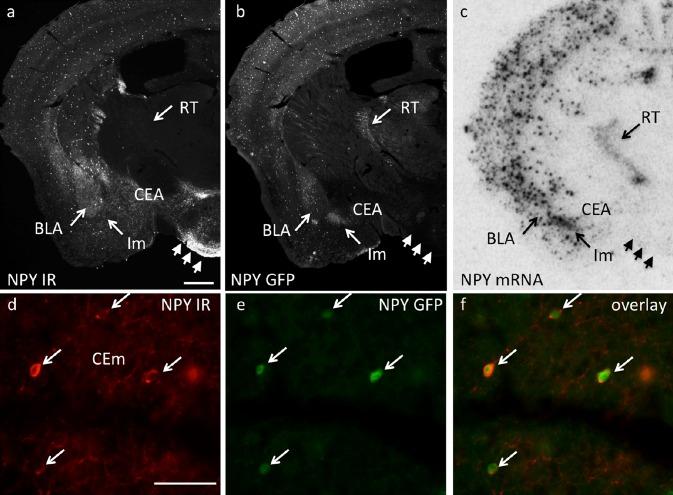
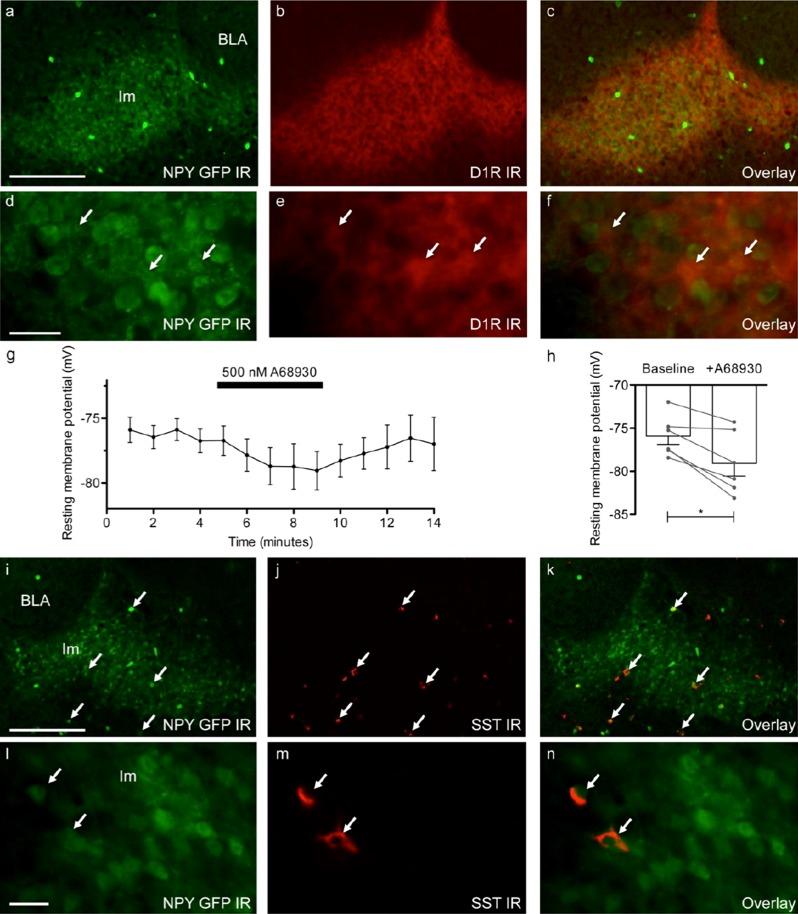
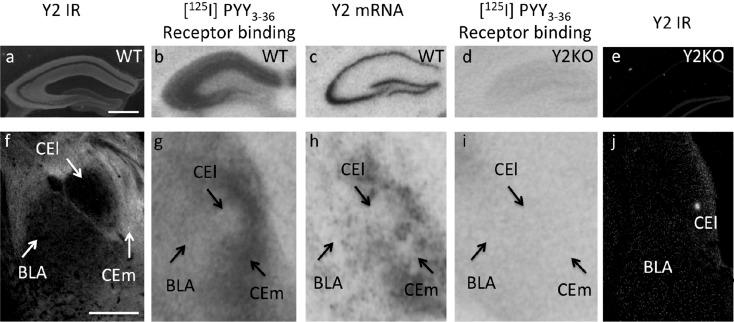
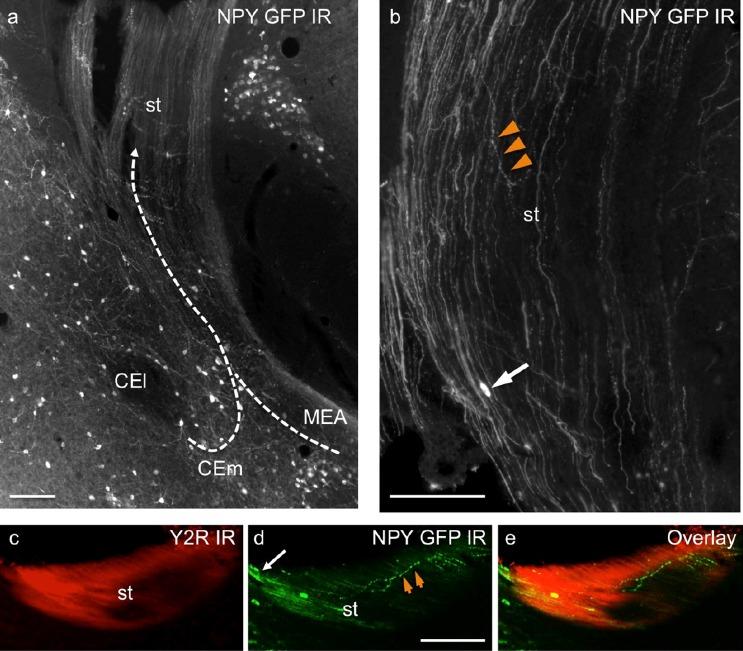
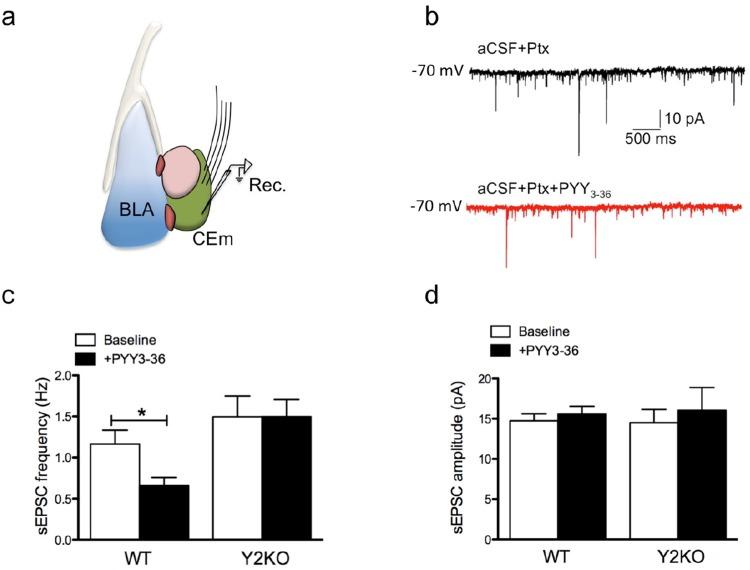
The amygdala is essential for generating emotional-affective behaviors. It consists of several nuclei with highly selective, elaborate functions. In particular, the central extended amygdala, consisting of the central amygdala (CEA) and the bed nucleus of the stria terminalis (BNST) is an essential component actively controlling efferent connections to downstream effectors like hypothalamus and brain stem. Both, CEA and BNST contain high amounts of different neuropeptides that significantly contribute to synaptic transmission. Among these, neuropeptide Y (NPY) has emerged as an important anxiolytic and fear-reducing neuromodulator. Here, we characterized the expression, connectivity and electrophysiological function of NPY and Y2 receptors within the CEA. We identified several NPY-expressing neuronal populations, including somatostatin- and calretinin-expressing neurons. Furthermore, in the main intercalated nucleus, NPY is expressed primarily in dopamine D1 receptor-expressing neurons but also in interspersed somatostatin-expressing neurons. Interestingly, NPY neurons did not co-localize with the Y2 receptor. Retrograde tract tracing experiments revealed that NPY neurons reciprocally connect the CEA and BNST. Functionally, the Y2 receptor agonist PYY3-36, reduced both, inhibitory as well as excitatory synaptic transmission in the centromedial amygdala (CEm). However, we also provide evidence that lack of NPY or Y2 receptors results in increased GABA release specifically at inhibitory synapses in the CEm. Taken together, our findings suggest that NPY expressed by distinct populations of neurons can modulate afferent and efferent projections of the CEA via presynaptic Y2 receptors located at inhibitory and excitatory synapses.
杏仁核对于产生情绪情感行为至关重要。它由几个具有高度选择性、精细功能的核团组成。特别是,中央扩展杏仁核,由中央杏仁核(CEA)和终纹床核(BNST)组成,是主动控制与下丘脑和脑干等下游效应器传出连接的重要组成部分。CEA和BNST都含有大量不同的神经肽,这些神经肽对突触传递有显著贡献。其中,神经肽Y(NPY)已成为一种重要的抗焦虑和减轻恐惧的神经调节剂。在这里,我们对CEA内NPY和Y2受体的表达、连接性和电生理功能进行了表征。我们鉴定了几个表达NPY的神经元群体,包括表达生长抑素和钙视网膜蛋白的神经元。此外,在主要的插入核中,NPY主要在表达多巴胺D1受体的神经元中表达,但也在散布的表达生长抑素的神经元中表达。有趣的是,NPY神经元不与Y2受体共定位。逆行束路追踪实验表明,NPY神经元相互连接CEA和BNST。在功能上,Y2受体激动剂PYY3 - 36降低了中央内侧杏仁核(CEm)中的抑制性和兴奋性突触传递。然而,我们也提供了证据表明,缺乏NPY或Y2受体会导致CEm中抑制性突触处GABA释放增加。综上所述,我们的研究结果表明,由不同神经元群体表达的NPY可以通过位于抑制性和兴奋性突触处的突触前Y2受体调节CEA的传入和传出投射。




 Zotero 插件