
一种用于测量 HIV 感染者中诱导性病毒储存库大小的新方法。
A Novel Assay to Measure the Magnitude of the Inducible Viral Reservoir in HIV-infected Individuals.
机构信息
Vaccine and Gene Therapy Institute Florida, Port St. Lucie, FL, USA.
University of California San Diego, La Jolla, California and Veterans Affairs San Diego Healthcare System, San Diego, CA, USA.
出版信息
EBioMedicine. 2015 Jun 27;2(8):874-83. doi: 10.1016/j.ebiom.2015.06.019. eCollection 2015 Aug.
BACKGROUND
Quantifying latently infected cells is critical to evaluate the efficacy of therapeutic strategies aimed at reducing the size of the long-lived viral reservoir, but the low frequency of these cells makes this very challenging.
METHODS
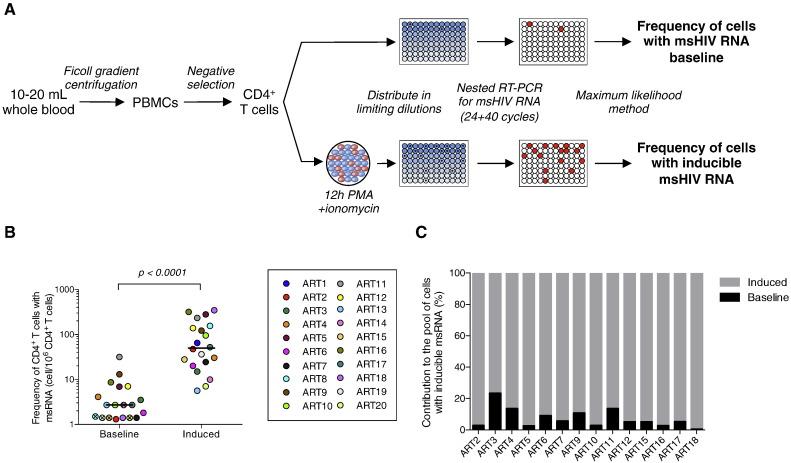
We developed TILDA (Tat/rev Induced Limiting Dilution Assay) to measure the frequency of cells with inducible multiply-spliced HIV RNA, as these transcripts are usually absent in latently infected cells but induced upon viral reactivation. TILDA requires less than a million cells, does not require RNA extraction and can be completed in two days.
FINDINGS
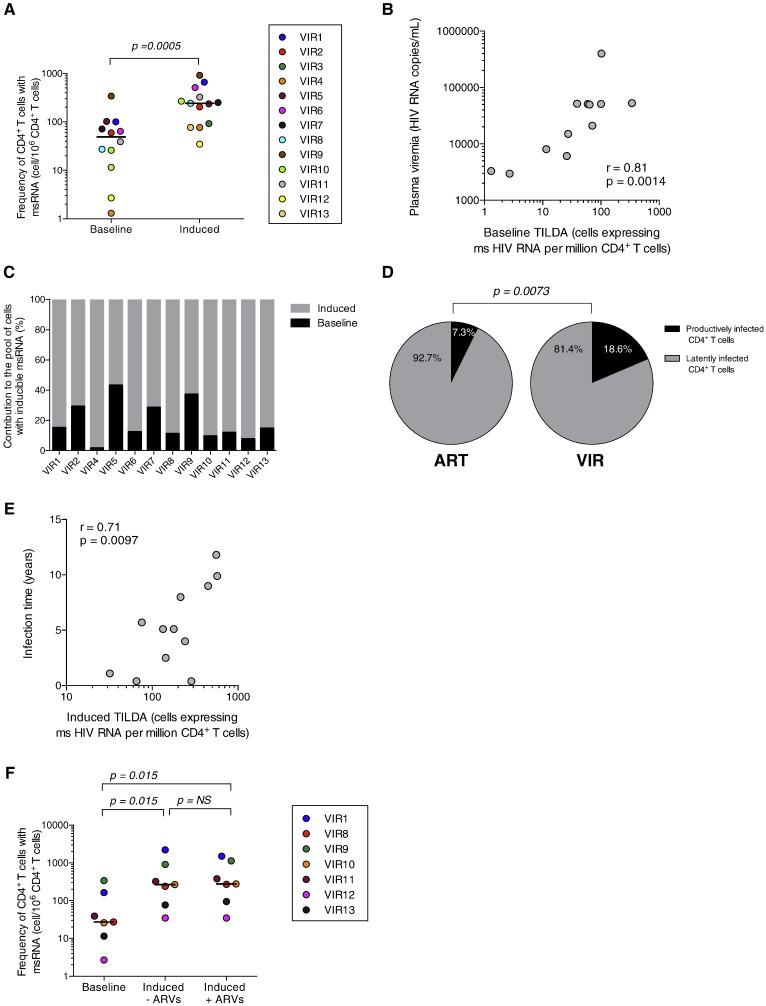
In suppressed individuals on ART, we found the median frequency of latently infected CD4 + T cells as estimated by TILDA to be 24 cells/million, which was 48 times more than the frequency measured by the quantitative viral outgrowth assay, and 6-27 times less than the frequencies of cells harbouring viral DNA measured by PCR-based assays. TILDA measurements strongly correlated with most HIV DNA assays. The size of the latent reservoir measured by TILDA was lower in subjects who initiated ART during the early compared to late stage of infection (p = 0.011). In untreated HIV disease, the frequency of CD4 + cells carrying latent but inducible HIV largely exceeded the frequency of actively producing cells, demonstrating that the majority of infected cells are transcriptionally silent even in the absence of ART.
INTERPRETATIONS
Our results suggest that TILDA is a reproducible and sensitive approach to measure the frequency of productively and latently infected cells in clinical settings. We demonstrate that the latent reservoir represents a substantial fraction of all infected cells prior to ART initiation.
RESEARCH IN CONTEXT
In this manuscript, we describe the development of a novel assay that measures the magnitude of the latent HIV reservoir, the main barrier to HIV eradication. This novel assay, termed TILDA for Tat/rev Induced Limiting Dilution Assay, requires only 10 ml of blood, does not necessitate extraction of viral nucleic acids, is highly reproducible, covers a wide dynamic range of reservoir sizes and can be completed in two days. As such, TILDA may represent an alternative to existing assays used to evaluate the efficacy of therapeutic strategies aimed at reducing the size of the latent HIV reservoir.
背景
量化潜伏感染细胞对于评估旨在减少长寿病毒储存库大小的治疗策略的疗效至关重要,但这些细胞的低频使得这非常具有挑战性。
方法
我们开发了 TILDA(Tat/rev 诱导的限制稀释测定)来测量具有诱导性多剪接 HIV RNA 的细胞频率,因为这些转录本通常不存在于潜伏感染的细胞中,但在病毒重新激活时被诱导。TILDA 仅需要不到 100 万个细胞,不需要提取 RNA,并且可以在两天内完成。
发现
在接受 ART 抑制的个体中,我们发现通过 TILDA 估计的潜伏感染 CD4+T 细胞的中位数频率为 24 个细胞/百万,这比定量病毒扩增测定测量的频率高 48 倍,比基于 PCR 的测定测量的携带病毒 DNA 的细胞频率低 6-27 倍。TILDA 测量结果与大多数 HIV DNA 测定高度相关。与感染晚期相比,在感染早期开始 ART 的个体中,通过 TILDA 测量的潜伏储存库规模较小(p=0.011)。在未经治疗的 HIV 疾病中,携带潜伏但可诱导 HIV 的 CD4+细胞的频率大大超过了活跃产生细胞的频率,这表明即使没有 ART,大多数感染细胞的转录也是沉默的。
解释
我们的结果表明,TILDA 是一种在临床环境中测量有生产力和潜伏感染细胞频率的可重复和敏感的方法。我们证明,潜伏储存库在开始 ART 之前代表了所有感染细胞的重要部分。
研究背景
在本文中,我们描述了一种新测定方法的开发,该方法可测量潜伏 HIV 储存库的大小,这是 HIV 根除的主要障碍。这种新测定方法称为 TILDA(Tat/rev 诱导的限制稀释测定),仅需要 10ml 血液,不需要提取病毒核酸,高度可重复,涵盖广泛的储存库大小动态范围,并且可以在两天内完成。因此,TILDA 可能是评估旨在减少潜伏 HIV 储存库大小的治疗策略疗效的现有测定方法的替代方法。


 Zotero 插件