
酵母聚糖诱导炎症期间HMGB1的抑制作用:核黄素的潜在治疗作用
HMGB1 Inhibition During Zymosan-Induced Inflammation: The Potential Therapeutic Action of Riboflavin.
作者信息
Mazur-Bialy Agnieszka Irena, Pocheć Ewa
机构信息
Department of Ergonomics and Exercise Physiology, Faculty of Health Science, Jagiellonian University Medical College, Grzegorzecka 20, 31-531, Kraków, Poland.
Department of Glycoconjugate Biochemistry, Institute of Zoology, Jagiellonian University, Kraków, Poland.
出版信息
Arch Immunol Ther Exp (Warsz). 2016 Apr;64(2):171-6. doi: 10.1007/s00005-015-0366-6. Epub 2015 Oct 7.
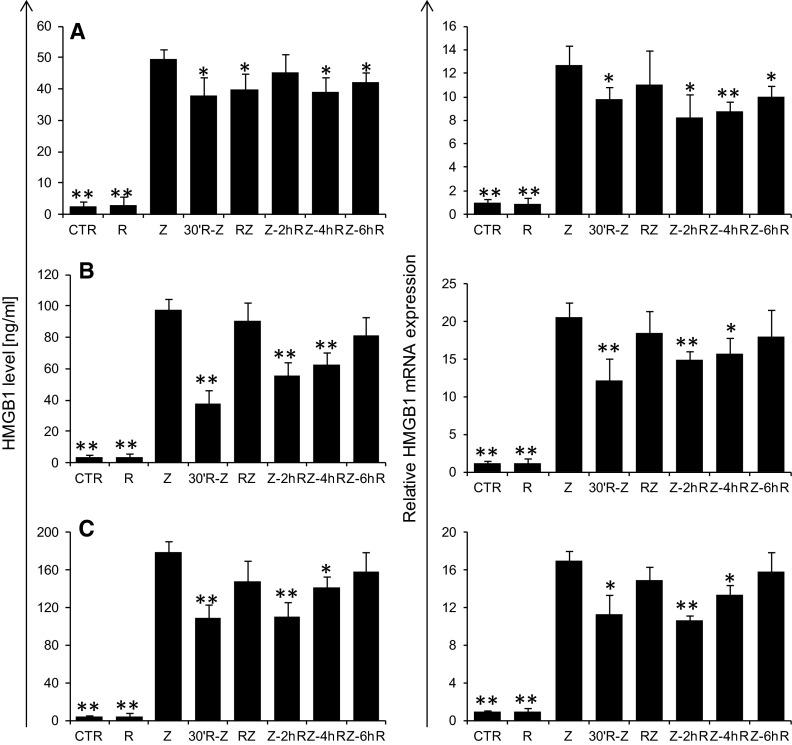
Sepsis, also known as systemic inflammatory response syndrome, is a life-threatening condition caused by a pathogenic agent and leading to multiple organ dysfunction syndrome. One of the factors responsible for the excessive intensification of the inflammatory response in the course of inflammation is high-mobility group protein B1 (HMGB1). HMG-1 is a nuclear protein which, after being released to the intercellular space, has a highly pro-inflammatory effect and acts as a late mediator of lethal damage. The purpose of this study was to examine whether the anti-inflammatory action of riboflavin is accompanied by inhibition of HMGB1 release during peritoneal inflammation and zymosan stimulation of macrophages. Peritonitis was induced in male BALB/c and C57BL/6J mice via intraperitoneal injection of zymosan (40 mg/kg). RAW 264.7 macrophages were activated with zymosan (250 µg/ml). Riboflavin (mice, 50 mg/kg; RAW 264.7, 25 µg/ml) was administered 30 min before zymosan, simultaneously with, or 2, 4, 6 h after zymosan. Additionally, mRNA expression of HMGB1 and its intracellular and serum levels were evaluated. The research showed that riboflavin significantly reduces both the expression and the release of HMGB1; however, the effect of riboflavin was time-dependent. The greatest efficacy was found when riboflavin was given 30 min prior to zymosan, and also 2 and 4 h (C57BL/6J; RAW 264.7) or 4 and 6 h (BALB/c) after zymosan. Research showed that riboflavin influences the level of HMGB1 released in the course of inflammation; however, further study is necessary to determine its mechanisms of action.
脓毒症,也称为全身炎症反应综合征,是一种由病原体引起的危及生命的病症,并导致多器官功能障碍综合征。炎症过程中炎症反应过度加剧的一个因素是高迁移率族蛋白B1(HMGB1)。HMG-1是一种核蛋白,释放到细胞间隙后具有高度促炎作用,并作为致死性损伤的晚期介质。本研究的目的是检验在腹膜炎症和酵母聚糖刺激巨噬细胞过程中,核黄素的抗炎作用是否伴随着对HMGB1释放的抑制。通过腹腔注射酵母聚糖(40mg/kg)在雄性BALB/c和C57BL/6J小鼠中诱导腹膜炎。用酵母聚糖(250μg/ml)激活RAW 264.7巨噬细胞。在注射酵母聚糖前30分钟、同时或注射酵母聚糖后2、4、6小时给予核黄素(小鼠,50mg/kg;RAW 264.7,25μg/ml)。此外,评估了HMGB1的mRNA表达及其细胞内和血清水平。研究表明,核黄素显著降低HMGB1的表达和释放;然而,核黄素的作用是时间依赖性的。当在酵母聚糖注射前30分钟以及酵母聚糖注射后2和4小时(C57BL/6J;RAW 264.7)或4和6小时(BALB/c)给予核黄素时,发现效果最佳。研究表明,核黄素影响炎症过程中释放的HMGB1水平;然而,需要进一步研究以确定其作用机制。

 Zotero 插件