
估算日本食源性疾病的负担。
Estimating the burden of foodborne diseases in Japan.
作者信息
Kumagai Yuko, Gilmour Stuart, Ota Erika, Momose Yoshika, Onishi Toshiro, Bilano Ver Luanni Feliciano, Kasuga Fumiko, Sekizaki Tsutomu, Shibuya Kenji
机构信息
Department of Veterinary Medical Science, University of Tokyo, Tokyo, Japan .
Department of Global Health Policy, Graduate School of Medicine, University of Tokyo, 7-3-1, Hongo, Bunkyo-ku, Tokyo 113-0033, Japan .
出版信息
Bull World Health Organ. 2015 Aug 1;93(8):540-549C. doi: 10.2471/BLT.14.148056. Epub 2015 Jun 1.
OBJECTIVE
To assess the burden posed by foodborne diseases in Japan using methods developed by the World Health Organization's Foodborne Disease Burden Epidemiology Reference Group (FERG).
METHODS
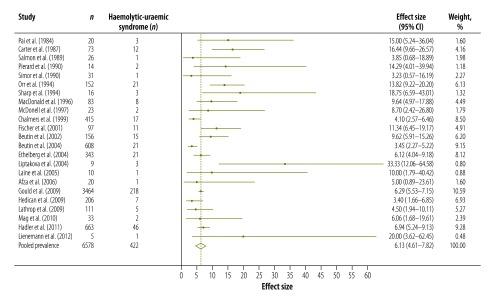
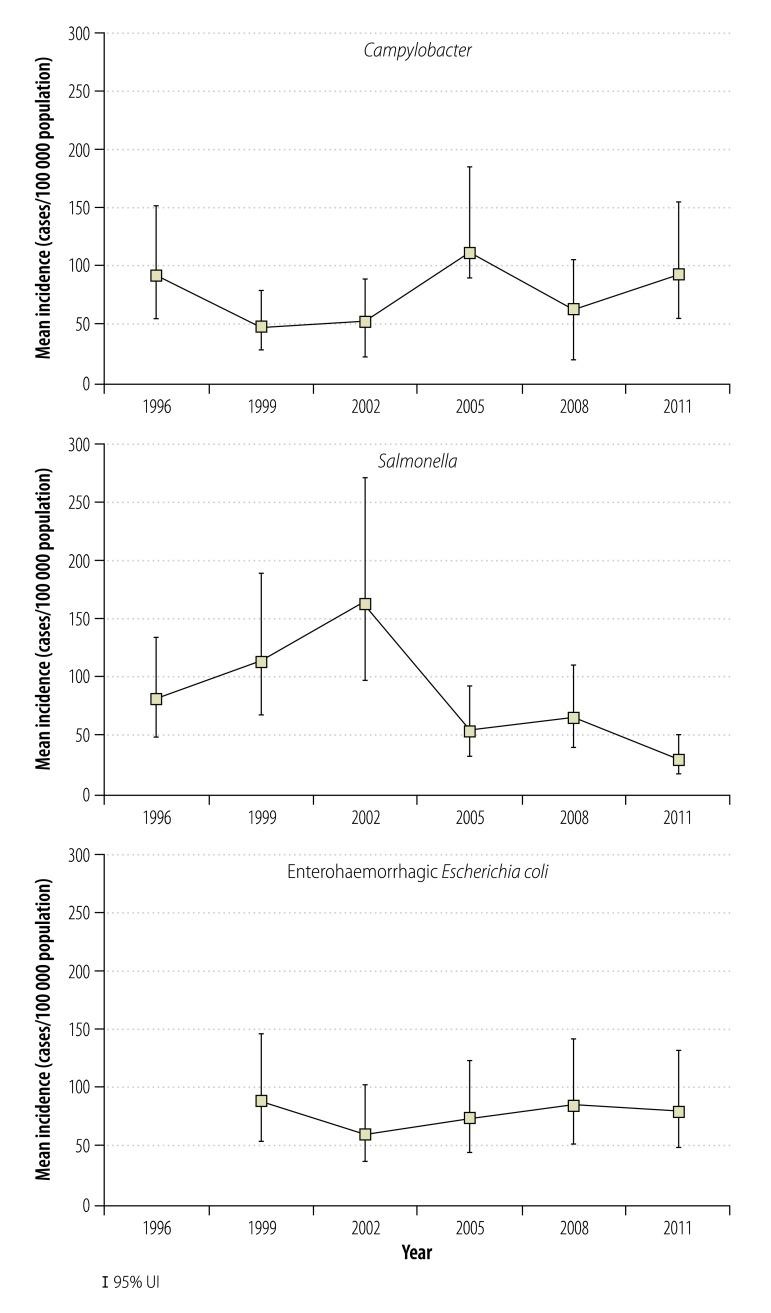
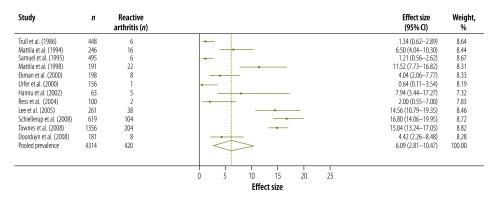
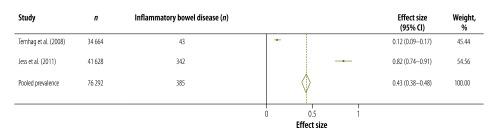
Expert consultation and statistics on food poisoning during 2011 were used to identify three common causes of foodborne disease in Japan: Campylobacter and Salmonella species and enterohaemorrhagic Escherichia coli (EHEC). We conducted systematic reviews of English and Japanese literature on the complications caused by these pathogens, by searching Embase, the Japan medical society abstract database and Medline. We estimated the annual incidence of acute gastroenteritis from reported surveillance data, based on estimated probabilities that an affected person would visit a physician and have gastroenteritis confirmed. We then calculated disability-adjusted life-years (DALYs) lost in 2011, using the incidence estimates along with disability weights derived from published studies.
FINDINGS
In 2011, foodborne disease caused by Campylobacter species, Salmonella species and EHEC led to an estimated loss of 6099, 3145 and 463 DALYs in Japan, respectively. These estimated burdens are based on the pyramid reconstruction method; are largely due to morbidity rather than mortality; and are much higher than those indicated by routine surveillance data.
CONCLUSION
Routine surveillance data may indicate foodborne disease burdens that are much lower than the true values. Most of the burden posed by foodborne disease in Japan comes from secondary complications. The tools developed by FERG appear useful in estimating disease burdens and setting priorities in the field of food safety.
目的
运用世界卫生组织食源性疾病负担流行病学参考小组(FERG)开发的方法,评估日本食源性疾病造成的负担。
方法
采用专家咨询以及2011年食物中毒统计数据,确定日本食源性疾病的三种常见病因:弯曲杆菌属、沙门氏菌属及肠出血性大肠杆菌(EHEC)。通过检索Embase、日本医学协会摘要数据库和Medline,我们对关于这些病原体所致并发症的英文和日文文献进行了系统综述。基于受影响者就医并确诊患肠胃炎的估计概率,我们根据报告的监测数据估算了急性肠胃炎的年发病率。然后,我们使用发病率估算值以及从已发表研究中得出的残疾权重,计算了2011年损失的残疾调整生命年(DALY)。
研究结果
2011年,由弯曲杆菌属、沙门氏菌属和肠出血性大肠杆菌引起的食源性疾病在日本分别导致约6099、3145和463个残疾调整生命年的损失。这些估算负担基于金字塔重建方法;主要归因于发病率而非死亡率;且远高于常规监测数据所示的负担。
结论
常规监测数据可能显示的食源性疾病负担远低于真实值。日本食源性疾病造成的负担大多来自继发性并发症。FERG开发的工具在估算疾病负担及确定食品安全领域的优先事项方面似乎很有用。




 Zotero 插件