
叶酸共轭两亲性聚乙二醇-聚乳酸-羟基乙酸共聚物纳米粒共递送顺铂和紫杉醇用于治疗非小细胞肺癌
Co-delivery of cisplatin and paclitaxel by folic acid conjugated amphiphilic PEG-PLGA copolymer nanoparticles for the treatment of non-small lung cancer.
作者信息
He Zelai, Huang Jingwen, Xu Yuanyuan, Zhang Xiangyu, Teng Yanwei, Huang Can, Wu Yufeng, Zhang Xi, Zhang Huijun, Sun Wenjie
机构信息
Department of Radiation Oncology, Fudan University Shanghai Cancer Center, Department of Oncology, Shanghai Medical College, Fudan University, Shanghai, China.
The Second Affiliated Hospital and Yuying Children's Hospital of Wenzhou Medical University, Wenzhou, China.
出版信息
Oncotarget. 2015 Dec 8;6(39):42150-68. doi: 10.18632/oncotarget.6243.
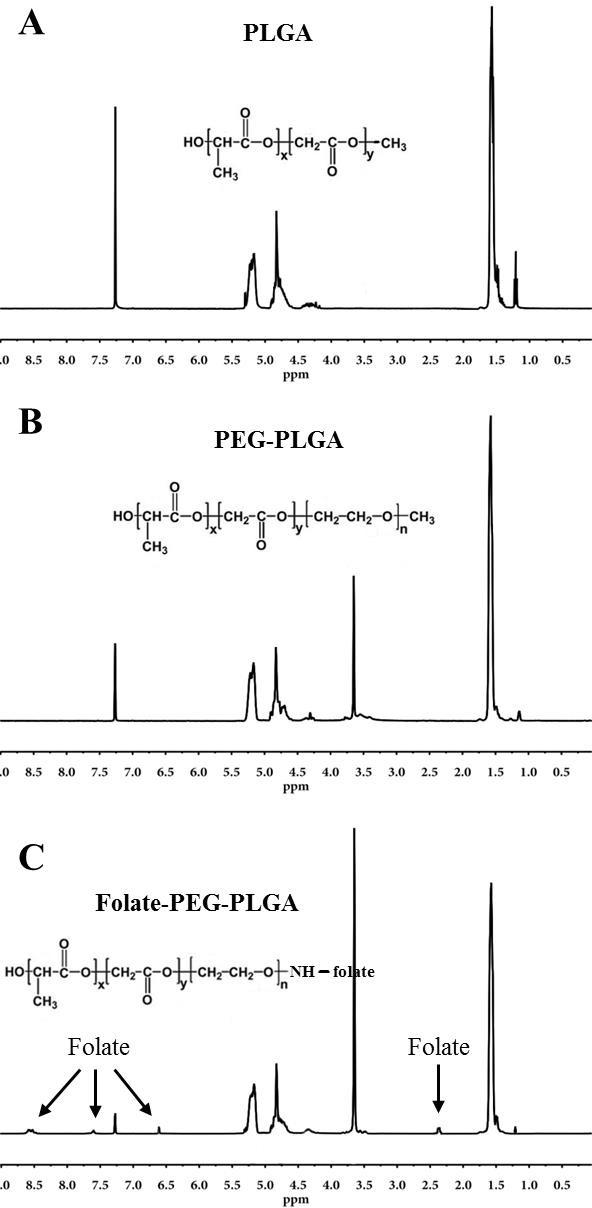
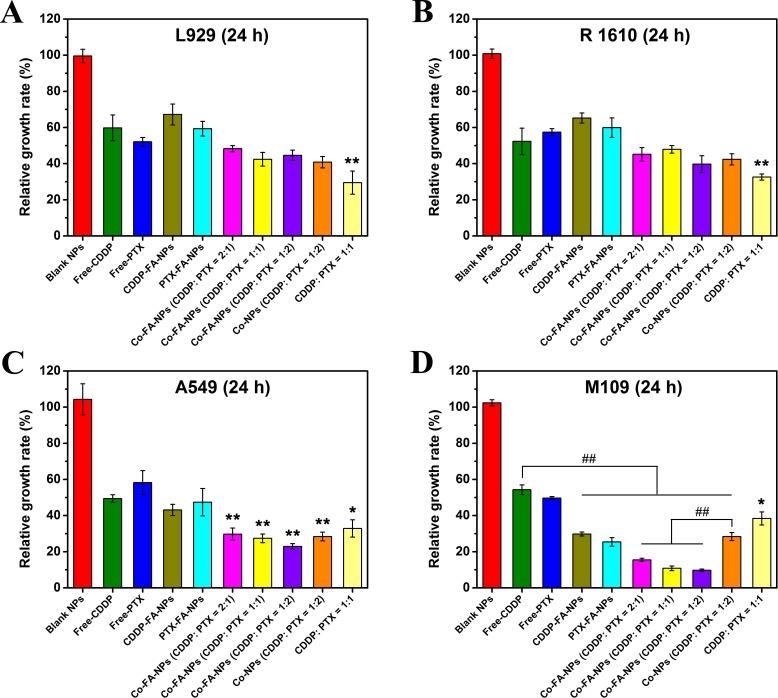
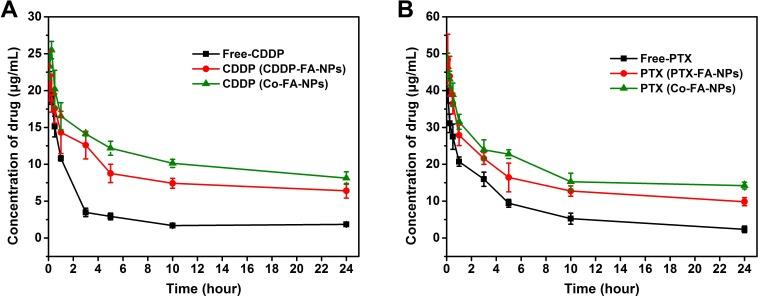
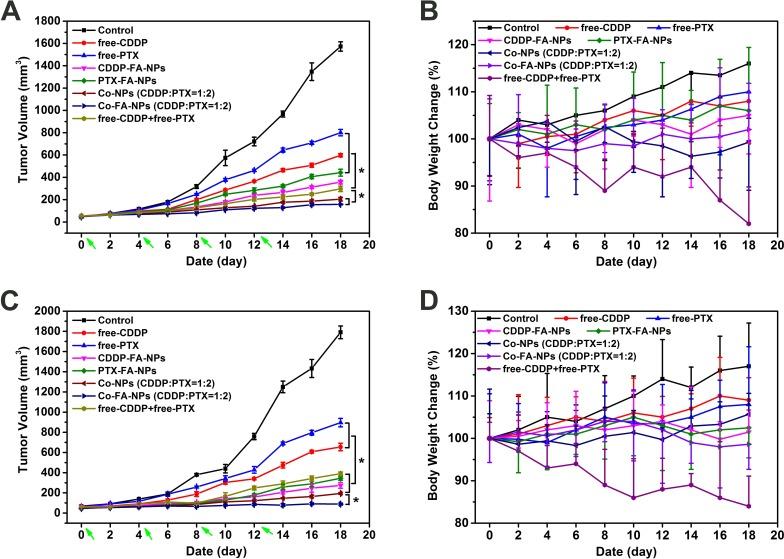
An amphiphilic copolymer, folic acid (FA) modified poly(ethylene glycol)-poly(lactic-co-glycolic acid) (FA-PEG-PLGA) was prepared and explored as a nanometer carrier for the co-delivery of cisplatin (cis-diaminodichloroplatinum, CDDP) and paclitaxel (PTX). CDDP and PTX were encapsulated inside the hydrophobic inner core and chelated to the middle shell, respectively. PEG provided the outer corona for prolonged circulation. An in vitro release profile of the CDDP + PTX-encapsulated nanoparticles revealed that the PTX chelation cross-link prevented an initial burst release of CDDP. After an incubation period of 24 hours, the CDDP+PTX-encapsulated nanoparticles exhibited a highly synergistic effect for the inhibition of A549 (FA receptor negative) and M109 (FA receptor positive) lung cancer cell line proliferation. Pharmacokinetic experiment and distribution research shows that nanoparticles have longer circulation time in the blood and can prolong the treatment times of chemotherapeutic drugs. For the in vivo treatment of A549 cells xeno-graft lung tumor, the CDDP+PTX-encapsulated nanoparticles displayed an obvious tumor inhibiting effect with an 89.96% tumor suppression rate (TSR). This TSR was significantly higher than that of free chemotherapy drug combination or nanoparticles with a single drug. For M109 cells xeno-graft tumor, the TSR was 95.03%. In vitro and in vivo experiments have all shown that the CDDP+PTX-encapsulated nanoparticles have better targeting and antitumor effects in M109 cells than CDDP+PTX-loaded PEG-PLGA nanoparticles (p < 0.05). In addition, more importantly, the enhanced anti-tumor efficacy of the CDDP+PTX-encapsulated nanoparticles came with reduced side-effects. No obvious body weight loss or functional changes occurred within blood components, liver, or kidneys during the treatment of A549 and M109 tumor-bearing mice with the CDDP+PTX-encapsulated nanoparticles. Thus, the FA modified amphiphilic copolymer-based combination of CDDP and PTX may provide useful guidance for effective and safe cancer chemotherapy, especially in tumors with high FA receptor expression.
制备了一种两亲性共聚物,叶酸(FA)修饰的聚乙二醇-聚乳酸-羟基乙酸共聚物(FA-PEG-PLGA),并将其作为顺铂(顺二氨基二氯铂,CDDP)和紫杉醇(PTX)共递送的纳米载体进行研究。CDDP和PTX分别包裹在疏水内核中并螯合到中间壳层。PEG提供外层冠层以实现延长循环。包裹CDDP+PTX的纳米颗粒的体外释放曲线表明,PTX螯合交联可防止CDDP的初始突释。孵育24小时后,包裹CDDP+PTX的纳米颗粒对抑制A549(FA受体阴性)和M109(FA受体阳性)肺癌细胞系增殖表现出高度协同作用。药代动力学实验和分布研究表明,纳米颗粒在血液中的循环时间更长,并且可以延长化疗药物的治疗时间。对于A549细胞异种移植肺肿瘤的体内治疗,包裹CDDP+PTX的纳米颗粒显示出明显的肿瘤抑制作用,肿瘤抑制率(TSR)为89.96%。该TSR显著高于游离化疗药物组合或单药纳米颗粒。对于M109细胞异种移植肿瘤,TSR为95.03%。体外和体内实验均表明,与负载CDDP+PTX的PEG-PLGA纳米颗粒相比,包裹CDDP+PTX的纳米颗粒在M109细胞中具有更好的靶向性和抗肿瘤作用(p<0.05)。此外,更重要的是,包裹CDDP+PTX的纳米颗粒增强的抗肿瘤疗效伴随着副作用的减少。在用包裹CDDP+PTX的纳米颗粒治疗A549和M109荷瘤小鼠的过程中,血液成分、肝脏或肾脏内未出现明显的体重减轻或功能变化。因此,基于FA修饰的两亲性共聚物的CDDP和PTX组合可能为有效且安全的癌症化疗提供有用的指导,尤其是在FA受体高表达的肿瘤中。




 Zotero 插件