
通过唾液和唾液细胞外囊泡的蛋白质组学分析深入了解口腔癌中的免疫反应。
Insights into immune responses in oral cancer through proteomic analysis of saliva and salivary extracellular vesicles.
作者信息
Winck Flavia V, Prado Ribeiro Ana Carolina, Ramos Domingues Romênia, Ling Liu Yi, Riaño-Pachón Diego Mauricio, Rivera César, Brandão Thaís Bianca, Gouvea Adriele Ferreira, Santos-Silva Alan Roger, Coletta Ricardo D, Paes Leme Adriana F
机构信息
Laboratório de Espectrometria de Massas, Laboratório Nacional de Biociências, LNBio, CNPEM, Campinas, SP, Brazil.
Instituto do Câncer do Estado de São Paulo, Octavio Frias de Oliveira, ICESP, São Paulo, SP, Brazil.
出版信息
Sci Rep. 2015 Nov 5;5:16305. doi: 10.1038/srep16305.
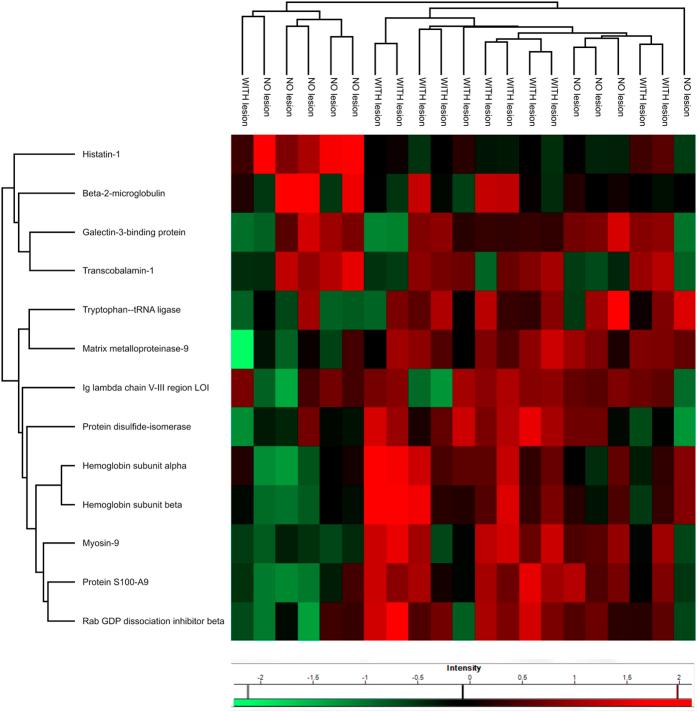
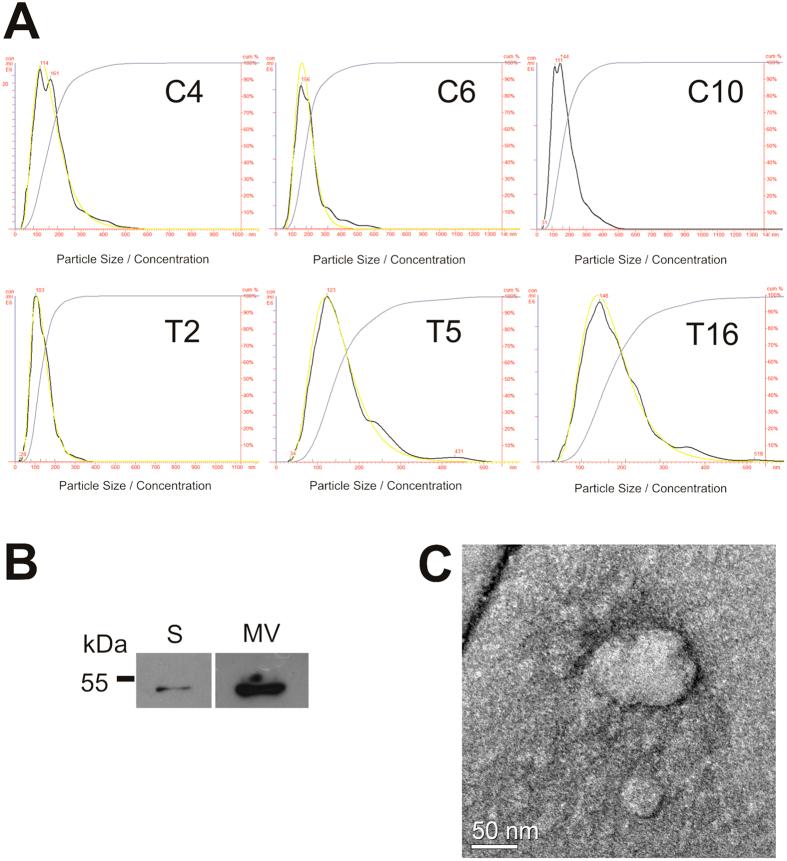
The development and progression of oral cavity squamous cell carcinoma (OSCC) involves complex cellular mechanisms that contribute to the low five-year survival rate of approximately 20% among diagnosed patients. However, the biological processes essential to tumor progression are not completely understood. Therefore, detecting alterations in the salivary proteome may assist in elucidating the cellular mechanisms modulated in OSCC and improve the clinical prognosis of the disease. The proteome of whole saliva and salivary extracellular vesicles (EVs) from patients with OSCC and healthy individuals were analyzed by LC-MS/MS and label-free protein quantification. Proteome data analysis was performed using statistical, machine learning and feature selection methods with additional functional annotation. Biological processes related to immune responses, peptidase inhibitor activity, iron coordination and protease binding were overrepresented in the group of differentially expressed proteins. Proteins related to the inflammatory system, transport of metals and cellular growth and proliferation were identified in the proteome of salivary EVs. The proteomics data were robust and could classify OSCC with 90% accuracy. The saliva proteome analysis revealed that immune processes are related to the presence of OSCC and indicate that proteomics data can contribute to determining OSCC prognosis.
口腔鳞状细胞癌(OSCC)的发生和发展涉及复杂的细胞机制,这导致确诊患者的五年生存率较低,约为20%。然而,肿瘤进展所必需的生物学过程尚未完全明确。因此,检测唾液蛋白质组的变化可能有助于阐明OSCC中调节的细胞机制,并改善该疾病的临床预后。通过液相色谱-串联质谱法(LC-MS/MS)和无标记蛋白质定量分析了OSCC患者和健康个体的全唾液和唾液细胞外囊泡(EVs)的蛋白质组。使用统计、机器学习和特征选择方法以及额外的功能注释进行蛋白质组数据分析。与免疫反应、肽酶抑制剂活性、铁配位和蛋白酶结合相关的生物学过程在差异表达蛋白组中过度富集。在唾液EVs的蛋白质组中鉴定出与炎症系统、金属转运以及细胞生长和增殖相关的蛋白质。蛋白质组学数据可靠,能够以90%的准确率对OSCC进行分类。唾液蛋白质组分析表明,免疫过程与OSCC的存在有关,并表明蛋白质组学数据有助于确定OSCC的预后。



 Zotero 插件