
癌症恶病质综合征中厌食的病理生理学
Pathophysiology of anorexia in the cancer cachexia syndrome.
作者信息
Ezeoke Chukwuemeka Charles, Morley John E
机构信息
United States Navy Medical Corps and PGY-2, Internal Medicine Residency, Saint Louis University Hospital St. Louis, MO, USA.
Division of Geriatrics, Saint Louis University School of Medicine 1402 S. Grand Blvd., M238, St. Louis, MO, 63104, USA ; Division of Endocrinology, Saint Louis University School of Medicine St. Louis, MO, USA.
出版信息
J Cachexia Sarcopenia Muscle. 2015 Dec;6(4):287-302. doi: 10.1002/jcsm.12059. Epub 2015 Oct 27.
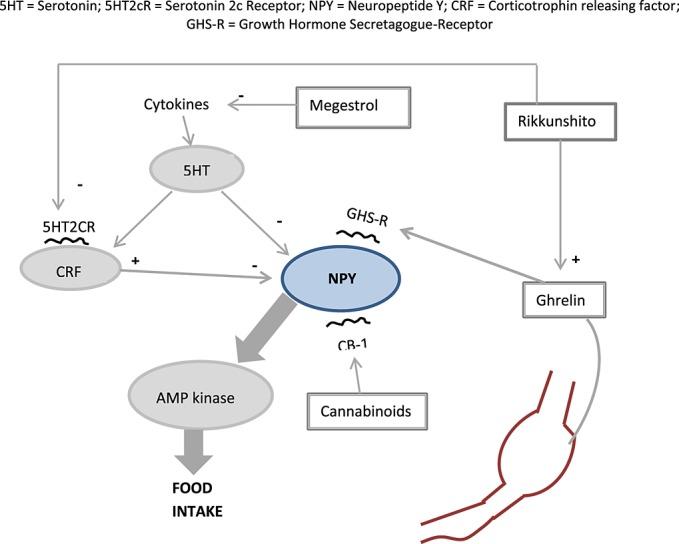
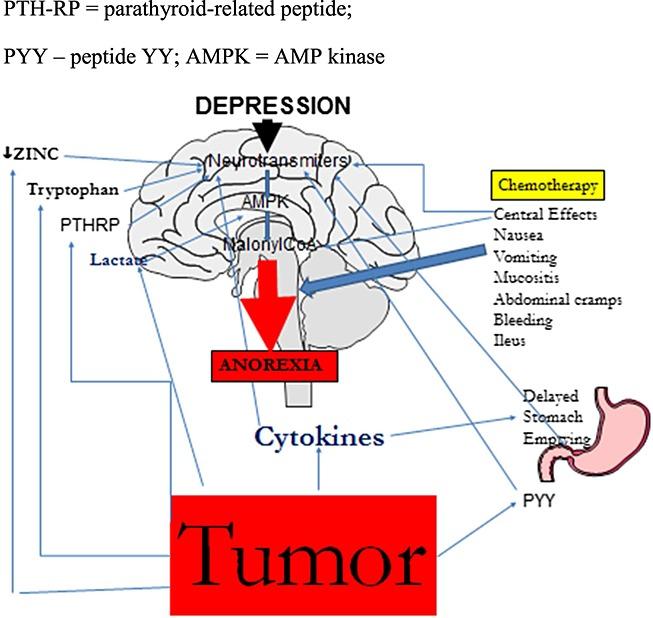
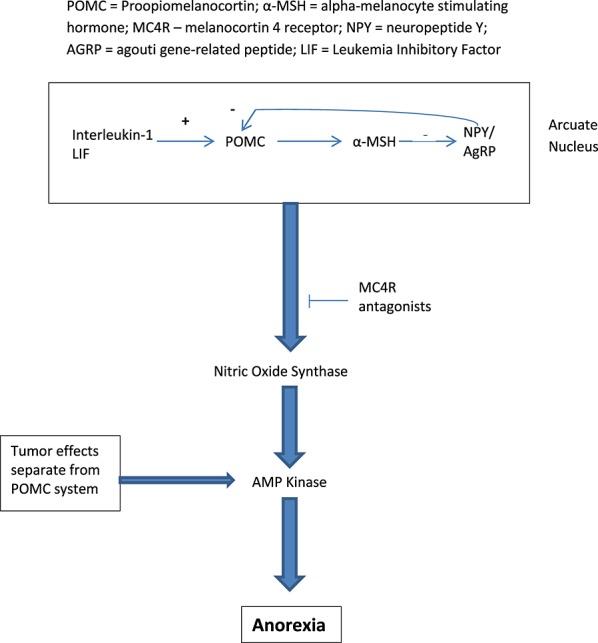
Anorexia is commonly present in persons with cancer and a major component of cancer cachexia. There are multiple causes of anorexia in cancer. Peripherally, these can be due to (i) substances released from or by the tumour, e.g. pro-inflammatory cytokines, lactate, and parathormone-related peptide; (ii) tumours causing dysphagia or altering gut function; (iii) tumours altering nutrients, e.g. zinc deficiency; (iv) tumours causing hypoxia; (v) increased peripheral tryptophan leading to increased central serotonin; or (vi) alterations of release of peripheral hormones that alter feeding, e.g. peptide tyrosine tyrosine and ghrelin. Central effects include depression and pain, decreasing the desire to eat. Within the central nervous system, tumours create multiple alterations in neurotransmitters, neuropeptides, and prostaglandins that modulate feeding. Many of these neurotransmitters appear to produce their anorectic effects through the adenosine monophosphate kinase/methylmalonyl coenzyme A/fatty acid system in the hypothalamus. Dynamin is a guanosine triphosphatase that is responsible for internalization of melanocortin 4 receptors and prostaglandin receptors. Dynamin is up-regulated in a mouse model of cancer anorexia. A number of drugs, e.g. megestrol acetate, cannabinoids, and ghrelin agonists, have been shown to have some ability to be orexigenic in cancer patients.
厌食症在癌症患者中普遍存在,是癌症恶病质的一个主要组成部分。癌症患者厌食的原因有多种。外周方面,可能是由于:(i) 肿瘤释放或由肿瘤产生的物质,如促炎细胞因子、乳酸和甲状旁腺激素相关肽;(ii) 肿瘤导致吞咽困难或改变肠道功能;(iii) 肿瘤改变营养物质,如锌缺乏;(iv) 肿瘤导致缺氧;(v) 外周色氨酸增加导致中枢5-羟色胺增加;或(vi) 改变进食的外周激素释放改变,如肽YY和胃饥饿素。中枢影响包括抑郁和疼痛,降低食欲。在中枢神经系统内,肿瘤会在调节进食的神经递质、神经肽和前列腺素方面产生多种改变。许多这些神经递质似乎通过下丘脑的单磷酸腺苷激酶/甲基丙二酰辅酶A/脂肪酸系统产生厌食作用。发动蛋白是一种鸟苷三磷酸酶,负责黑皮质素4受体和前列腺素受体的内化。在癌症厌食症小鼠模型中,发动蛋白上调。一些药物,如醋酸甲地孕酮、大麻素和胃饥饿素激动剂,已被证明在癌症患者中有一定的促食欲能力。



 Zotero 插件