
一项关于红肉类和加工肉类、肉类烹饪方法、血红素铁、杂环胺与前列腺癌的前瞻性研究的综述和荟萃分析。
A review and meta-analysis of prospective studies of red and processed meat, meat cooking methods, heme iron, heterocyclic amines and prostate cancer.
机构信息
EpidStat Institute, 2100 Commonwealth Blvd, Suite 203, Ann Arbor, MI, USA.
EpidStat Institute, Bothell, WA, USA.
出版信息
Nutr J. 2015 Dec 21;14:125. doi: 10.1186/s12937-015-0111-3.
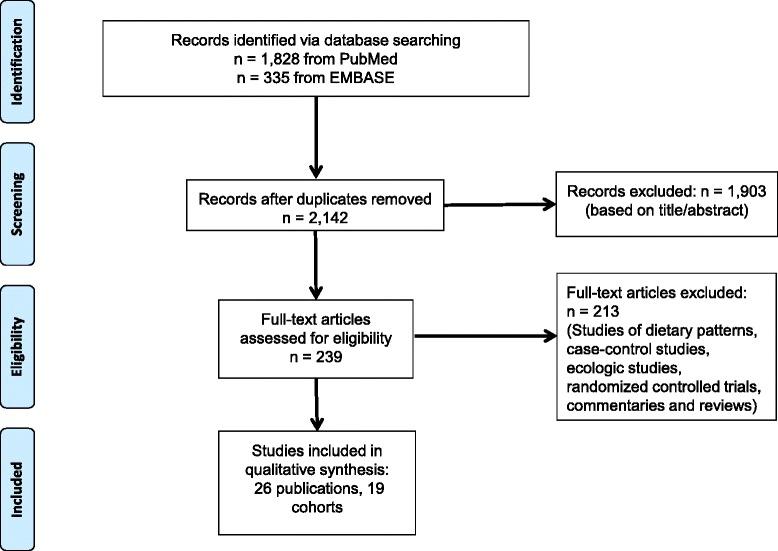
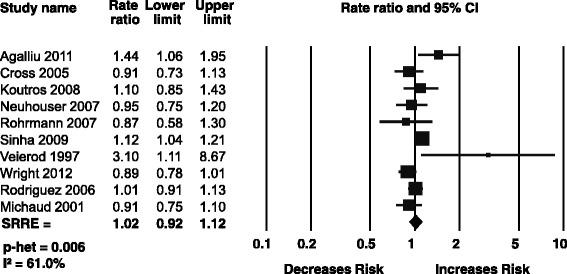
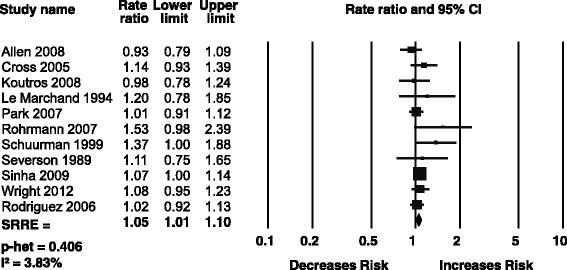
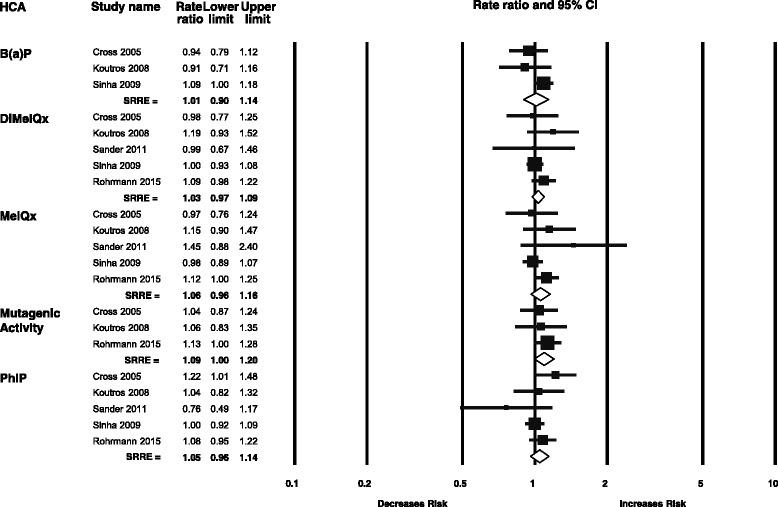
Prostate cancer remains a significant public health concern among men in the U.S. and worldwide. Epidemiologic studies have generally produced inconclusive results for dietary risk factors for prostate cancer, including consumption of red and processed meats. We aimed to update a previous meta-analysis of prospective cohorts of red and processed meats and prostate cancer with the inclusion of new and updated cohort studies, as well as evaluate meat cooking methods, heme iron, and heterocyclic amine (HCA) intake exposure data. A comprehensive literature search was performed and 26 publications from 19 different cohort studies were included. Random effects models were used to calculate summary relative risk estimates (SRREs) for high vs. low exposure categories. Additionally, meta-regression analyses and stratified intake analyses were conducted to evaluate dose-response relationships. The SRREs for total prostate cancer and total red meat consumption, fresh red meat consumption, and processed meat consumption were 1.02 (95% CI: 0.92-1.12), 1.06 (95% CI: 0.97-1.16), and 1.05 (95% CI: 1.01-1.10), respectively. Analyses were also conducted for the outcomes of non-advanced, advanced, and fatal prostate cancer when sufficient data were available, but these analyses did not produce significant results. No significant SRREs were observed for any of the meat cooking methods, HCA, or heme iron analyses. Dose-response analyses did not reveal significant patterns of associations between red or processed meat and prostate cancer. In conclusion, the results from our analyses do not support an association between red meat or processed consumption and prostate cancer, although we observed a weak positive summary estimate for processed meats.
前列腺癌仍然是美国和全球男性关注的重大公共卫生问题。流行病学研究一般对前列腺癌的饮食危险因素得出的结论并不明确,包括红肉类和加工肉类的摄入。我们旨在更新之前对红肉类和加工肉类与前列腺癌的前瞻性队列研究的荟萃分析,纳入新的和更新的队列研究,并评估肉类烹饪方法、血红素铁和杂环胺(HCA)摄入暴露数据。进行了全面的文献检索,纳入了 19 项不同队列研究的 26 项出版物。使用随机效应模型计算高暴露与低暴露类别之间的汇总相对风险估计(SRRE)。此外,还进行了荟萃回归分析和分层摄入量分析,以评估剂量-反应关系。总前列腺癌和总红肉类摄入、新鲜红肉类摄入和加工肉类摄入的 SRRE 分别为 1.02(95%CI:0.92-1.12)、1.06(95%CI:0.97-1.16)和 1.05(95%CI:1.01-1.10)。当有足够的数据时,还针对非晚期、晚期和致命前列腺癌的结局进行了分析,但这些分析没有产生显著结果。任何肉类烹饪方法、HCA 或血红素铁分析均未观察到显著的 SRRE。剂量-反应分析没有显示红肉类或加工肉类与前列腺癌之间存在显著关联的模式。总之,我们的分析结果不支持红肉类或加工肉类消费与前列腺癌之间存在关联,尽管我们观察到加工肉类的汇总估计值呈微弱的正相关。
 Zotero 插件