
过氧化物还原酶在运动诱导的氧化还原信号传导中未被探索的作用?
An unexplored role for Peroxiredoxin in exercise-induced redox signalling?
作者信息
Wadley Alex J, Aldred Sarah, Coles Steven J
机构信息
Institute of Science and the Environment, University of Worcester, Worcestershire WR2 6AJ, United Kingdom.
School of Sport, Exercise and Rehabilitation Sciences, University of Birmingham, B15 2TT, United Kingdom.
出版信息
Redox Biol. 2016 Aug;8:51-8. doi: 10.1016/j.redox.2015.10.003. Epub 2015 Dec 25.
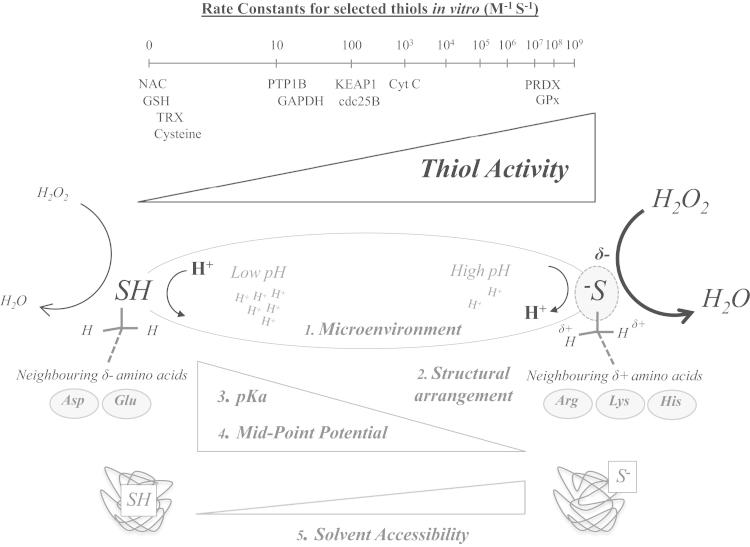
Peroxiredoxin (PRDX) is a ubiquitous oxidoreductase protein with a conserved ionised thiol that permits catalysis of hydrogen peroxide (H2O2) up to a million times faster than any thiol-containing signalling protein. The increased production of H2O2 within active tissues during exercise is thought to oxidise conserved cysteine thiols, which may in turn facilitate a wide variety of physiological adaptations. The precise mechanisms linking H2O2 with the oxidation of signalling thiol proteins (phosphates, kinases and transcription factors) are unclear due to these proteins' low reactivity with H2O2 relative to abundant thiol peroxidases such as PRDX. Recent work has shown that following exposure to H2O2 in vitro, the sulfenic acid of the PRDX cysteine can form mixed disulphides with transcription factors associated with cell survival. This implicates PRDX as an 'active' redox relay in transmitting the oxidising equivalent of H2O2 to downstream proteins. Furthermore, under oxidative stress, PRDX can form stable oxidised dimers that can be secreted into the extracellular space, potentially acting as an extracellular 'stress' signal. There is extensive literature assessing non-specific markers of oxidative stress in response to exercise, however the PRDX catalytic cycle may offer a more robust approach for measuring changes in redox balance following exercise. This review discusses studies assessing PRDX-mediated cellular signalling and integrates the recent advances in redox biology with investigations that have examined the role of PRDX during exercise in humans and animals. Future studies should explore the role of PRDX as a key regulator of peroxide mediated-signal transduction during exercise in humans.
过氧化物酶(PRDX)是一种普遍存在的氧化还原酶蛋白,具有保守的离子化硫醇,能够催化过氧化氢(H2O2),其催化速度比任何含硫醇的信号蛋白快达一百万倍。运动过程中活跃组织内H2O2生成量的增加被认为会氧化保守的半胱氨酸硫醇,这反过来可能促进多种生理适应性变化。由于相对于丰富的硫醇过氧化物酶(如PRDX),这些蛋白与H2O2的反应性较低,因此将H2O2与信号硫醇蛋白(磷酸酶、激酶和转录因子)氧化联系起来的精确机制尚不清楚。最近的研究表明,在体外暴露于H2O2后,PRDX半胱氨酸的亚磺酸可以与细胞存活相关的转录因子形成混合二硫键。这表明PRDX作为一个“活跃的”氧化还原中继器,将H2O2的氧化当量传递给下游蛋白。此外,在氧化应激下,PRDX可以形成稳定的氧化二聚体,这些二聚体可以分泌到细胞外空间,可能作为一种细胞外“应激”信号。有大量文献评估了运动引起的氧化应激的非特异性标志物,然而PRDX催化循环可能为测量运动后氧化还原平衡的变化提供一种更可靠的方法。本综述讨论了评估PRDX介导的细胞信号传导的研究,并将氧化还原生物学的最新进展与研究PRDX在人类和动物运动中的作用的调查相结合。未来的研究应该探索PRDX作为人类运动过程中过氧化物介导的信号转导的关键调节因子的作用。


 Zotero 插件