
蟾毒灵通过激活JNK/p38信号通路下调hTERT表达,诱导胰腺癌细胞和口腔癌细胞发生线粒体依赖性凋亡。
Bufalin Induces Mitochondria-Dependent Apoptosis in Pancreatic and Oral Cancer Cells by Downregulating hTERT Expression via Activation of the JNK/p38 Pathway.
作者信息
Tian Xin, Dai Shundong, Sun Jing, Jiang Shenyi, Sui Chengguang, Meng Fandong, Li Yan, Fu Liye, Jiang Tao, Wang Yang, Su Jia, Jiang Youhong
机构信息
Molecular Oncology Laboratory of Cancer Research Institute, The First Affiliated Hospital of China Medical University, Shenyang 110001, China.
Department of Pathology, The First Affiliated Hospital and College of Basic Medical Sciences of China Medical University, Shenyang 110001, China; Institute of Pathology and Pathophysiology, Shenyang 110001, China.
出版信息
Evid Based Complement Alternat Med. 2015;2015:546210. doi: 10.1155/2015/546210. Epub 2015 Dec 10.
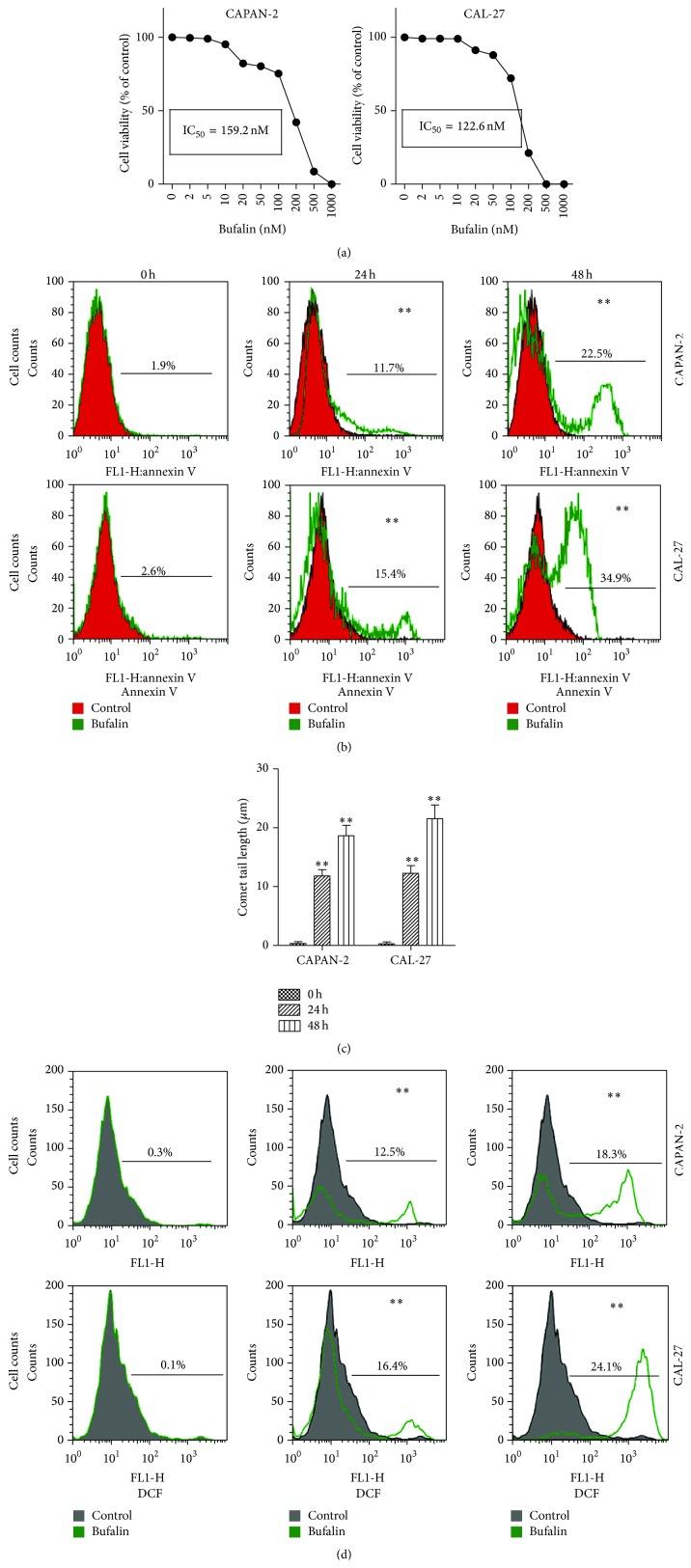
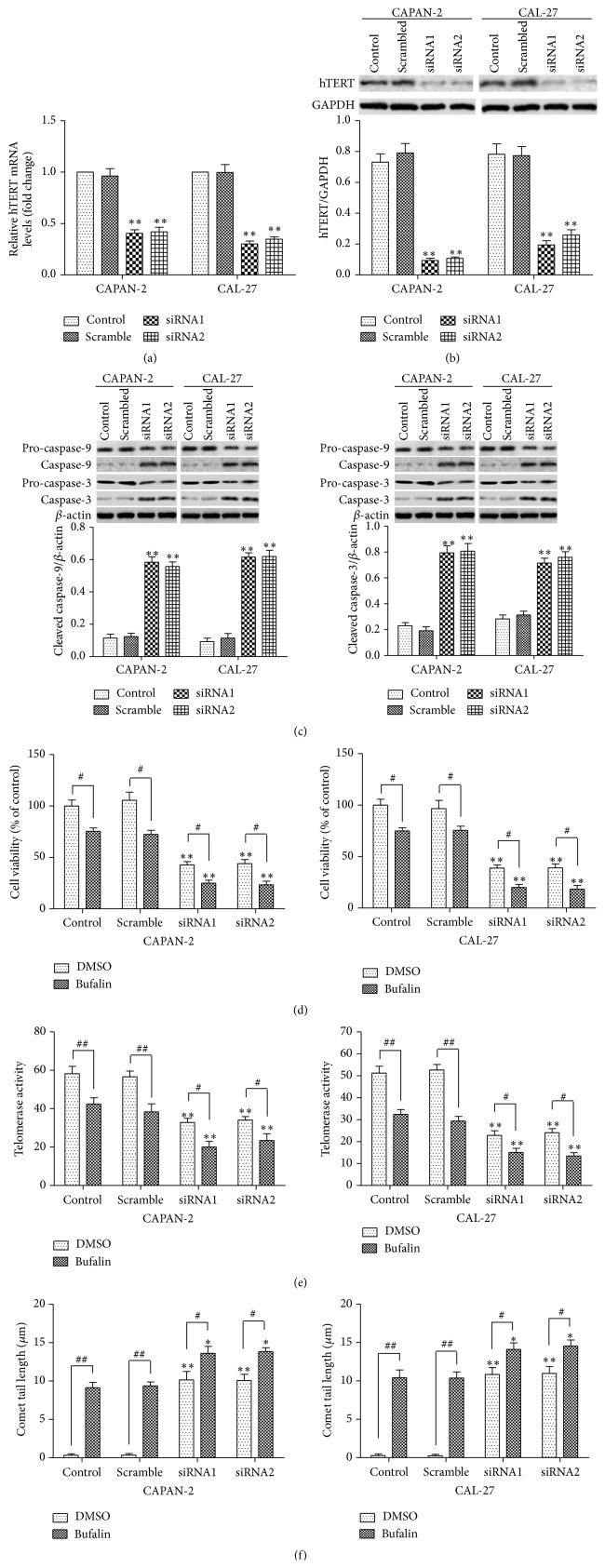
Bufalin, a digoxin-like active component of the traditional Chinese medicine Chan Su, exhibits potent antitumor activities in many human cancers. Bufalin induces mitochondria-dependent apoptosis in cancer cells, but the detailed molecular mechanisms are largely unknown. hTERT, the catalytic subunit of telomerase, protects against mitochondrial damage by binding to mitochondrial DNA and reducing mitochondrial ROS production. In the present study, we investigated the effects of bufalin on the cell viability, ROS production, DNA damage, and apoptosis of CAPAN-2 human pancreatic and CAL-27 human oral cancer cells. Bufalin reduced CAPAN-2 and CAL-27 cell viability with IC50 values of 159.2 nM and 122.6 nM, respectively. The reduced cell viability was accompanied by increased ROS production, DNA damage, and apoptosis and decreased expression of hTERT. hTERT silencing in CAPAN-2 and CAL-27 cells by siRNA resulted in increased caspase-9/-3 cleavage and DNA damage and decreased cell viability. Collectively, these data suggest that bufalin downregulates hTERT to induce mitochondria-dependent apoptosis in CAPAN-2 and CAL-27 cells. Moreover, bufalin increased the phosphorylation of JNK and p38-MAPK in CAPAN-2 and CAL-27 cells, and blocking the JNK/p38-MAPK pathway using the JNK inhibitor SP600125 or the p38-MAPK inhibitor SB203580 reversed bufalin-induced hTERT downregulation. Thus, the JNK/p38 pathway is involved in bufalin-induced hTERT downregulation and subsequent induction of apoptosis by the mitochondrial pathway.
蟾酥灵是中药蟾酥中的一种类地高辛活性成分,在多种人类癌症中表现出强大的抗肿瘤活性。蟾酥灵可诱导癌细胞发生线粒体依赖性凋亡,但其详细的分子机制尚不清楚。端粒酶催化亚基hTERT通过与线粒体DNA结合并减少线粒体活性氧的产生来保护细胞免受线粒体损伤。在本研究中,我们研究了蟾酥灵对CAPAN-2人胰腺癌细胞和CAL-27人口腔癌细胞的细胞活力、活性氧产生、DNA损伤和凋亡的影响。蟾酥灵降低了CAPAN-2和CAL-27细胞的活力,IC50值分别为159.2 nM和122.6 nM。细胞活力的降低伴随着活性氧产生增加、DNA损伤和凋亡增加以及hTERT表达降低。通过小干扰RNA沉默CAPAN-2和CAL-27细胞中的hTERT导致caspase-9/-3切割增加和DNA损伤,并降低细胞活力。总体而言,这些数据表明蟾酥灵通过下调hTERT来诱导CAPAN-2和CAL-27细胞发生线粒体依赖性凋亡。此外,蟾酥灵增加了CAPAN-2和CAL-27细胞中JNK和p38-MAPK的磷酸化,使用JNK抑制剂SP600125或p38-MAPK抑制剂SB203580阻断JNK/p38-MAPK途径可逆转蟾酥灵诱导的hTERT下调。因此,JNK/p38途径参与了蟾酥灵诱导的hTERT下调以及随后通过线粒体途径诱导的凋亡。


 Zotero 插件