
缺氧在肠道炎症中的作用。
The role of hypoxia in intestinal inflammation.
作者信息
Shah Yatrik M
机构信息
Department of Molecular & Integrative Physiology, University of Michigan Medical School, Ann Arbor, MI, 48109, USA.
Department of Internal medicine, Division of Gastroenterology, University of Michigan Medical School, Ann Arbor, MI, 48109, USA.
出版信息
Mol Cell Pediatr. 2016 Dec;3(1):1. doi: 10.1186/s40348-016-0030-1. Epub 2016 Jan 26.
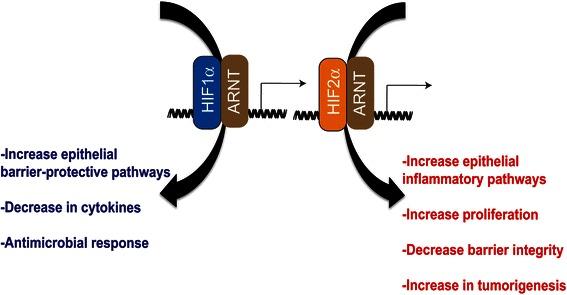
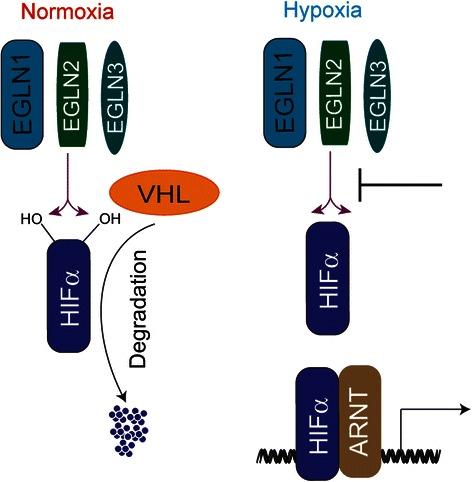
Inflammatory bowel disease (IBD) is a chronic relapsing inflammatory disease of the intestine. IBD is a multifactorial disorder, and IBD-associated genes are critical in innate immune response, inflammatory response, autophagy, and epithelial barrier integrity. Moreover, epithelial oxygen tension plays a critical role in intestinal inflammation and resolution in IBD. The intestines have a dynamic and rapid fluctuation in cellular oxygen tension, which is dysregulated in IBD. Intestinal epithelial cells have a steep oxygen gradient where the tips of the villi are hypoxic and the oxygenation increases at the base of the villi. IBD results in heightened hypoxia throughout the mucosa. Hypoxia signals through a well-conserved family of transcription factors, where hypoxia-inducible factor (HIF)-1α and HIF-2α are essential in maintaining intestinal homeostasis. In inflamed mucosa, HIF-1α increases barrier protective genes, elicits protective innate immune responses, and activates an antimicrobial response through the increase in β-defensins. HIF-2α is essential in maintaining an epithelial-elicited inflammatory response and the regenerative and proliferative capacity of the intestine following an acute injury. HIF-1α activation in colitis leads to a protective response, whereas chronic activation of HIF-2α increases the pro-inflammatory response, intestinal injury, and cancer. In this mini-review, we detail the role of HIF-1α and HIF-2α in intestinal inflammation and injury and therapeutic implications of targeting HIF signaling in IBD.
炎症性肠病(IBD)是一种肠道慢性复发性炎症性疾病。IBD是一种多因素疾病,与IBD相关的基因在固有免疫反应、炎症反应、自噬和上皮屏障完整性中起关键作用。此外,上皮氧张力在IBD的肠道炎症和炎症消退中起关键作用。肠道细胞氧张力存在动态快速波动,在IBD中这种波动失调。肠上皮细胞存在陡峭的氧梯度,绒毛顶端缺氧,而绒毛底部氧合增加。IBD导致整个黏膜缺氧加剧。缺氧通过一个保守的转录因子家族发出信号,其中缺氧诱导因子(HIF)-1α和HIF-2α在维持肠道稳态中至关重要。在炎症黏膜中,HIF-1α增加屏障保护基因,引发保护性固有免疫反应,并通过增加β-防御素激活抗菌反应。HIF-2α在维持上皮引发的炎症反应以及急性损伤后肠道的再生和增殖能力方面至关重要。结肠炎中HIF-1α的激活导致保护性反应,而HIF-2α的慢性激活会增加促炎反应、肠道损伤和癌症。在本综述中,我们详细阐述了HIF-1α和HIF-2α在肠道炎症和损伤中的作用以及靶向IBD中HIF信号通路的治疗意义。
 Zotero 插件