
银纳米颗粒对HT22海马神经元细胞中p53/p21信号通路介导的增殖、DNA损伤反应及甲基化参数的长期影响
Prolonged Effects of Silver Nanoparticles on p53/p21 Pathway-Mediated Proliferation, DNA Damage Response, and Methylation Parameters in HT22 Hippocampal Neuronal Cells.
作者信息
Mytych Jennifer, Zebrowski Jacek, Lewinska Anna, Wnuk Maciej
机构信息
Department of Genetics, University of Rzeszow, Rejtana 16C, 35-959, Rzeszow, Poland.
Department of Plant Physiology, University of Rzeszow, Werynia 502, 36-100, Kolbuszowa, Poland.
出版信息
Mol Neurobiol. 2017 Mar;54(2):1285-1300. doi: 10.1007/s12035-016-9688-6. Epub 2016 Feb 3.
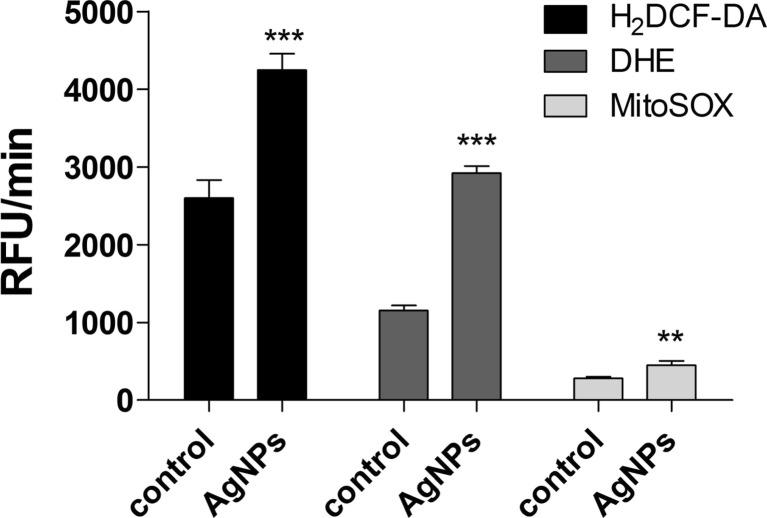
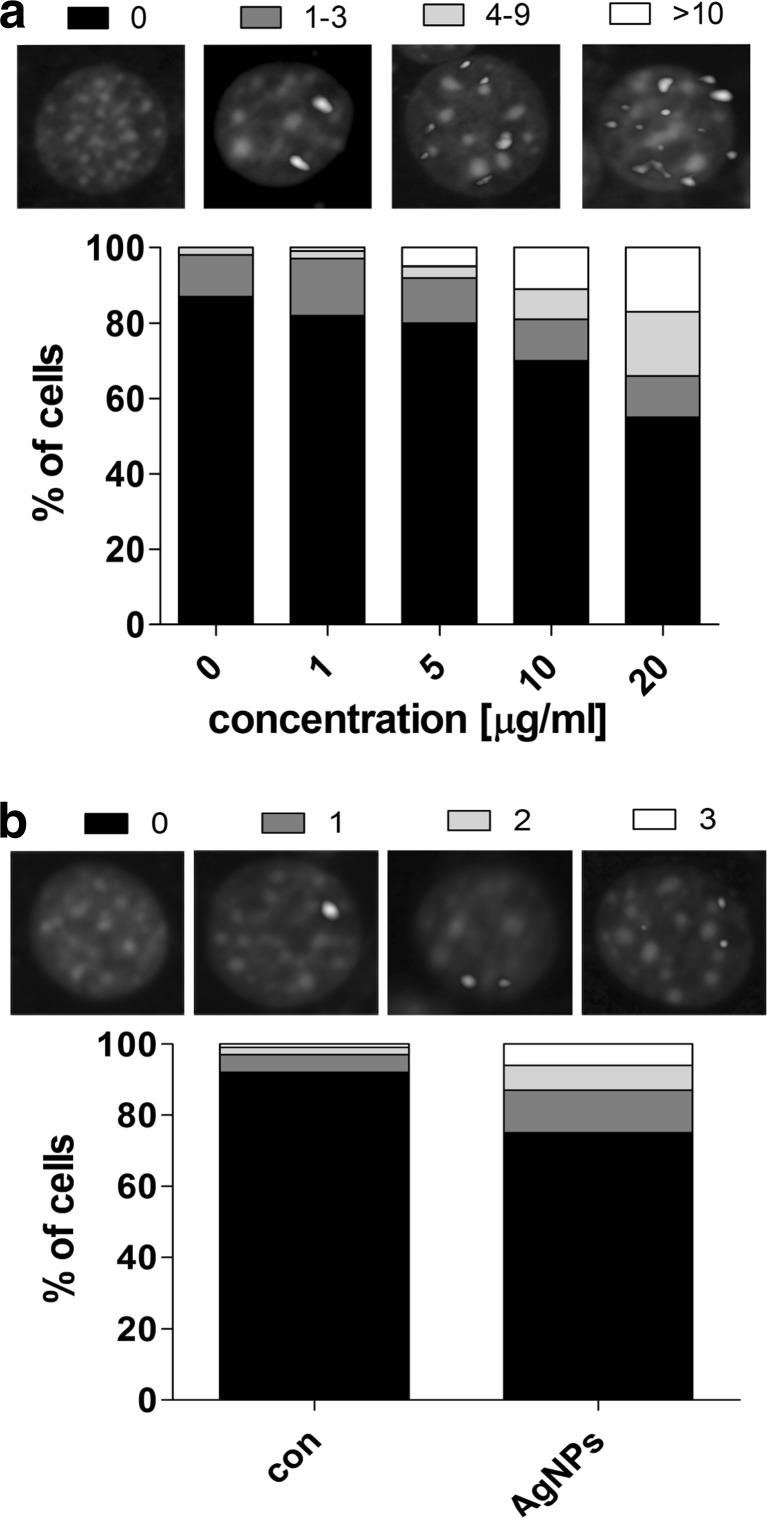
It is widely accepted that silver nanoparticles (AgNPs) are toxic to biological systems. However, little is known about their actions at molecular level and the cytophysiological effects after AgNP removal. As nanoparticles are suggested a promising tool to transport drugs to the brain for use in neurological conditions, we used HT22 mouse hippocampal neuronal cells as a model to study AgNP-mediated effects after their removal from the cell culture medium. We selected a relatively low concentration of AgNPs, 5 μg/ml, treated the cells for 48 h, and evaluated AgNP-induced cytophysiological effects after 96 h of AgNP removal. AgNP removal did not result in cytotoxicity. In contrast, AgNPs modulated HT22 cell cycle and proliferation and induced oxidative stress and 53BP1 recruitment, which were accompanied by elevated levels of p53 and p21. AgNP-associated diminution in lamin B1 pools did not significantly affect the structure of the nucleus. No disruption in F-actin dynamics was observed upon AgNP treatment. Moreover, we showed for the first time that AgNPs stimulated changes in DNA methylation: the augmentation in 5-methylcytosine (5-mC) and DNMT1, DNMT2, DNMT3a, and DNMT3b levels were observed. The upregulation of DNMT2 may be a part of cellular stress response to AgNP treatment. Taken together, AgNP removal resulted in p53/p21-mediated inhibition of cell proliferation, oxidant-based DNA damage response, and changes in DNA methylation patterns, which suggests that more attention should be paid to the possible outcomes in individuals exposed to nano-sized biomaterials.
人们普遍认为银纳米颗粒(AgNPs)对生物系统有毒性。然而,对于它们在分子水平上的作用以及从细胞培养基中去除AgNP后的细胞生理效应却知之甚少。由于纳米颗粒被认为是一种有前途的工具,可将药物输送到大脑用于治疗神经疾病,我们使用HT22小鼠海马神经元细胞作为模型,研究从细胞培养基中去除AgNP后其介导的效应。我们选择了相对较低浓度的AgNP,即5μg/ml,处理细胞48小时,并在去除AgNP 96小时后评估AgNP诱导的细胞生理效应。去除AgNP并未导致细胞毒性。相反,AgNPs调节了HT22细胞周期和增殖,诱导了氧化应激和53BP1募集,同时伴随着p53和p21水平的升高。AgNP导致的核纤层蛋白B1池减少并未显著影响细胞核的结构。在AgNP处理后未观察到F-肌动蛋白动力学的破坏。此外,我们首次表明AgNPs刺激了DNA甲基化的变化:观察到5-甲基胞嘧啶(5-mC)以及DNA甲基转移酶1、DNA甲基转移酶2、DNA甲基转移酶3a和DNA甲基转移酶3b水平的增加。DNA甲基转移酶2的上调可能是细胞对AgNP处理应激反应的一部分。综上所述,去除AgNP导致了p53/p21介导的细胞增殖抑制、基于氧化剂的DNA损伤反应以及DNA甲基化模式的变化,这表明应更加关注接触纳米级生物材料的个体可能出现的后果。




 Zotero 插件