
Vikodak——一个用于从16S宏基因组数据集中推断微生物群落功能潜力的模块化框架。
Vikodak--A Modular Framework for Inferring Functional Potential of Microbial Communities from 16S Metagenomic Datasets.
作者信息
Nagpal Sunil, Haque Mohammed Monzoorul, Mande Sharmila S
机构信息
Bio-Sciences R&D Division, TCS Innovation Labs, Tata Research Development & Design Centre, 54-B, Hadapsar Industrial Estate, Pune 411 013, Maharashtra, India.
出版信息
PLoS One. 2016 Feb 5;11(2):e0148347. doi: 10.1371/journal.pone.0148347. eCollection 2016.
BACKGROUND
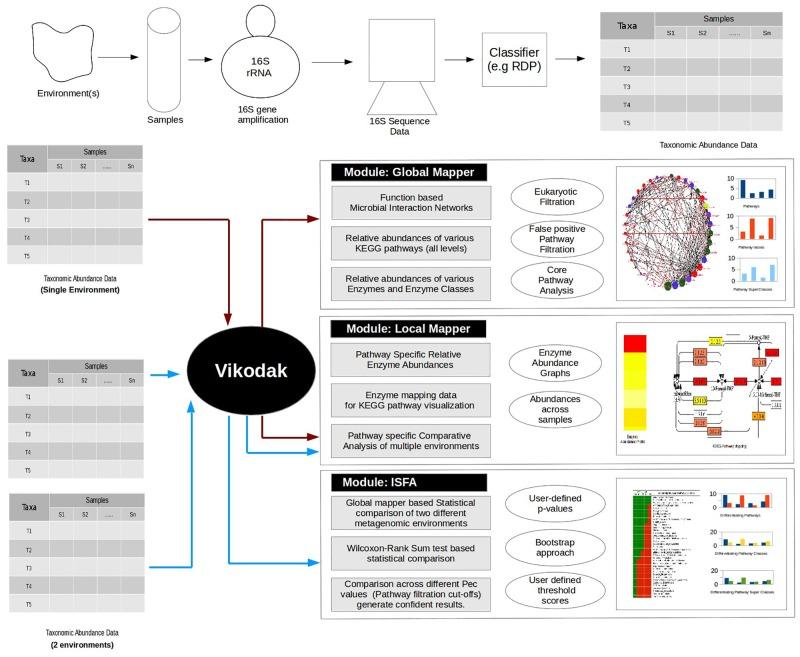
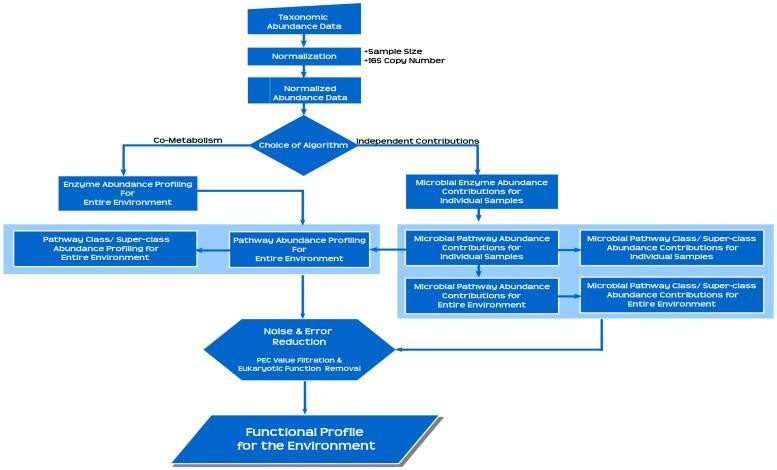
The overall metabolic/functional potential of any given environmental niche is a function of the sum total of genes/proteins/enzymes that are encoded and expressed by various interacting microbes residing in that niche. Consequently, prior (collated) information pertaining to genes, enzymes encoded by the resident microbes can aid in indirectly (re)constructing/ inferring the metabolic/ functional potential of a given microbial community (given its taxonomic abundance profile). In this study, we present Vikodak--a multi-modular package that is based on the above assumption and automates inferring and/ or comparing the functional characteristics of an environment using taxonomic abundance generated from one or more environmental sample datasets. With the underlying assumptions of co-metabolism and independent contributions of different microbes in a community, a concerted effort has been made to accommodate microbial co-existence patterns in various modules incorporated in Vikodak.
RESULTS
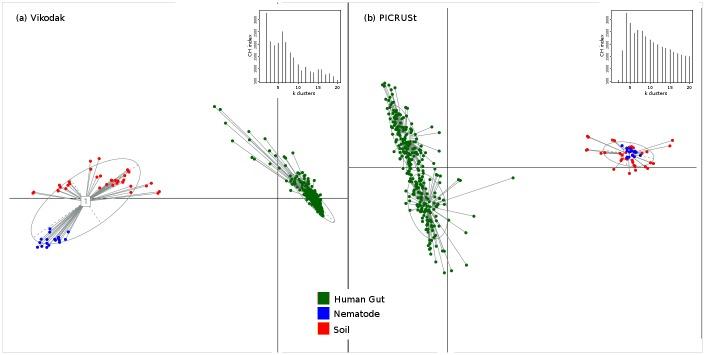
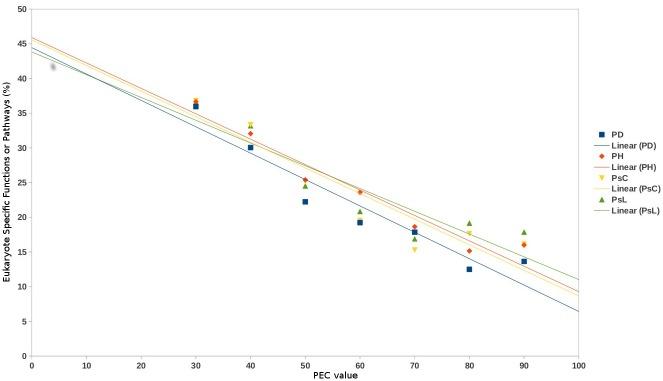
Validation experiments on over 1400 metagenomic samples have confirmed the utility of Vikodak in (a) deciphering enzyme abundance profiles of any KEGG metabolic pathway, (b) functional resolution of distinct metagenomic environments, (c) inferring patterns of functional interaction between resident microbes, and (d) automating statistical comparison of functional features of studied microbiomes. Novel features incorporated in Vikodak also facilitate automatic removal of false positives and spurious functional predictions.
CONCLUSIONS
With novel provisions for comprehensive functional analysis, inclusion of microbial co-existence pattern based algorithms, automated inter-environment comparisons; in-depth analysis of individual metabolic pathways and greater flexibilities at the user end, Vikodak is expected to be an important value addition to the family of existing tools for 16S based function prediction.
AVAILABILITY AND IMPLEMENTATION
A web implementation of Vikodak can be publicly accessed at: http://metagenomics.atc.tcs.com/vikodak. This web service is freely available for all categories of users (academic as well as commercial).
背景
任何特定环境生态位的整体代谢/功能潜力是该生态位中各种相互作用的微生物所编码和表达的基因/蛋白质/酶的总和的函数。因此,与常驻微生物编码的基因、酶相关的先前(整理好的)信息有助于间接(重新)构建/推断给定微生物群落的代谢/功能潜力(鉴于其分类丰度概况)。在本研究中,我们展示了Vikodak——一个基于上述假设的多模块软件包,它使用从一个或多个环境样本数据集中生成的分类丰度来自动推断和/或比较环境的功能特征。基于共代谢以及群落中不同微生物的独立贡献这一基本假设,我们做出了协同努力,以在Vikodak所包含的各个模块中纳入微生物共存模式。
结果
对超过1400个宏基因组样本的验证实验证实了Vikodak在以下方面的效用:(a)解读任何KEGG代谢途径的酶丰度概况,(b)区分不同宏基因组环境的功能,(c)推断常驻微生物之间的功能相互作用模式,以及(d)自动对所研究微生物群落的功能特征进行统计比较。Vikodak中纳入的新功能还有助于自动去除误报和虚假的功能预测。
结论
凭借用于全面功能分析的新规定、基于微生物共存模式的算法、自动的环境间比较、对单个代谢途径的深入分析以及在用户端更大的灵活性,预计Vikodak将成为现有基于16S功能预测工具家族的重要补充。
可用性和实现方式
Vikodak的网络实现版本可在以下网址公开访问:http://metagenomics.atc.tcs.com/vikodak。该网络服务对所有类别的用户(学术用户和商业用户)免费开放。

 Zotero 插件