
玉米磷脂酰肌醇合酶基因(ZmPIS)467 bp启动子的鉴定,该启动子在转基因烟草中赋予高水平基因表达以及盐胁迫或渗透胁迫诱导性
Identification of a 467 bp Promoter of Maize Phosphatidylinositol Synthase Gene (ZmPIS) Which Confers High-Level Gene Expression and Salinity or Osmotic Stress Inducibility in Transgenic Tobacco.
作者信息
Zhang Hongli, Hou Jiajia, Jiang Pingping, Qi Shoumei, Xu Changzheng, He Qiuxia, Ding Zhaohua, Wang Zhiwu, Zhang Kewei, Li Kunpeng
机构信息
Key Laboratory of Plant Cell Engineering and Germplasm Innovation, Ministry of Education, School of Life Science, Shandong University Jinan, China.
Research Center of Bioenergy and Bioremediation, College of Resources and Environment, Southwest University Chongqing, China.
出版信息
Front Plant Sci. 2016 Feb 1;7:42. doi: 10.3389/fpls.2016.00042. eCollection 2016.
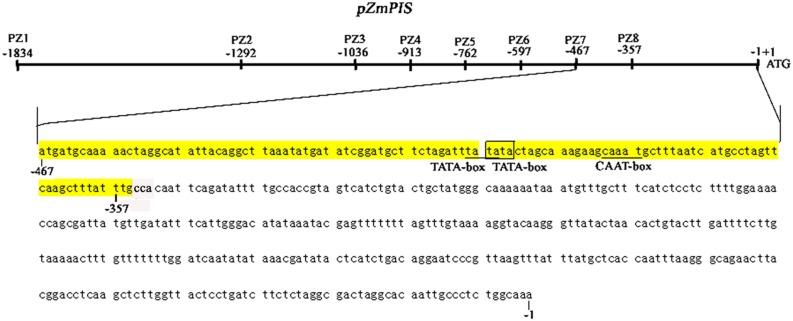
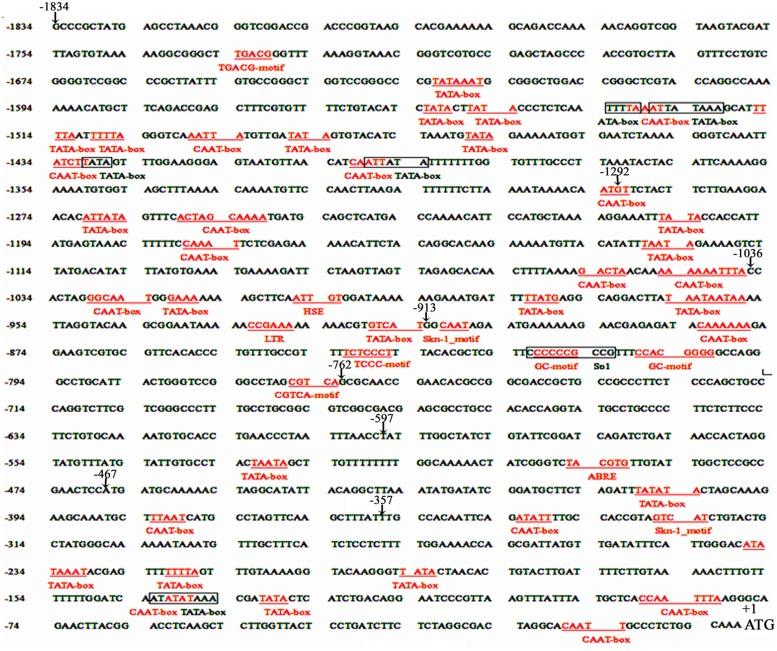
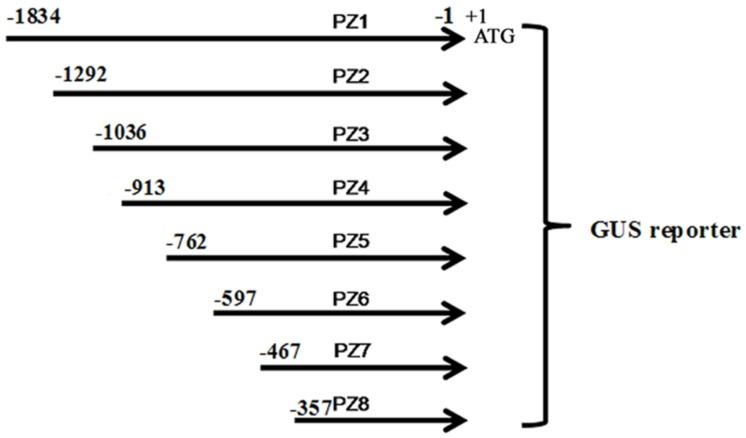
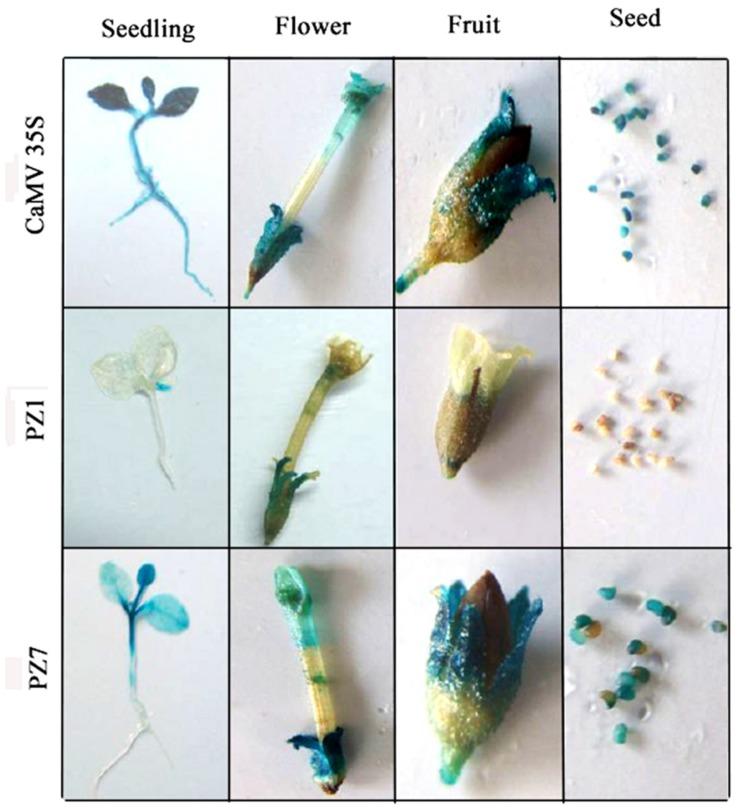
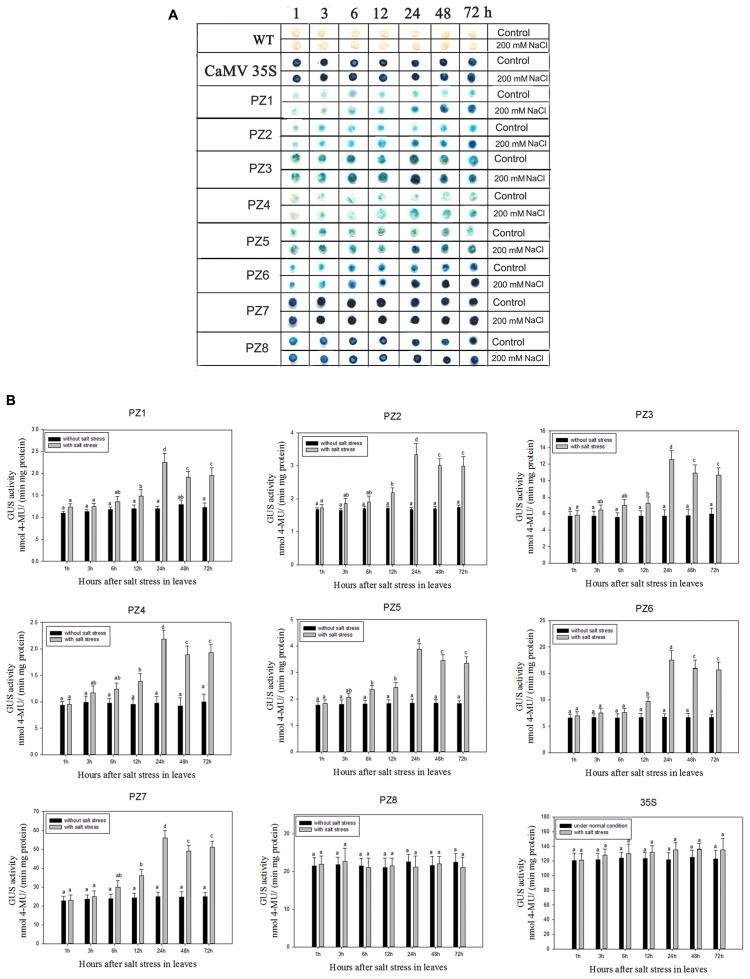
Salinity and drought often affect plant growth and crop yields. Cloning and identification of salinity and drought stress inducible promoters is of great significance for their use in the genetic improvement of crop resistance. Previous studies showed that phosphatidylinositol synthase is involved in plant salinity and drought stress responses but its promoter has not been characterized by far. In the study, the promoter (pZmPIS, 1834 bp upstream region of the translation initiation site) was isolated from maize genome. To functionally validate the promoter, eight 5' deletion fragments of pZmPIS in different lengths were fused to GUS to produce pZmPIS::GUS constructs and transformed into tobacco, namely PZ1-PZ8. The transcription activity and expression pattern obviously changed when the promoter was truncated. Previous studies have demonstrated that NaCl and PEG treatments are usually used to simulate salinity and drought treatments. The results showed that PZ1-PZ7 can respond well upon NaCl and PEG treatments, while PZ8 not. PZ7 (467 bp) displayed the highest transcription activity in all tissues of transgenic tobacco amongst 5' deleted promoter fragments, which corresponds to about 20 and 50% of CaMV35S under normal and NaCl or PEG treatment, respectively. This implied that PZ7 is the core region of pZmPIS which confers high-level gene expression and NaCl or PEG inducible nature. The 113 bp segment between PZ7 and PZ8 (-467 to -355 bp) was considered as the key sequence for ZmPIS responding to NaCl or PEG treatment. GUS transient assay in tobacco leaves showed that this segment was sufficient for the NaCl or PEG stress response. Bioinformatic analysis revealed that the 113 bp sequence may contain new elements that are crucial for ZmPIS response to NaCl or PEG stress. These results promote our understanding on transcriptional regulation mechanism of ZmPIS and the characterized PZ7 promoter fragment would be an ideal candidate for the overexpression of drought and salinity responsive gene to improve crop resistance.
盐度和干旱常常影响植物生长及作物产量。克隆和鉴定盐度及干旱胁迫诱导型启动子对于将其用于作物抗性的遗传改良具有重要意义。先前的研究表明磷脂酰肌醇合成酶参与植物对盐度和干旱胁迫的响应,但其启动子迄今尚未得到表征。在本研究中,从玉米基因组中分离出了启动子(pZmPIS,翻译起始位点上游1834 bp区域)。为了对该启动子进行功能验证,将不同长度的pZmPIS的八个5'缺失片段与GUS融合,构建pZmPIS::GUS载体并转化到烟草中,即PZ1 - PZ8。当启动子被截短时,转录活性和表达模式明显改变。先前的研究表明,NaCl和PEG处理通常用于模拟盐度和干旱处理。结果显示,PZ1 - PZ7在NaCl和PEG处理下能良好响应,而PZ8不能。在5'缺失的启动子片段中,PZ7(467 bp)在转基因烟草的所有组织中表现出最高的转录活性,在正常条件下以及NaCl或PEG处理时,分别相当于CaMV35S活性的约20%和50%。这表明PZ7是pZmPIS的核心区域,赋予高水平基因表达以及NaCl或PEG诱导特性。PZ7和PZ8之间的113 bp片段(-467至-355 bp)被认为是ZmPIS响应NaCl或PEG处理的关键序列。烟草叶片中的GUS瞬时分析表明,该片段足以介导NaCl或PEG胁迫响应。生物信息学分析显示,113 bp序列可能包含对ZmPIS响应NaCl或PEG胁迫至关重要的新元件。这些结果增进了我们对ZmPIS转录调控机制的理解,并且所鉴定的PZ7启动子片段将是用于过表达干旱和盐度响应基因以提高作物抗性的理想候选元件。



 Zotero 插件