
在胰岛素抵抗状态下大脑胰岛素信号增强,FOXO和PGC-1α减少,β淀粉样蛋白1-40/42和磷酸化tau蛋白增加,可能促使阿尔茨海默病的发展。
Brain Insulin Signaling Is Increased in Insulin-Resistant States and Decreases in FOXOs and PGC-1α and Increases in Aβ1-40/42 and Phospho-Tau May Abet Alzheimer Development.
作者信息
Sajan Mini, Hansen Barbara, Ivey Robert, Sajan Joshua, Ari Csilla, Song Shijie, Braun Ursula, Leitges Michael, Farese-Higgs Margaret, Farese Robert V
机构信息
Medical, Neurology, Psychiatry, and Research Services, James A. Haley Veterans Hospital, Tampa, FL Department of Internal Medicine, Morsani College of Medicine, University of South Florida, Tampa, FL.
Department of Internal Medicine, Morsani College of Medicine, University of South Florida, Tampa, FL.
出版信息
Diabetes. 2016 Jul;65(7):1892-903. doi: 10.2337/db15-1428. Epub 2016 Feb 19.
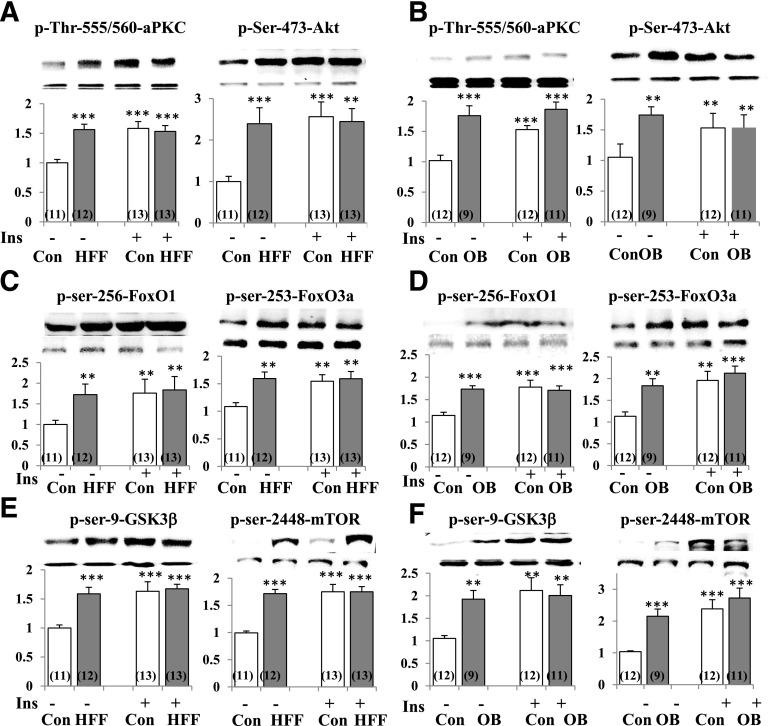
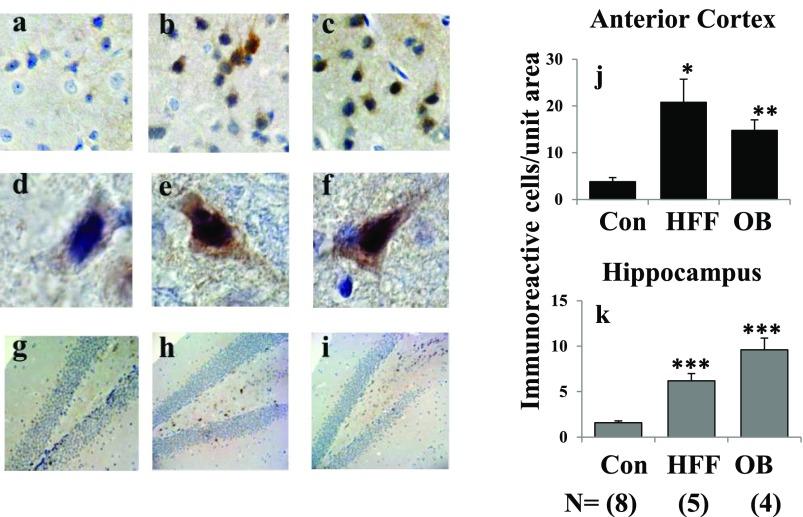
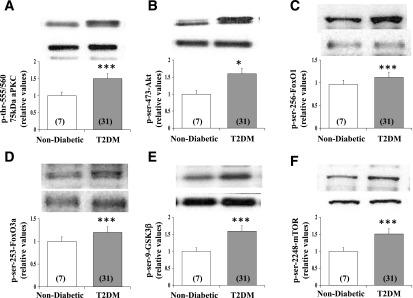
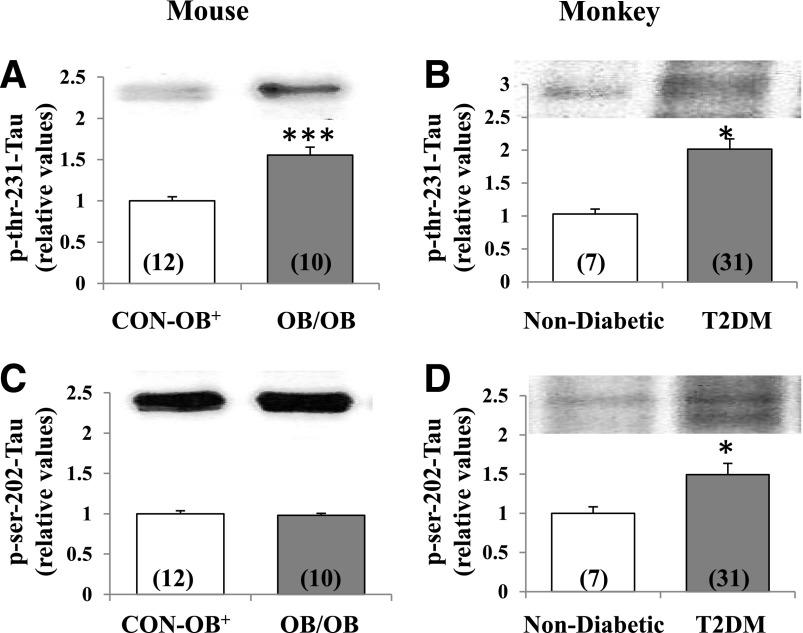
Increased coexistence of Alzheimer disease (AD) and type 2 diabetes mellitus (T2DM) suggests that insulin resistance abets neurodegenerative processes, but linkage mechanisms are obscure. Here, we examined insulin signaling factors in brains of insulin-resistant high-fat-fed mice, ob/ob mice, mice with genetically impaired muscle glucose transport, and monkeys with diet-dependent long-standing obesity/T2DM. In each model, the resting/basal activities of insulin-regulated brain protein kinases, Akt and atypical protein kinase C (aPKC), were maximally increased. Moreover, Akt hyperactivation was accompanied by hyperphosphorylation of substrates glycogen synthase kinase-3β and mammalian target of rapamycin and FOXO proteins FOXO1, FOXO3A, and FOXO4 and decreased peroxisome proliferator-activated receptor γ coactivator-1α (PGC-1α) expression. Akt hyperactivation was confirmed in individual neurons of anterocortical and hippocampal regions that house cognition/memory centers. Remarkably, β-amyloid (Aβ1-40/42) peptide levels were as follows: increased in the short term by insulin in normal mice, increased basally in insulin-resistant mice and monkeys, and accompanied by diminished amyloid precursor protein in monkeys. Phosphorylated tau levels were increased in ob/ob mice and T2DM monkeys. Importantly, with correction of hyperinsulinemia by inhibition of hepatic aPKC and improvement in systemic insulin resistance, brain insulin signaling normalized. As FOXOs and PGC-1α are essential for memory and long-term neuronal function and regeneration and as Aβ1-40/42 and phospho-tau may increase interneuronal plaques and intraneuronal tangles, presently observed aberrations in hyperinsulinemic states may participate in linking insulin resistance to AD.
阿尔茨海默病(AD)与2型糖尿病(T2DM)共存现象增多,提示胰岛素抵抗促进神经退行性变过程,但相关联系机制尚不清楚。在此,我们研究了胰岛素抵抗的高脂喂养小鼠、ob/ob小鼠、肌肉葡萄糖转运基因受损的小鼠以及饮食诱导长期肥胖/T2DM的猴子大脑中的胰岛素信号因子。在每个模型中,胰岛素调节的脑蛋白激酶Akt和非典型蛋白激酶C(aPKC)的静息/基础活性均显著增加。此外,Akt过度激活伴随着糖原合酶激酶-3β、雷帕霉素靶蛋白以及FOXO蛋白FOXO1、FOXO3A和FOXO4的过度磷酸化,同时过氧化物酶体增殖物激活受体γ共激活因子-1α(PGC-1α)表达降低。在包含认知/记忆中心的前额叶皮质和海马区的单个神经元中证实了Akt过度激活。值得注意的是,β淀粉样蛋白(Aβ1-40/42)肽水平如下:正常小鼠中胰岛素短期升高,胰岛素抵抗小鼠和猴子中基础水平升高,且猴子中淀粉样前体蛋白减少。ob/ob小鼠和T2DM猴子中磷酸化tau水平升高。重要的是,通过抑制肝脏aPKC纠正高胰岛素血症并改善全身胰岛素抵抗后,脑胰岛素信号恢复正常。由于FOXO和PGC-1α对记忆、长期神经元功能及再生至关重要,且Aβ1-40/42和磷酸化tau可能增加神经元间斑块和神经元内缠结,目前在高胰岛素血症状态下观察到的异常可能参与了胰岛素抵抗与AD的关联。




 Zotero 插件