
共济失调蛋白-10是一种恶病质素混合物的组成部分,可引发癌症恶病质中的心脏代谢功能障碍。
Ataxin-10 is part of a cachexokine cocktail triggering cardiac metabolic dysfunction in cancer cachexia.
作者信息
Schäfer Michaela, Oeing Christian U, Rohm Maria, Baysal-Temel Ezgi, Lehmann Lorenz H, Bauer Ralf, Volz H Christian, Boutros Michael, Sohn Daniela, Sticht Carsten, Gretz Norbert, Eichelbaum Katrin, Werner Tessa, Hirt Marc N, Eschenhagen Thomas, Müller-Decker Karin, Strobel Oliver, Hackert Thilo, Krijgsveld Jeroen, Katus Hugo A, Berriel Diaz Mauricio, Backs Johannes, Herzig Stephan
机构信息
Institute for Diabetes and Cancer (IDC), Helmholtz Center Munich, 85764 Neuherberg, Germany; Joint Heidelberg-IDC Translational Diabetes Program, Inner Medicine I, Heidelberg University Hospital, 69120 Heidelberg, Germany; DZHK (German Centre for Cardiovascular Research), Partner site Heidelberg/Mannheim, 69120 Heidelberg, Germany; German Center for Diabetes Research (DZD), 85764 Neuherberg, Germany.
Department of Cardiology, Angiology and Pulmonology, University Hospital Heidelberg, 69120 Heidelberg, Germany; DZHK (German Centre for Cardiovascular Research), Partner site Heidelberg/Mannheim, 69120 Heidelberg, Germany; Department of Molecular Cardiology and Epigenetics, University Hospital Heidelberg, 69120 Heidelberg, Germany.
出版信息
Mol Metab. 2015 Nov 26;5(2):67-78. doi: 10.1016/j.molmet.2015.11.004. eCollection 2016 Feb.
OBJECTIVES
Cancer cachexia affects the majority of tumor patients and significantly contributes to high mortality rates in these subjects. Despite its clinical importance, the identity of tumor-borne signals and their impact on specific peripheral organ systems, particularly the heart, remain mostly unknown.
METHODS AND RESULTS
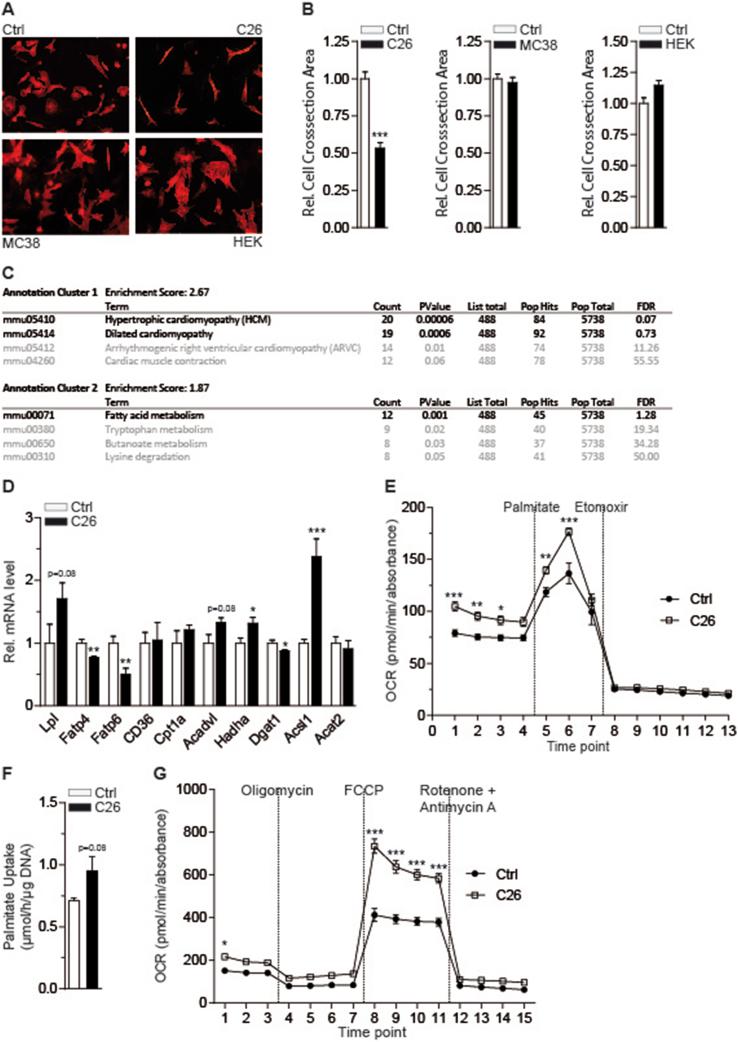
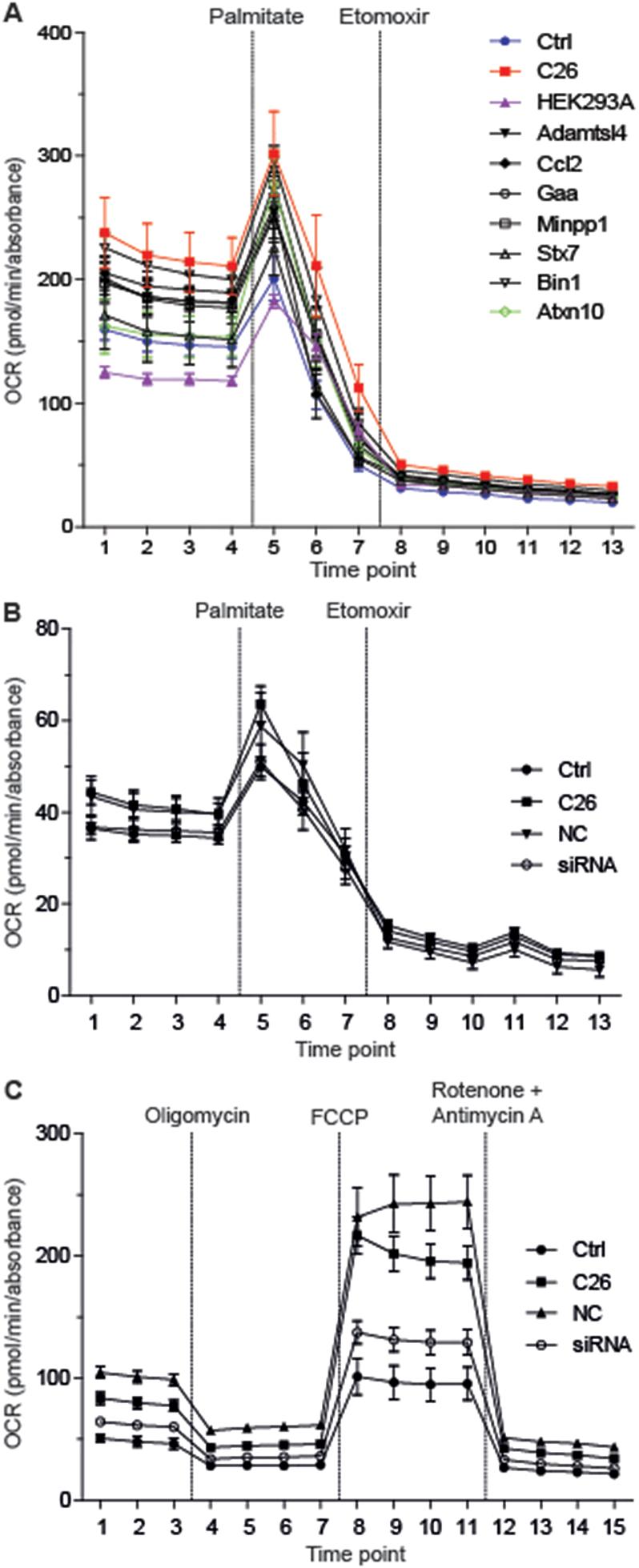
By combining differential colon cancer cell secretome profiling with large-scale cardiomyocyte phenotyping, we identified a signature panel of seven "cachexokines", including Bridging integrator 1, Syntaxin 7, Multiple inositol-polyphosphate phosphatase 1, Glucosidase alpha acid, Chemokine ligand 2, Adamts like 4, and Ataxin-10, which were both sufficient and necessary to trigger cardiac atrophy and aberrant fatty acid metabolism in cardiomyocytes. As a prototypical example, engineered secretion of Ataxin-10 from non-cachexia-inducing cells was sufficient to induce cachexia phenotypes in cardiomyocytes, correlating with elevated Ataxin-10 serum levels in murine and human cancer cachexia models.
CONCLUSIONS
As Ataxin-10 serum levels were also found to be elevated in human cachectic cancer patients, the identification of Ataxin-10 as part of a cachexokine cocktail now provides a rational approach towards personalized predictive, diagnostic and therapeutic measures in cancer cachexia.
目的
癌症恶病质影响大多数肿瘤患者,并显著导致这些患者的高死亡率。尽管其具有临床重要性,但肿瘤源性信号的身份及其对特定外周器官系统(尤其是心脏)的影响仍大多未知。
方法与结果
通过将结肠癌细胞分泌组差异分析与大规模心肌细胞表型分析相结合,我们鉴定出了由7种“恶病质因子”组成的特征性组合,包括衔接整合素1、 syntaxin 7、多肌醇多磷酸磷酸酶1、α酸性葡萄糖苷酶、趋化因子配体2、类亚当金属蛋白酶4和ataxin - 10,这些因子对于触发心肌细胞的心脏萎缩和异常脂肪酸代谢既是充分的也是必要的。作为一个典型例子,从非恶病质诱导细胞中工程化分泌ataxin - 10足以在心肌细胞中诱导恶病质表型,这与小鼠和人类癌症恶病质模型中ataxin - 10血清水平升高相关。
结论
由于在人类恶病质癌症患者中也发现ataxin - 10血清水平升高,将ataxin - 10鉴定为恶病质因子组合的一部分,现在为癌症恶病质的个性化预测、诊断和治疗措施提供了一种合理的方法。



 Zotero 插件