
血清循环微小RNA可预测高危转移性疾病小鼠模型中的神经母细胞瘤进展。
Serum-circulating miRNAs predict neuroblastoma progression in mouse model of high-risk metastatic disease.
作者信息
Ramraj Satish Kumar, Aravindan Sheeja, Somasundaram Dinesh Babu, Herman Terence S, Natarajan Mohan, Aravindan Natarajan
机构信息
Department of Radiation Oncology, University of Oklahoma Health Sciences Center, Oklahoma City, OK, USA.
Stephenson Cancer Center, Oklahoma City, OK, USA.
出版信息
Oncotarget. 2016 Apr 5;7(14):18605-19. doi: 10.18632/oncotarget.7615.
BACKGROUND
Circulating miRNAs have momentous clinical relevance as prognostic biomarkers and in the progression of solid tumors. Recognizing novel candidates of neuroblastoma-specific circulating miRNAs would allow us to identify potential prognostic biomarkers that could predict the switch from favorable to high-risk metastatic neuroblastoma (HR-NB).
RESULTS
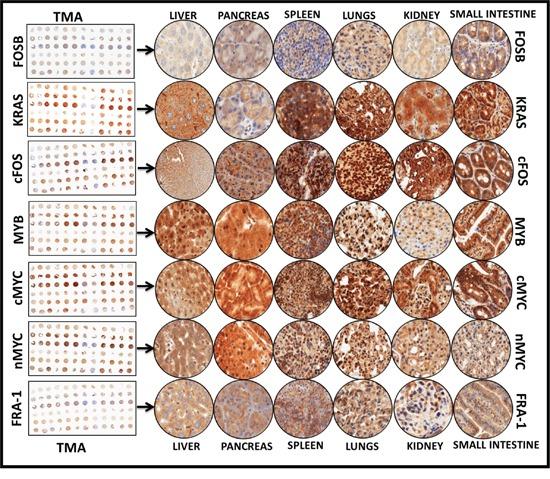
Utilizing mouse models of favorable and HR-NB and whole miRnome profiling, we identified high serum levels of 34 and low levels of 46 miRNAs in animals with HR-NB. Preferential sequence homology exclusion of mouse miRNAs identified 25 (11 increased; 14 decreased) human-specific prognostic marker candidates, of which, 21 were unique to HR-NB. miRNA QPCR validated miRnome profile. Target analysis defined the candidate miRNAs' signal transduction flow-through and demonstrated their converged roles in tumor progression. miRNA silencing studies verified the function of select miRNAs on the translation of at least 14 target proteins. Expressions of critical targets that correlate tumor progression in tissue of multifarious organs identify the orchestration of HR-NB. Significant (>10 fold) increase in serum levels of miR-381, miR-548h, and miR-580 identify them as potential prognostic markers for neuroblastoma progression.
CONCLUSION
For the first time, we identified serum-circulating miRNAs that predict the switch from favorable to HR-NB and, further imply that these miRNAs could play a functional role in tumor progression.
背景
循环miRNA作为预后生物标志物以及在实体瘤进展中具有重大临床意义。识别神经母细胞瘤特异性循环miRNA的新候选物将使我们能够鉴定出潜在的预后生物标志物,这些标志物可预测从低危到高危转移性神经母细胞瘤(HR-NB)的转变。
结果
利用低危和HR-NB小鼠模型以及全miRNA组分析,我们在HR-NB动物中鉴定出34种血清miRNA水平升高和46种水平降低。通过对小鼠miRNA进行优先序列同源性排除,鉴定出25种(11种升高;14种降低)人类特异性预后标志物候选物,其中21种是HR-NB特有的。miRNA QPCR验证了miRNA组分析结果。靶标分析确定了候选miRNA的信号转导流程,并证明了它们在肿瘤进展中的共同作用。miRNA沉默研究证实了所选miRNA对至少14种靶蛋白翻译的功能。在多种器官组织中与肿瘤进展相关的关键靶标的表达确定了HR-NB的调控机制。血清中miR-381、miR-548h和miR-580水平显著(>10倍)升高,表明它们是神经母细胞瘤进展的潜在预后标志物。
结论
我们首次鉴定出可预测从低危到HR-NB转变的血清循环miRNA,并进一步表明这些miRNA可能在肿瘤进展中发挥功能作用。


 Zotero 插件