
miR-137和miR-6500-3p的下调促进小儿高级别胶质瘤中的细胞增殖。
Downregulation of miR-137 and miR-6500-3p promotes cell proliferation in pediatric high-grade gliomas.
作者信息
Liang Muh-Lii, Hsieh Tsung-Han, Ng Kim-Hai, Tsai Ya-Ni, Tsai Cheng-Fong, Chao Meng-En, Liu Da-Jung, Chu Shing-Shiung, Chen Wan, Liu Yun-Ru, Liu Ren-Shyan, Lin Shih-Chieh, Ho Donald Ming-Tak, Wong Tai-Tong, Yang Muh-Hwa, Wang Hsei-Wei
机构信息
Institutes of Clinical Medicine, National Yang-Ming University, Taipei, Taiwan.
Division of Pediatric Neurosurgery, Neurological Institute, Taipei Veterans General Hospital, Taipei, Taiwan.
出版信息
Oncotarget. 2016 Apr 12;7(15):19723-37. doi: 10.18632/oncotarget.7736.
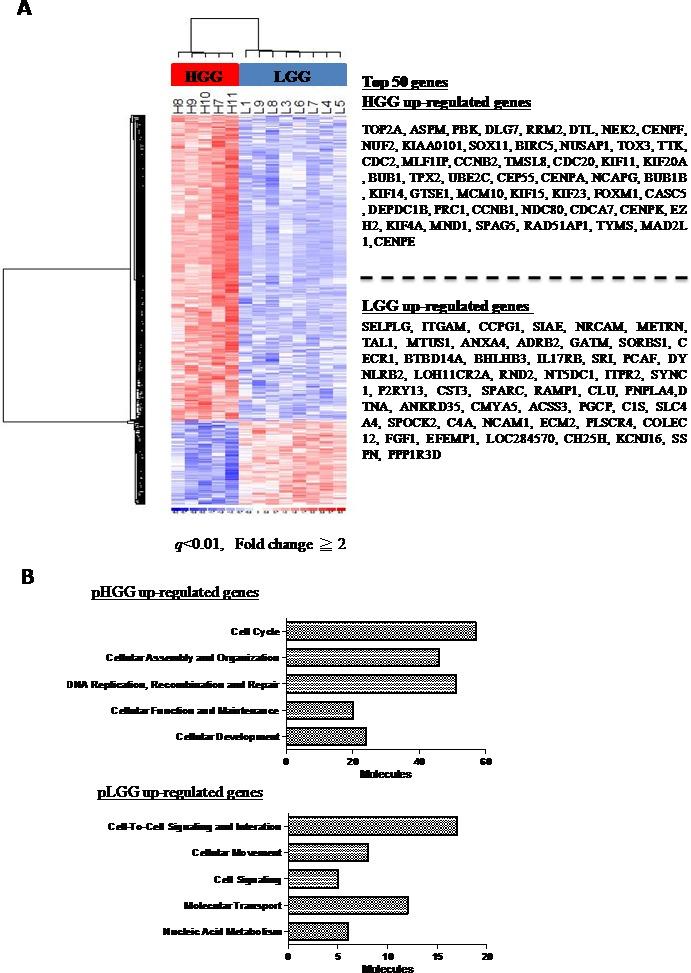
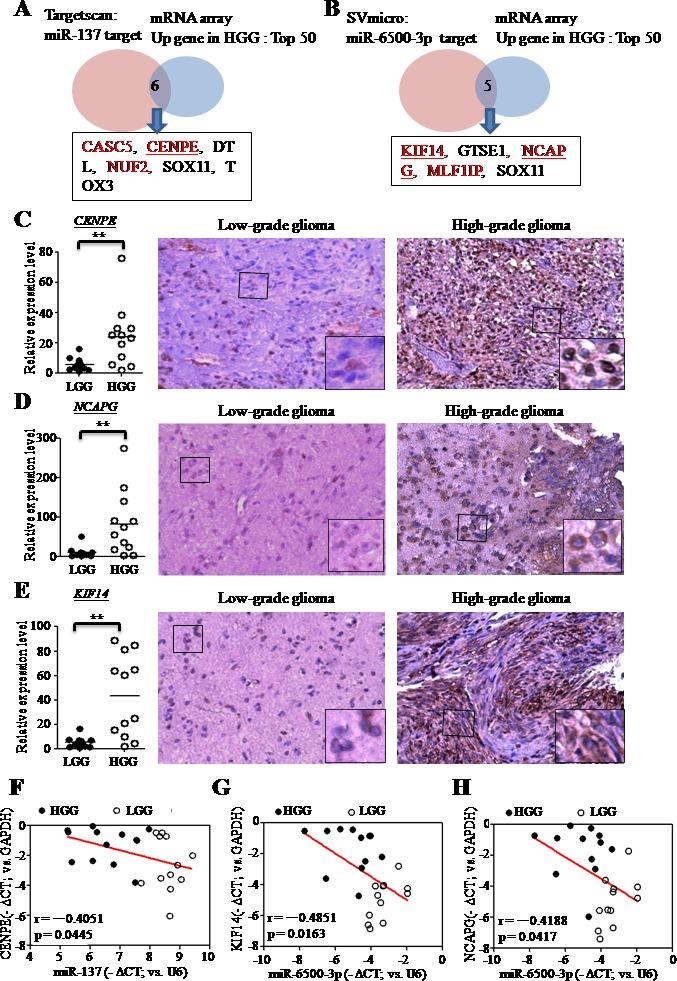
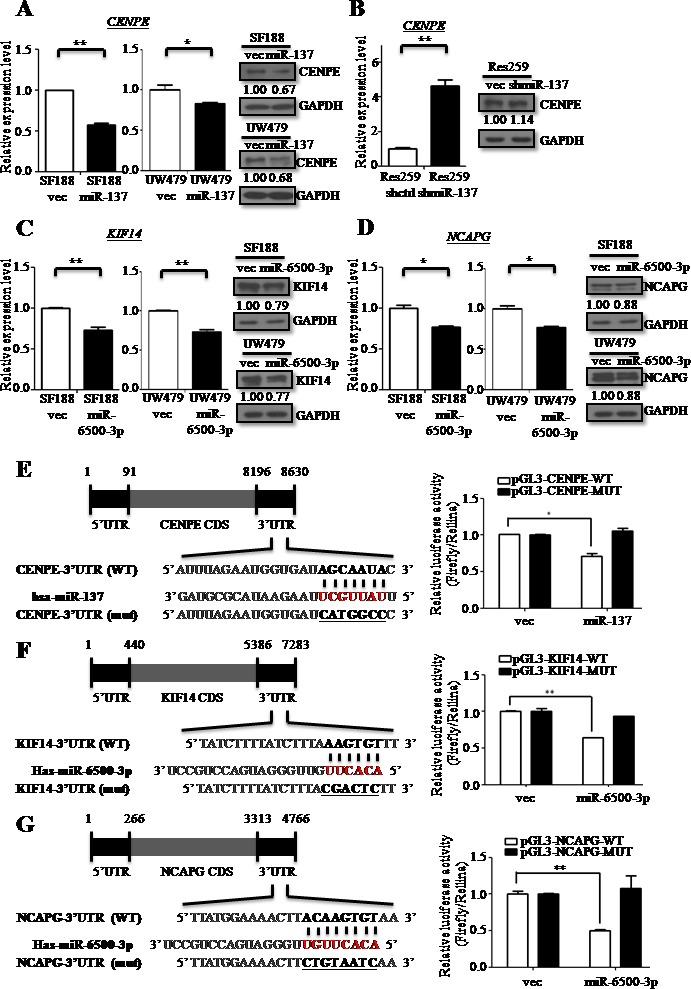
Pediatric high-grade gliomas (pHGGs) are aggressive brain tumors affecting children, and outcomes have remained dismal, even with access to new multimodal therapies. In this study, we compared the miRNomes and transcriptomes of pediatric low- (pLGGs) and high-grade gliomas (pHGGs) using small RNA sequencing (smRNA-Seq) and gene expression microarray, respectively. Through integrated bioinformatics analyses and experimental validation, we identified miR-137 and miR-6500-3p as significantly downregulated in pHGGs. miR-137 or miR-6500-3p overexpression reduced cell proliferation in two pHGG cell lines, SF188 and UW479. CENPE, KIF14 and NCAPG levels were significantly higher in pHGGs than pLGGs, and were direct targets of miR-137 or miR-6500-3p. Furthermore, knockdown of CENPE, KIF14 or NCAPG combined with temozolomide treatment resulted in a combined suppressive effect on pHGG cell proliferation. In summary, our results identify novel mRNA/miRNA interactions that contribute to pediatric glioma malignancy and represent potential targets for the development of new therapeutic strategies.
小儿高级别胶质瘤(pHGGs)是侵袭性脑肿瘤,会影响儿童,即便采用了新的多模式疗法,其治疗效果仍然不佳。在本研究中,我们分别使用小RNA测序(smRNA-Seq)和基因表达微阵列,比较了小儿低级别胶质瘤(pLGGs)和高级别胶质瘤(pHGGs)的微小RNA组(miRNomes)和转录组。通过综合生物信息学分析和实验验证,我们发现miR-137和miR-6500-3p在pHGGs中显著下调。miR-137或miR-6500-3p过表达可降低两种pHGG细胞系SF188和UW479的细胞增殖。CENPE、KIF14和NCAPG在pHGGs中的水平显著高于pLGGs,并且是miR-137或miR-6500-3p的直接靶点。此外,敲低CENPE、KIF14或NCAPG并联合替莫唑胺治疗对pHGG细胞增殖产生联合抑制作用。总之,我们的研究结果确定了有助于小儿胶质瘤恶性发展的新型mRNA/miRNA相互作用,并代表了开发新治疗策略的潜在靶点。


 Zotero 插件