
淋巴细胞与单核细胞比值在癌症患者中的预后作用:一项系统评价和荟萃分析的证据
Prognostic role of lymphocyte to monocyte ratio for patients with cancer: evidence from a systematic review and meta-analysis.
作者信息
Gu Liangyou, Li Hongzhao, Chen Luyao, Ma Xin, Li Xintao, Gao Yu, Zhang Yu, Xie Yongpeng, Zhang Xu
机构信息
Department of Urology/State Key Laboratory of Kidney Diseases, Chinese PLA General Hospital/PLA Medical School, Beijing, China.
School of Medicine, Nankai University, Tianjin, China.
出版信息
Oncotarget. 2016 May 31;7(22):31926-42. doi: 10.18632/oncotarget.7876.
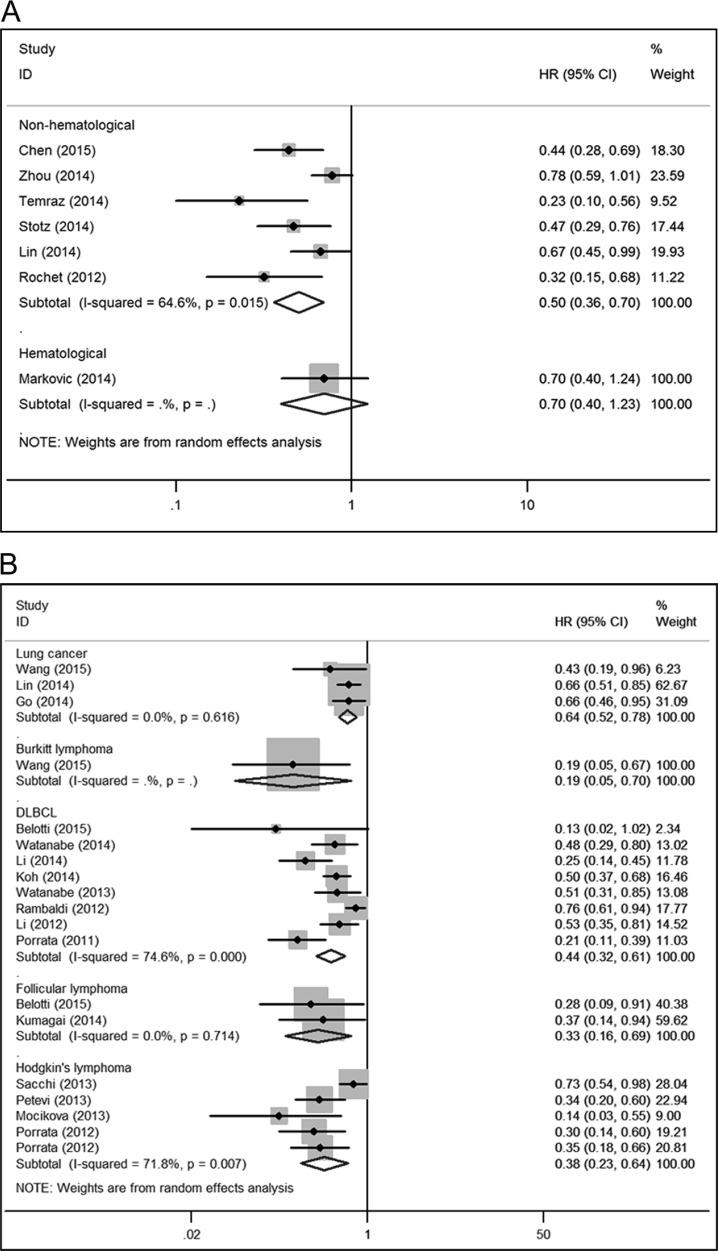
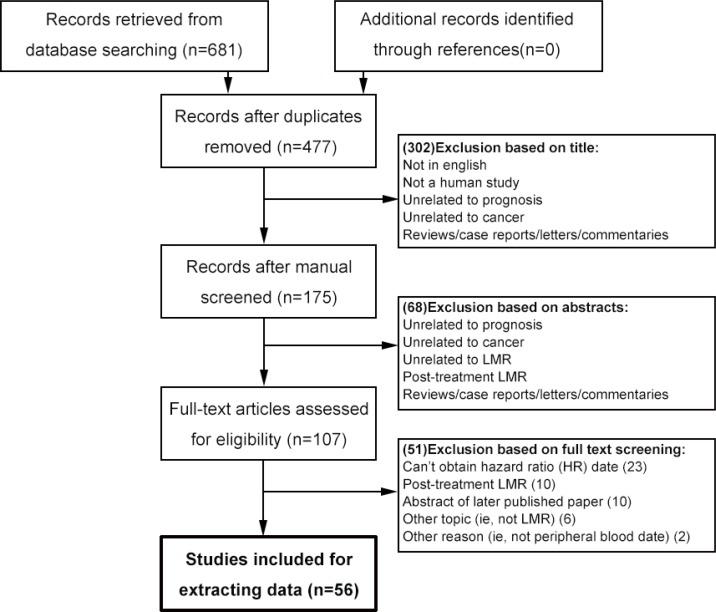
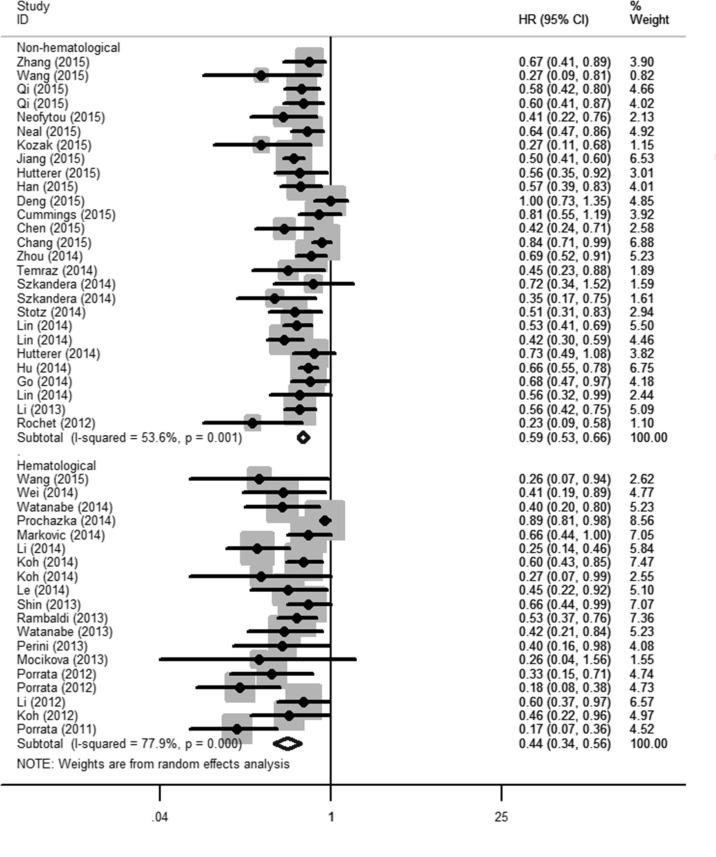
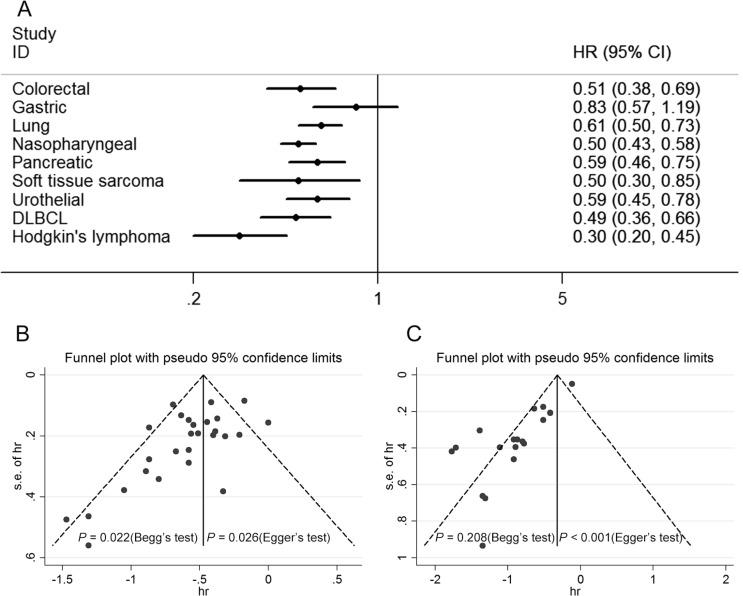
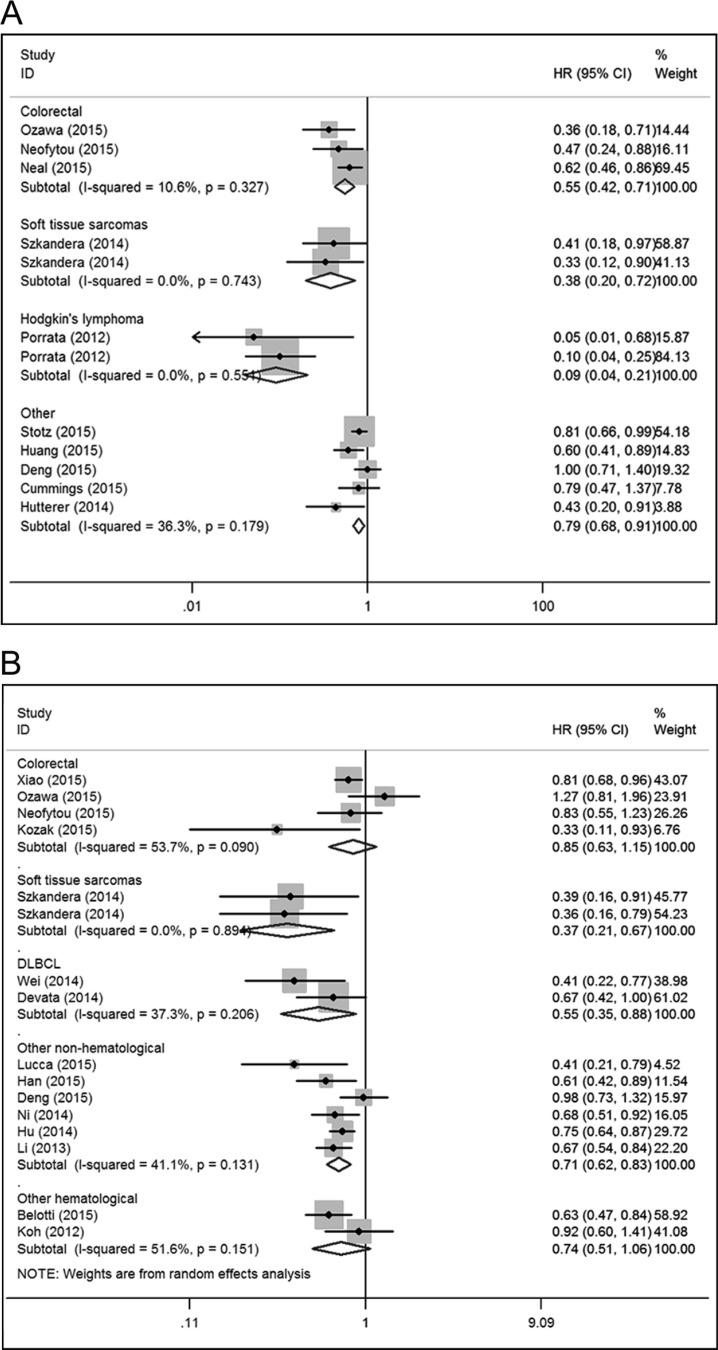
Inflammation influences cancer development and progression, and a low lymphocyte to monocyte ratio (LMR) has been reported to be a poor prognostic indicator in several malignancies. Here we quantify the prognostic impact of this biomarker and assess its consistency in various cancers. Eligible studies were retrieved from PubMed, Embase and Web of Science databases. Overall survival (OS) was the primary outcome, cancer-specific survival (CSS), disease-free survival (DFS), recurrence-free survival (RFS), and progression-free survival (PFS) were secondary outcomes. Pooled hazard ratios (HRs), odds ratios (ORs), and 95% confidence intervals (CIs) were calculated. Fifty-six studies comprising 20,248 patients were included in the analysis. Overall, decreased LMR was significantly associated with shorter OS in non-hematological malignancy (HR: 0.59, 95% CI: 0.53-0.66; P < 0.001) and hematological malignancy (HR: 0.44, 95% CI: 0.34-0.56; P < 0.001). Similar results were found in CSS, DFS, RFS and PFS. Moreover, low LMR was significantly associated with some clinicopathological characteristics that are indicative of poor prognosis and disease aggressiveness. By these results, we conclude that a decreased LMR implied poor prognosis in patients with cancer and could serve as a readily available and inexpensive biomarker for clinical decision.
炎症影响癌症的发生和发展,据报道,低淋巴细胞与单核细胞比值(LMR)在几种恶性肿瘤中是预后不良的指标。在此,我们量化了这一生物标志物的预后影响,并评估其在各种癌症中的一致性。从PubMed、Embase和Web of Science数据库中检索符合条件的研究。总生存期(OS)是主要结局,癌症特异性生存期(CSS)、无病生存期(DFS)、无复发生存期(RFS)和无进展生存期(PFS)是次要结局。计算合并风险比(HRs)、比值比(ORs)和95%置信区间(CIs)。分析纳入了56项研究,共20248例患者。总体而言,LMR降低与非血液系统恶性肿瘤(HR:0.59,95%CI:0.53 - 0.66;P < 0.001)和血液系统恶性肿瘤(HR:0.44,95%CI:0.34 - 0.56;P < 0.001)的较短OS显著相关。在CSS、DFS、RFS和PFS中也发现了类似结果。此外,低LMR与一些提示预后不良和疾病侵袭性的临床病理特征显著相关。基于这些结果,我们得出结论,LMR降低意味着癌症患者预后不良,并且可以作为一种易于获得且廉价的生物标志物用于临床决策。
 Zotero 插件