
通过杂交去除丰富序列(DASH):利用Cas9在测序文库和分子计数应用中去除不需要的高丰度物种。
Depletion of Abundant Sequences by Hybridization (DASH): using Cas9 to remove unwanted high-abundance species in sequencing libraries and molecular counting applications.
作者信息
Gu W, Crawford E D, O'Donovan B D, Wilson M R, Chow E D, Retallack H, DeRisi J L
机构信息
Departments of Pathology and Laboratory Medicine, University of California San Francisco, San Francisco, CA, USA.
Department of Biochemistry and Biophysics, University of California San Francisco, San Francisco, CA, USA.
出版信息
Genome Biol. 2016 Mar 4;17:41. doi: 10.1186/s13059-016-0904-5.
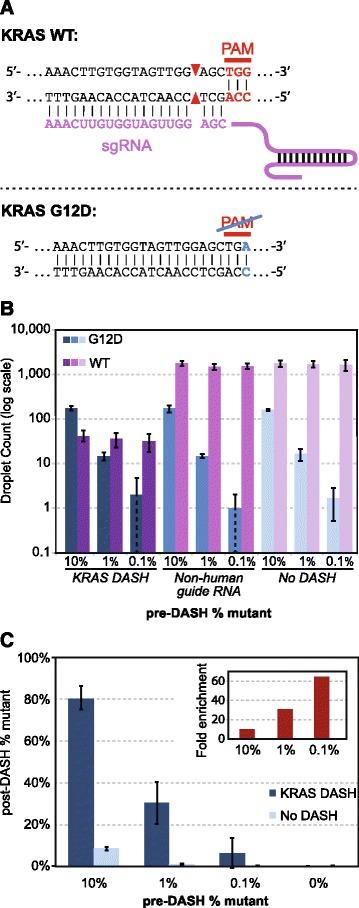
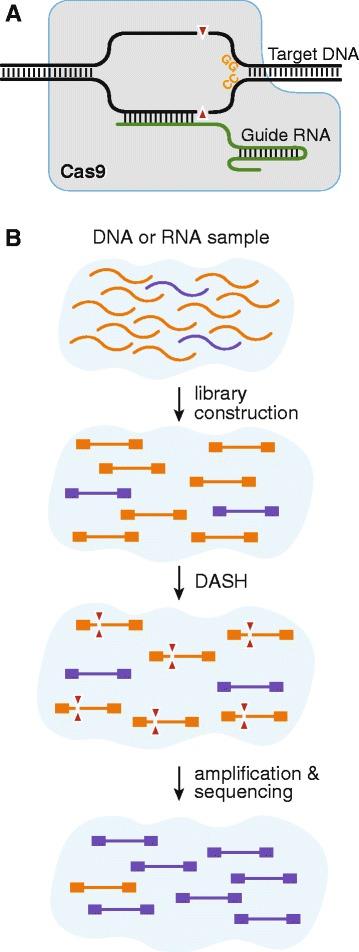
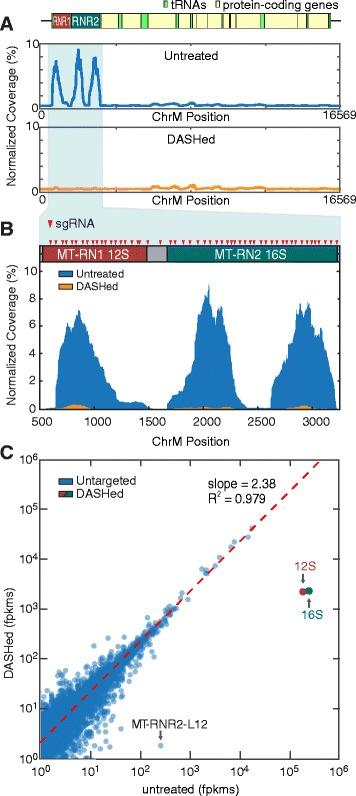
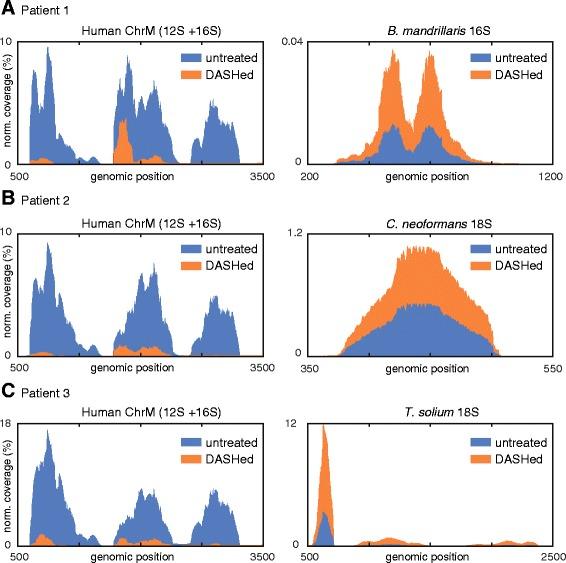
Next-generation sequencing has generated a need for a broadly applicable method to remove unwanted high-abundance species prior to sequencing. We introduce DASH (Depletion of Abundant Sequences by Hybridization). Sequencing libraries are 'DASHed' with recombinant Cas9 protein complexed with a library of guide RNAs targeting unwanted species for cleavage, thus preventing them from consuming sequencing space. We demonstrate a more than 99 % reduction of mitochondrial rRNA in HeLa cells, and enrichment of pathogen sequences in patient samples. We also demonstrate an application of DASH in cancer. This simple method can be adapted for any sample type and increases sequencing yield without additional cost.
下一代测序技术催生了一种广泛适用的方法需求,即在测序前去除不需要的高丰度物种。我们引入了DASH(通过杂交耗尽丰富序列)。测序文库与重组Cas9蛋白进行“DASH处理”,该蛋白与靶向不需要物种进行切割的向导RNA文库复合,从而防止它们占用测序空间。我们证明了HeLa细胞中线粒体rRNA减少了99%以上,并且患者样本中的病原体序列得到了富集。我们还展示了DASH在癌症中的应用。这种简单的方法可适用于任何样本类型,且无需额外成本即可提高测序产量。
 Zotero 插件