
雌性小鼠中miR-155缺失可预防饮食诱导的肥胖。
miR-155 Deletion in Female Mice Prevents Diet-Induced Obesity.
作者信息
Gaudet Andrew D, Fonken Laura K, Gushchina Liubov V, Aubrecht Taryn G, Maurya Santosh K, Periasamy Muthu, Nelson Randy J, Popovich Phillip G
机构信息
Department of Neuroscience, Wexner Medical Center, The Ohio State University, Biomedical Research Tower 6th floor 460 W. 12th Ave Columbus, OH 43210 USA.
Center for Brain and Spinal Cord Repair, Wexner Medical Center, The Ohio State University, Biomedical Research Tower 6th floor 460 W. 12th Ave Columbus, OH 43210 USA.
出版信息
Sci Rep. 2016 Mar 8;6:22862. doi: 10.1038/srep22862.
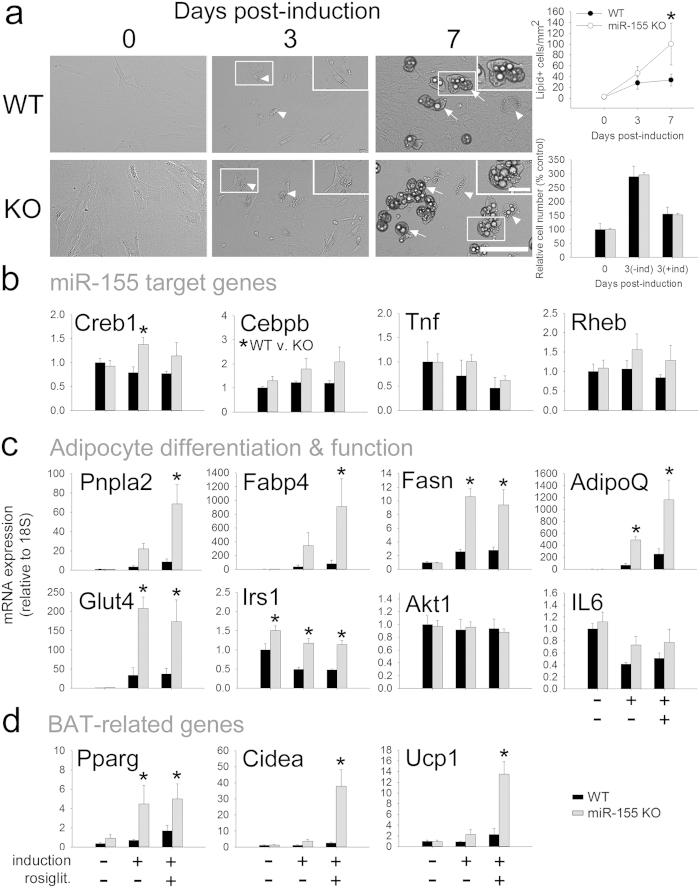
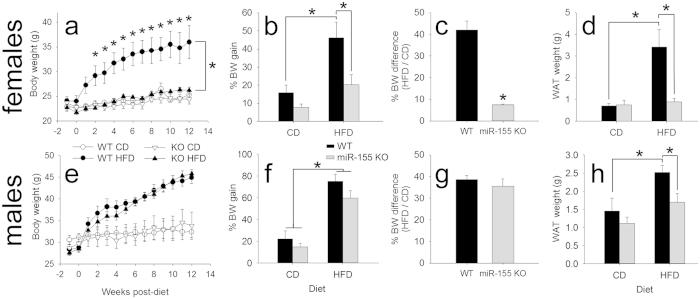
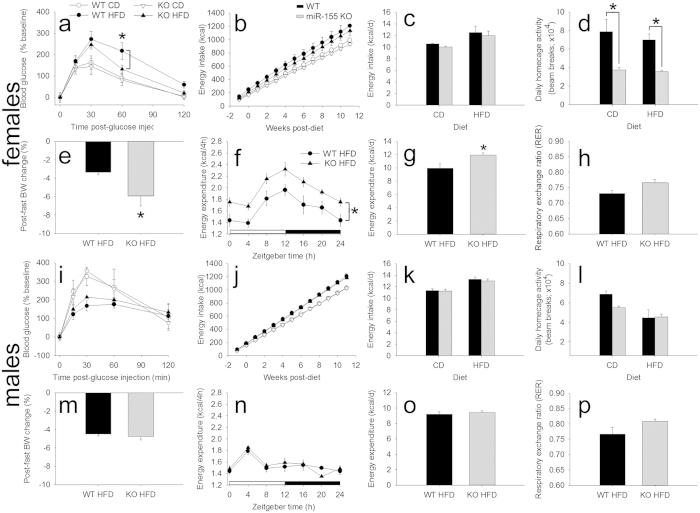
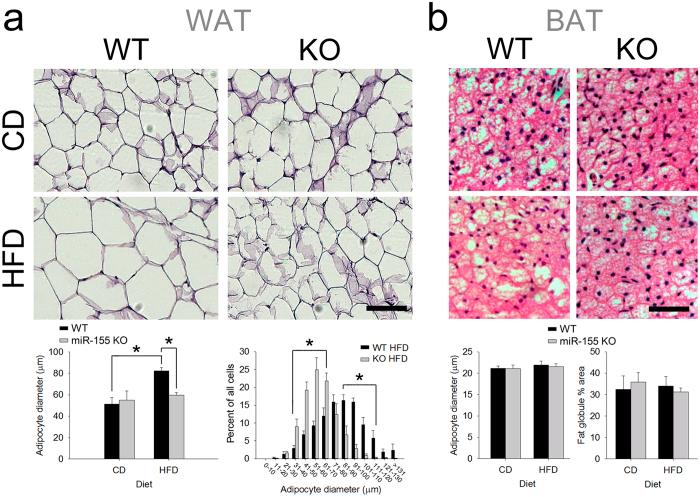
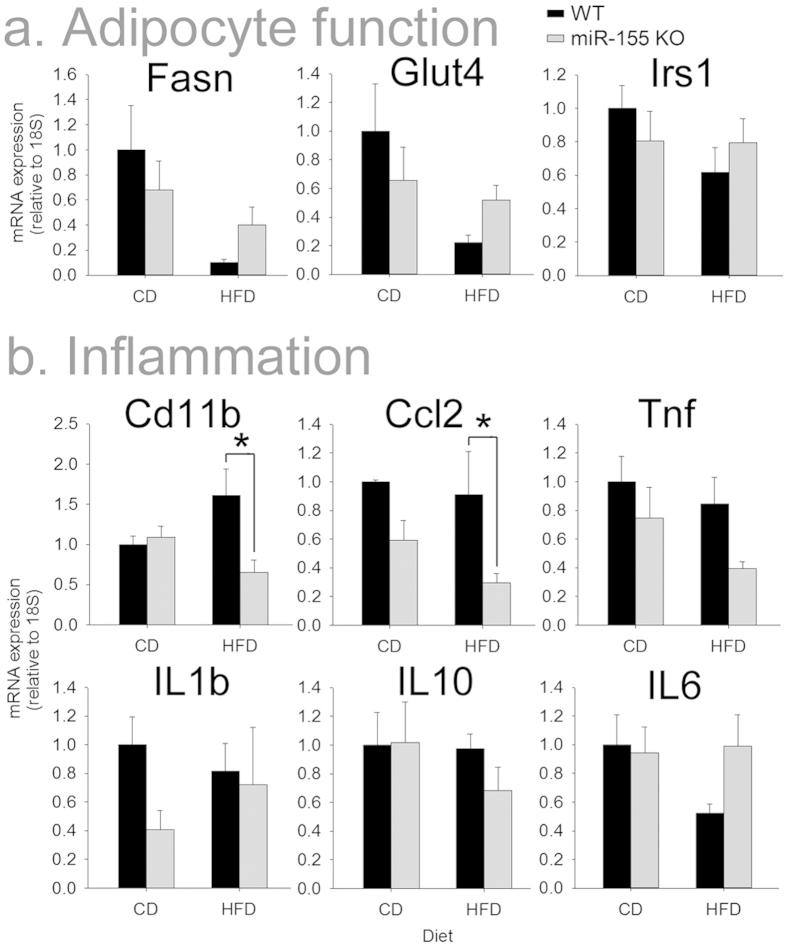
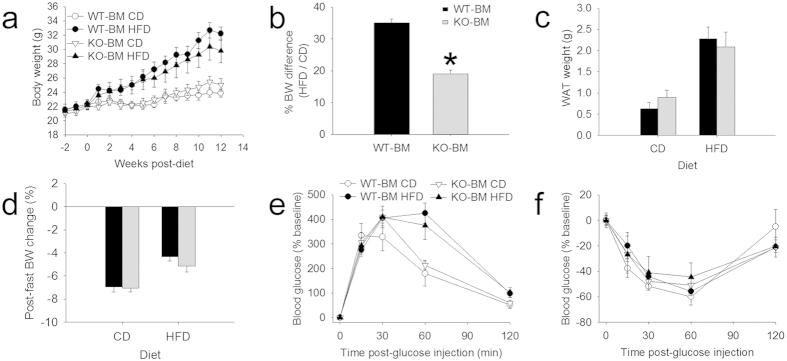
Obesity is a growing epidemic in developed countries. Obese individuals are susceptible to comorbidities, including cardiovascular disease and metabolic disorder. Increasing the ability of adipose tissue to expend excess energy could improve protection from obesity. One promising target is microRNA (miR)-155-5p. We demonstrate that deletion of miR-155 (-5p and -3p) in female mice prevents diet-induced obesity. Body weight gain did not differ between wild-type (WT) and miR-155 knockout (KO) mice fed control diet (CD); however, miR-155 KO mice fed high-fat diet (HFD) gained 56% less body weight and 74% less gonadal white adipose tissue (WAT) than WT mice. Enhanced WAT thermogenic potential, brown adipose tissue differentiation, and/or insulin sensitivity might underlie this obesity resistance. Indeed, miR-155 KO mice on HFD had 21% higher heat release than WT HFD mice. Compared to WT adipocytes, miR-155 KO adipocytes upregulated brown (Ucp1, Cidea, Pparg) and white (Fabp4, Pnpla2, AdipoQ, Fasn) adipogenic genes, and glucose metabolism genes (Glut4, Irs1). miR-155 deletion abrogated HFD-induced adipocyte hypertrophy and WAT inflammation. Therefore, miR-155 deletion increases adipogenic, insulin sensitivity, and energy uncoupling machinery, while limiting inflammation in WAT, which together could restrict HFD-induced fat accumulation. Our results identify miR-155 as a novel candidate target for improving obesity resistance.
肥胖在发达国家正成为一种日益严重的流行病。肥胖个体易患多种合并症,包括心血管疾病和代谢紊乱。提高脂肪组织消耗多余能量的能力可能会增强对肥胖的抵御能力。一个有前景的靶点是微小RNA(miR)-155-5p。我们证明,雌性小鼠中miR-155(-5p和-3p)的缺失可预防饮食诱导的肥胖。喂食对照饮食(CD)的野生型(WT)小鼠和miR-155基因敲除(KO)小鼠之间体重增加没有差异;然而,喂食高脂饮食(HFD)的miR-155 KO小鼠比WT小鼠体重增加少56%,性腺白色脂肪组织(WAT)少74%。增强的WAT产热潜力、棕色脂肪组织分化和/或胰岛素敏感性可能是这种抗肥胖作用的基础。事实上,喂食HFD的miR-155 KO小鼠的热量释放比WT HFD小鼠高21%。与WT脂肪细胞相比,miR-155 KO脂肪细胞上调了棕色(Ucp1、Cidea、Pparg)和白色(Fabp4、Pnpla2、AdipoQ、Fasn)脂肪生成基因以及葡萄糖代谢基因(Glut4、Irs1)。miR-155的缺失消除了HFD诱导的脂肪细胞肥大和WAT炎症。因此,miR-155的缺失增加了脂肪生成、胰岛素敏感性和能量解偶联机制,同时限制了WAT中的炎症,这共同作用可能会限制HFD诱导的脂肪堆积。我们的研究结果确定miR-155是提高抗肥胖能力的一个新的候选靶点。
 Zotero 插件