
电磁波暴露后体外产生的小鼠胚胎评估;形态测量学研究。
Evaluation of mouse embryos produced in vitro after electromagnetic waves exposure; Morphometric study.
作者信息
Rostamzadeh Ayoob, Mohammadi Mohsen, Ahmadi Reza, Nazari Afshin, Ghaderi Omar, Anjomshoa Maryam
机构信息
M.Sc. of Anatomy, Faculty Member, Department of Anatomical Sciences, Faculty of Medicine, Shahrekord University of Medical Sciences, Shahrekord, Iran.
Ph.D. of Pharmaceutical Biotechnology, Assistant Professor, Department of Pharmaceutical Biotechnology, Faculty of Pharmacy, Lorestan University of Medical Sciences, Khorramabad, Iran.
出版信息
Electron Physician. 2016 Jan 15;8(1):1701-10. doi: 10.19082/1701. eCollection 2016 Jan.
INTRODUCTION
Today, the use of electromagnetic waves in medical diagnostic devices, such as magnetic resonance imaging (MRI), has increased, and many of its biological effects have been reported. The aim of the present study was to assess the biological effects of 1.5 Tesla (T) magnetic resonance imaging (MRI) on fertility and reproductive parameters.
METHODS
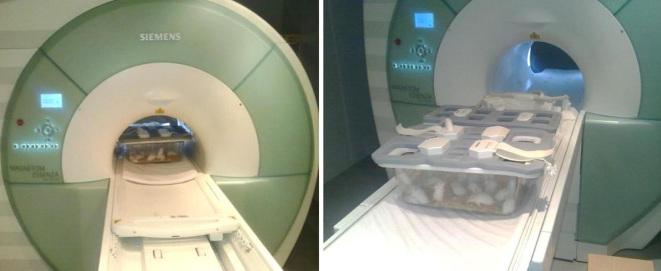
Eighty adult male and female NMRI mice (NMRI: Naval Medical Research Institute) of age 6-8 weeks were studied and randomly divided into two study and control groups. After confirmation of pregnancy, the mice in the study group were exposed to the MRI (1.5 T) machine's waves over the next three weeks, once a week for 36 minutes. One day and thirty-five days after the last radiation, the mice were killed in order to do the in vitro fertilization (IVF) by neck beads' displacement and the impact on the evolution of embryos, and its quality was studied. Data were analyzed using SPSS version 20 and the significance level of less than 0.05 was considered.
RESULTS
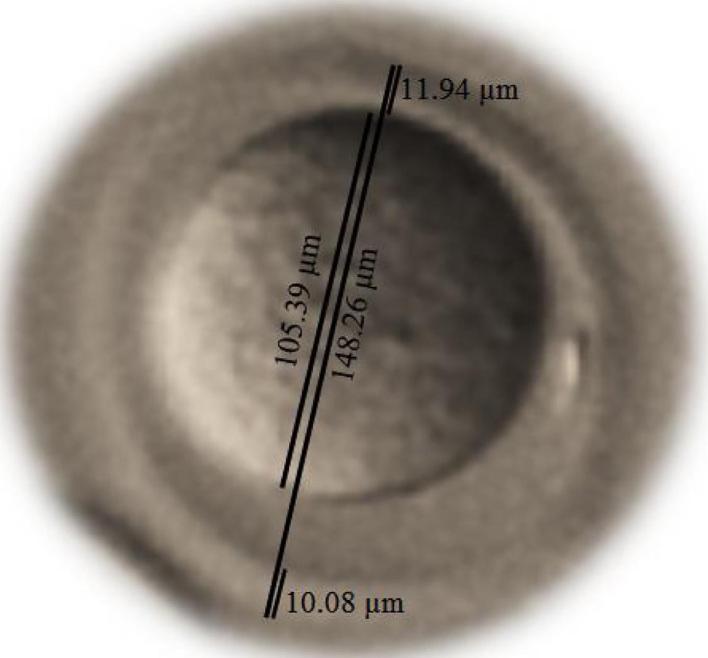
Embryo morphometry showed that the total diameter and the cytoplasm diameter of the study group embryos suffered significant reduction compared to the control group, 1 day after the last irradiation (p < 0.05), but the diameter of the perivitelline space of this group's embryos had a significant increase (p < 0.05). The qualitative results during 35 days after irradiation showed that morphologically parameters of the embryos in the study group had no significant differences from the control group.
CONCLUSION
Exposure to MRI irradiation can transiently disturb the development of mouse embryos and fertility, but these effects are reversible 35 days after the last irradiation.
引言
如今,诸如磁共振成像(MRI)等医学诊断设备中电磁波的使用有所增加,并且其许多生物学效应已被报道。本研究的目的是评估1.5特斯拉(T)磁共振成像(MRI)对生育能力和生殖参数的生物学效应。
方法
研究了80只6 - 8周龄的成年雄性和雌性NMRI小鼠(NMRI:海军医学研究所),并将其随机分为两个研究组和对照组。确认怀孕后,研究组的小鼠在接下来的三周内每周一次暴露于MRI(1.5 T)机器的波下,每次36分钟。在最后一次辐射后的第1天和第35天,通过颈部脱臼处死小鼠,以便进行体外受精(IVF)并研究对胚胎发育及其质量的影响。使用SPSS 20版分析数据,显著性水平设定为小于0.05。
结果
胚胎形态测量显示,与对照组相比,在最后一次照射后1天,研究组胚胎的总直径和细胞质直径显著减小(p < 0.05),但该组胚胎的卵周隙直径显著增加(p < 0.05)。照射后35天内的定性结果表明,研究组胚胎的形态学参数与对照组无显著差异。
结论
暴露于MRI辐射可暂时干扰小鼠胚胎的发育和生育能力,但这些影响在最后一次照射后35天是可逆的。



 Zotero 插件