
ONCOS-102 治疗实体瘤的 I 期研究——临床反应评估和免疫标志物的探索性分析。
Phase I study with ONCOS-102 for the treatment of solid tumors - an evaluation of clinical response and exploratory analyses of immune markers.
机构信息
Oncos Therapeutics, Helsinki, Finland.
Cancer Gene Therapy Group, Hartman Institute, University of Helsinki, Helsinki, Finland ; Helsinki University Hospital Comprehensive Cancer Center, Helsinki, Finland.
出版信息
J Immunother Cancer. 2016 Mar 15;4:17. doi: 10.1186/s40425-016-0121-5. eCollection 2016.
BACKGROUND
We conducted a phase I study with a granulocyte macrophage colony stimulating factor (GMCSF)-expressing oncolytic adenovirus, ONCOS-102, in patients with solid tumors refractory to available treatments. The objectives of the study were to determine the optimal dose for further use and to assess the safety, tolerability and adverse event (AE) profile of ONCOS-102. Further, the response rate and overall survival were evaluated as well as preliminary evidence of disease control. As an exploratory endpoint, the effect of ONCOS 102 on biological correlates was examined.
METHODS
The study was conducted using a classic 3 + 3 dose escalation study design involving 12 patients. Patients were repeatedly treated intratumorally with ONCOS-102 plus daily low-dose oral cyclophosphamide (CPO). Tumor response was evaluated with diagnostic positron emission tomography (PET) and computed tomography (CT). Tumor biopsies were collected at baseline and after treatment initiation for analysis of immunological correlates. Peripheral blood mononuclear cells (PBMCs) were collected at baseline and during the study to assess antigen specificity of CD8+ T cells by interferon gamma (IFNγ) enzyme linked immunospot assay (ELISPOT).
RESULTS
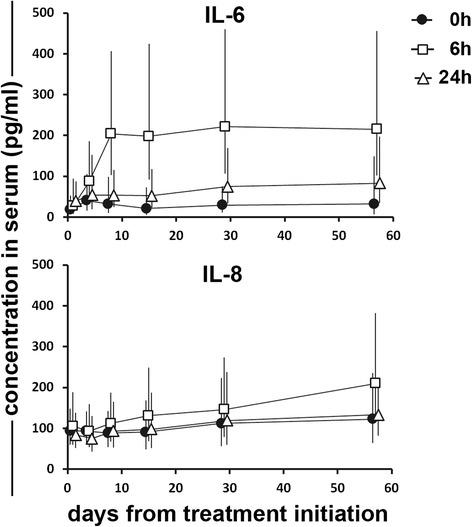
No dose limiting toxicity (DLT) or maximum tolerated dose (MTD) was identified for ONCOS-102. Four out of ten (40 %) evaluable patients had disease control based on PET/CT scan at 3 months and median overall survival was 9.3 months. A short-term increase in systemic pro-inflammatory cytokines and a prominent infiltration of TILs to tumors was seen post-treatment in 11 out of 12 patients. Two patients showed marked infiltration of CD8+ T cells to tumors and concomitant systemic induction of tumor-specific CD8+ T cells. Interestingly, high expression levels of genes associated with activated TH1 cells and TH1 type immune profile were observed in the post-treatment biopsies of these two patients.
CONCLUSIONS
ONCOS-102 is safe and well tolerated at the tested doses. All three examined doses may be used in further development. There was evidence of antitumor immunity and signals of clinical efficacy. Importantly, treatment resulted in infiltration of CD8+ T cells to tumors and up-regulation of PD-L1, highlighting the potential of ONCOS-102 as an immunosensitizing agent for combinatory therapies with checkpoint inhibitors.
TRIAL REGISTRATION
NCT01598129. Registered 19/04/2012.
背景
我们进行了一项 I 期研究,使用表达粒细胞巨噬细胞集落刺激因子(GMCSF)的溶瘤腺病毒 ONCOS-102 治疗对现有治疗方法无反应的实体瘤患者。该研究的目的是确定进一步使用的最佳剂量,并评估 ONCOS-102 的安全性、耐受性和不良事件(AE)情况。此外,还评估了反应率和总生存率以及疾病控制的初步证据。作为一个探索性终点,研究了 ONCOS 102 对生物标志物的影响。
方法
该研究采用经典的 3+3 剂量递增设计,涉及 12 名患者。患者反复接受 ONCOS-102 瘤内治疗,并每日口服低剂量环磷酰胺(CPO)。采用诊断正电子发射断层扫描(PET)和计算机断层扫描(CT)评估肿瘤反应。在基线和治疗开始时采集肿瘤活检标本,用于分析免疫学标志物。在基线和研究期间采集外周血单核细胞(PBMC),通过干扰素γ(IFNγ)酶联免疫斑点(ELISPOT)分析 CD8+T 细胞的抗原特异性。
结果
ONCOS-102 未确定剂量限制性毒性(DLT)或最大耐受剂量(MTD)。10 名可评估患者中有 4 名(40%)根据 3 个月时的 PET/CT 扫描显示疾病得到控制,中位总生存期为 9.3 个月。12 名患者中有 11 名在治疗后短期内出现全身促炎细胞因子水平升高,肿瘤内浸润的 TILs 明显增加。两名患者的肿瘤内明显浸润 CD8+T 细胞,并伴有全身诱导肿瘤特异性 CD8+T 细胞。有趣的是,在这两名患者的治疗后活检中观察到与激活的 TH1 细胞和 TH1 型免疫谱相关的基因表达水平升高。
结论
ONCOS-102 在测试剂量下安全且耐受良好。三个检查剂量都可用于进一步开发。有抗肿瘤免疫的证据和临床疗效的信号。重要的是,治疗导致 CD8+T 细胞浸润肿瘤,并上调 PD-L1,突出了 ONCOS-102 作为免疫致敏剂与检查点抑制剂联合治疗的潜力。
试验注册
NCT01598129。注册于 2012 年 4 月 19 日。



 Zotero 插件