
一种新型 Toll 样受体(TLR)影响腹足纲生物光滑双脐螺与复殖吸虫曼氏血吸虫之间的兼容性。
A Novel Toll-Like Receptor (TLR) Influences Compatibility between the Gastropod Biomphalaria glabrata, and the Digenean Trematode Schistosoma mansoni.
作者信息
Pila Emmanuel A, Tarrabain Mahmoud, Kabore Alethe L, Hanington Patrick C
机构信息
The School of Public Health, University of Alberta, Edmonton, Alberta, Canada.
出版信息
PLoS Pathog. 2016 Mar 25;12(3):e1005513. doi: 10.1371/journal.ppat.1005513. eCollection 2016 Mar.
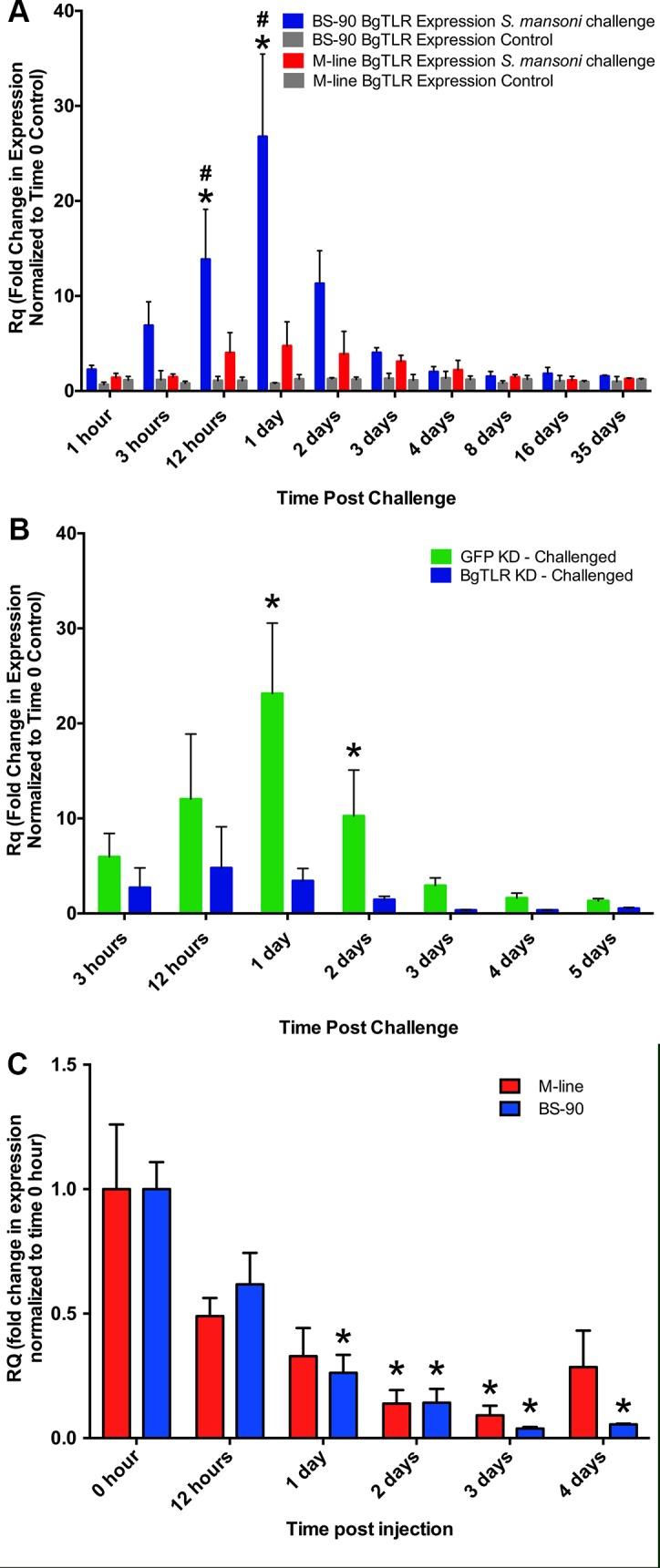
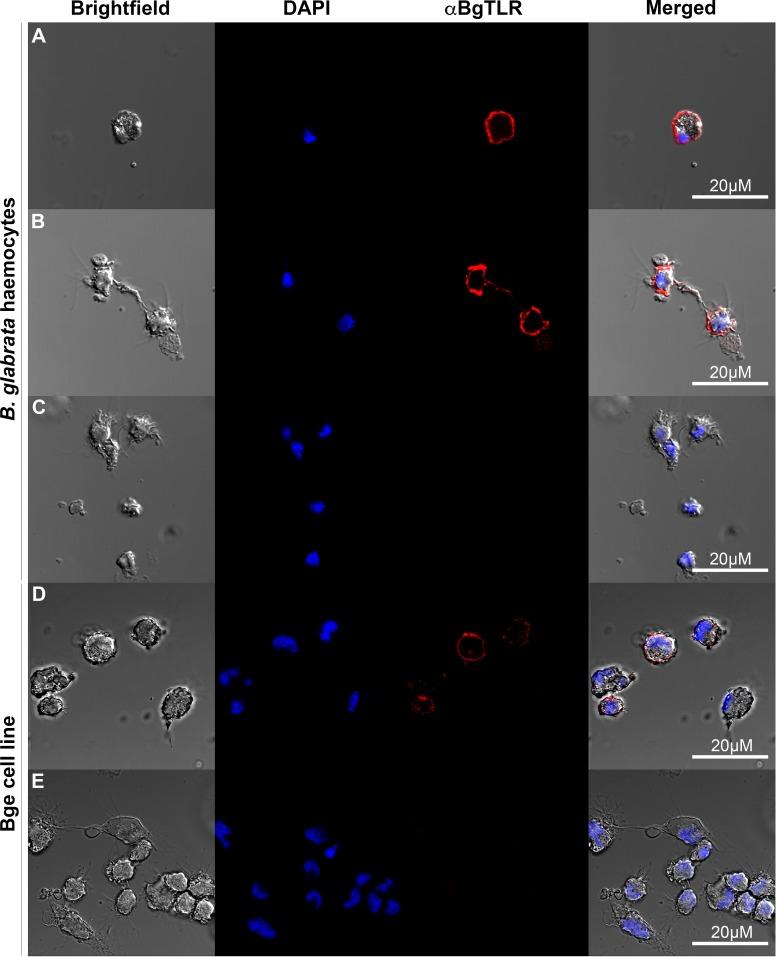
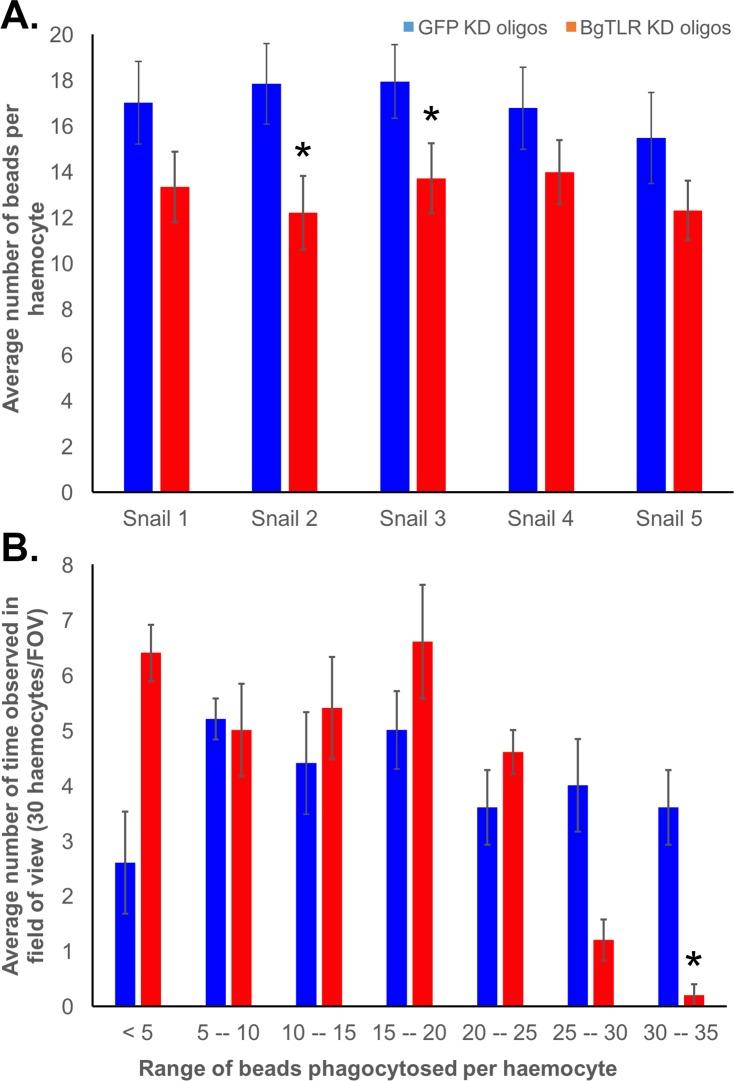
Schistosomiasis, a devastating disease caused by parasitic flatworms of the genus Schistosoma, affects over 260 million people worldwide especially in tropical and sub-tropical regions. Schistosomes must undergo their larval development within specific species of snail intermediate hosts, a trait that is shared among almost all digenean trematodes. This unique and long-standing host-parasite relationship presents an opportunity to study both the importance of conserved immunological features in novel immunological roles, as well as new immunological adaptations that have arisen to combat a very specific type of immunological challenge. While it is well supported that the snail immune response is important for protecting against schistosome infection, very few specific snail immune factors have been identified and even fewer have been functionally characterized. Here, we provide the first functional report of a snail Toll-like receptor, which we demonstrate as playing an important role in the cellular immune response of the snail Biomphalaria glabrata following challenge with Schistosoma mansoni. This TLR (BgTLR) was identified as part of a peptide screen of snail immune cell surface proteins that differed in abundance between B. glabrata snails that differ in their compatibility phenotype to challenge by S. mansoni. The S. mansoni-resistant strain of B. glabrata (BS-90) displayed higher levels of BgTLR compared to the susceptible (M-line) strain. Transcript expression of BgTLR was found to be very responsive in BS-90 snails when challenged with S. mansoni, increasing 27 fold relative to β-actin (non-immune control gene); whereas expression in susceptible M-line snails was not significantly increased. Knockdown of BgTLR in BS-90 snails via targeted siRNA oligonucleotides was confirmed using a specific anti-BgTLR antibody and resulted in a significant alteration of the resistant phenotype, yielding patent infections in 43% of the normally resistant snails, which shed S. mansoni cercariae 1-week before the susceptible controls. Our results represent the first functional characterization of a gastropod TLR, and demonstrate that BgTLR is an important snail immune receptor that is capable of influencing infection outcome following S. mansoni challenge.
血吸虫病是由血吸虫属的寄生扁虫引起的一种毁灭性疾病,全球有超过2.6亿人受其影响,尤其是在热带和亚热带地区。血吸虫必须在特定种类的蜗牛中间宿主体内经历幼虫发育阶段,几乎所有复殖吸虫都具有这一特性。这种独特且长期存在的宿主 - 寄生虫关系为研究保守免疫特征在新免疫角色中的重要性以及为应对非常特殊类型的免疫挑战而产生的新免疫适应提供了机会。虽然有充分证据表明蜗牛的免疫反应对于抵御血吸虫感染很重要,但已鉴定出的特定蜗牛免疫因子极少,且功能表征的更少。在此,我们首次报道了蜗牛Toll样受体的功能,证明其在曼氏血吸虫攻击后,对光滑双脐螺的细胞免疫反应中发挥重要作用。该TLR(BgTLR)是通过对蜗牛免疫细胞表面蛋白进行肽筛选鉴定出来的,这些蛋白在对曼氏血吸虫攻击具有不同相容性表型的光滑双脐螺之间丰度存在差异。与易感(M系)菌株相比,光滑双脐螺的曼氏血吸虫抗性菌株(BS - 90)显示出更高水平的BgTLR。当用曼氏血吸虫攻击时,发现BS - 90蜗牛中BgTLR的转录表达反应非常强烈,相对于β - 肌动蛋白(非免疫对照基因)增加了27倍;而在易感的M系蜗牛中表达没有显著增加。通过靶向siRNA寡核苷酸敲低BS - 90蜗牛中的BgTLR,使用特异性抗BgTLR抗体得到证实,并且导致抗性表型发生显著改变,43%的正常抗性蜗牛出现显性感染,它们在易感对照之前1周排出曼氏血吸虫尾蚴。我们的结果代表了腹足类TLR的首次功能表征,并证明BgTLR是一种重要的蜗牛免疫受体,能够影响曼氏血吸虫攻击后的感染结果。


 Zotero 插件