
脊髓损伤患者使用动力外骨骼辅助行走的临床有效性和安全性:系统评价与荟萃分析
Clinical effectiveness and safety of powered exoskeleton-assisted walking in patients with spinal cord injury: systematic review with meta-analysis.
作者信息
Miller Larry E, Zimmermann Angela K, Herbert William G
机构信息
Miller Scientific Consulting, Inc., Asheville, NC, USA.
Miller Scientific Consulting, Inc., Asheville, NC, USA; Department of Human Nutrition, Foods, and Exercise, Virginia Tech, Blacksburg, VA, USA.
出版信息
Med Devices (Auckl). 2016 Mar 22;9:455-66. doi: 10.2147/MDER.S103102. eCollection 2016.
BACKGROUND
Powered exoskeletons are designed to safely facilitate ambulation in patients with spinal cord injury (SCI). We conducted the first meta-analysis of the available published research on the clinical effectiveness and safety of powered exoskeletons in SCI patients.
METHODS
MEDLINE and EMBASE databases were searched for studies of powered exoskeleton-assisted walking in patients with SCI. Main outcomes were analyzed using fixed and random effects meta-analysis models.
RESULTS
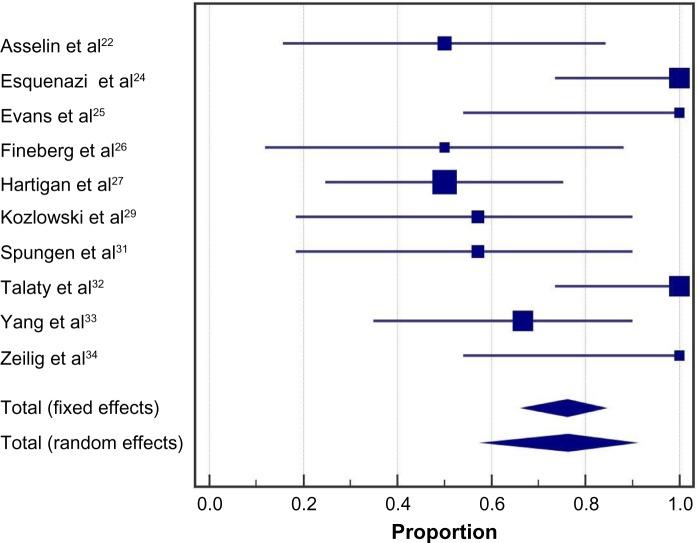
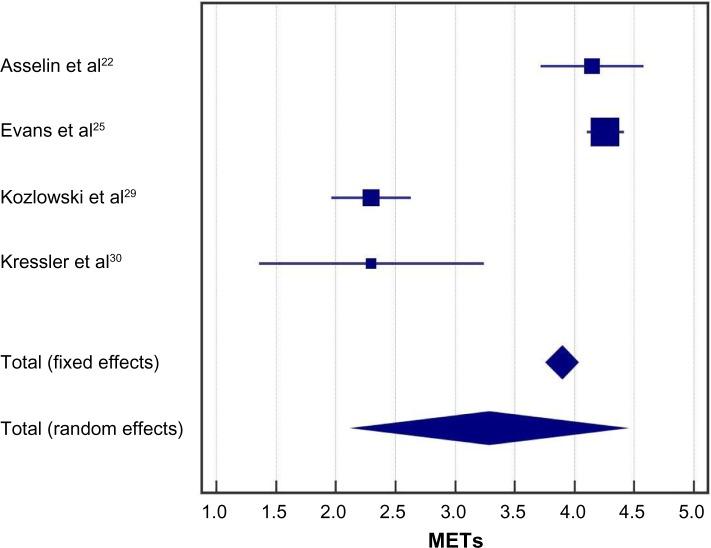
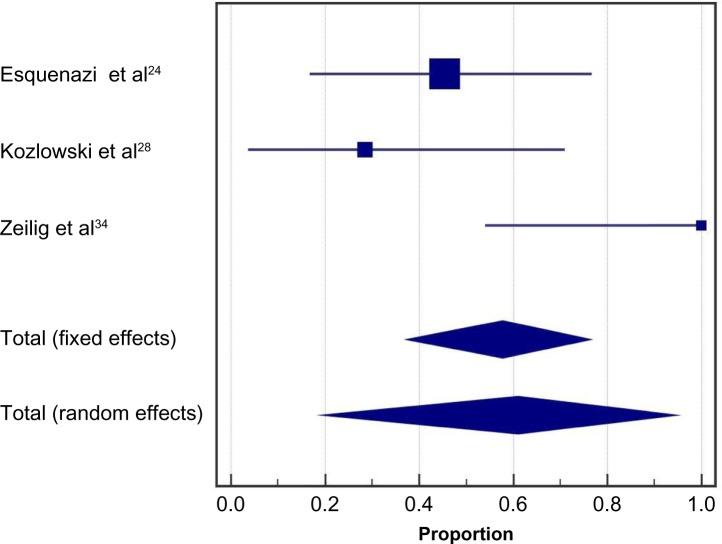
A total of 14 studies (eight ReWalk™, three Ekso™, two Indego(®), and one unspecified exoskeleton) representing 111 patients were included in the analysis. Training programs were typically conducted three times per week, 60-120 minutes per session, for 1-24 weeks. Ten studies utilized flat indoor surfaces for training and four studies incorporated complex training, including walking outdoors, navigating obstacles, climbing and descending stairs, and performing activities of daily living. Following the exoskeleton training program, 76% of patients were able to ambulate with no physical assistance. The weighted mean distance for the 6-minute walk test was 98 m. The physiologic demand of powered exoskeleton-assisted walking was 3.3 metabolic equivalents and rating of perceived exertion was 10 on the Borg 6-20 scale, comparable to self-reported exertion of an able-bodied person walking at 3 miles per hour. Improvements in spasticity and bowel movement regularity were reported in 38% and 61% of patients, respectively. No serious adverse events occurred. The incidence of fall at any time during training was 4.4%, all occurring while tethered using a first-generation exoskeleton and none resulting in injury. The incidence of bone fracture during training was 3.4%. These risks have since been mitigated with newer generation exoskeletons and refinements to patient eligibility criteria.
CONCLUSION
Powered exoskeletons allow patients with SCI to safely ambulate in real-world settings at a physical activity intensity conducive to prolonged use and known to yield health benefits.
背景
动力外骨骼旨在安全地帮助脊髓损伤(SCI)患者行走。我们对已发表的关于动力外骨骼对SCI患者临床有效性和安全性的研究进行了首次荟萃分析。
方法
在MEDLINE和EMBASE数据库中检索关于动力外骨骼辅助SCI患者行走的研究。主要结局采用固定效应和随机效应荟萃分析模型进行分析。
结果
分析共纳入14项研究(8项ReWalk™、3项Ekso™、2项Indego(®)和1项未指明的外骨骼),涉及111例患者。训练计划通常每周进行3次,每次60 - 120分钟,持续1 - 24周。10项研究利用室内平坦地面进行训练,4项研究纳入了复杂训练,包括户外行走、穿越障碍物、上下楼梯以及进行日常生活活动。经过外骨骼训练计划后,76%的患者能够在无身体辅助的情况下行走。6分钟步行试验的加权平均距离为98米。动力外骨骼辅助行走的生理需求为3.3代谢当量,自感用力度在Borg 6 - 20量表上为10,与自我报告的身体健全者以每小时3英里速度行走时的用力程度相当。分别有38%和61%的患者报告痉挛和肠道运动规律性有所改善。未发生严重不良事件。训练期间任何时间的跌倒发生率为4.4%,均发生在使用第一代外骨骼系绳时,且均未导致受伤。训练期间的骨折发生率为3.4%。随着新一代外骨骼的出现以及患者入选标准的完善,这些风险已得到缓解。
结论
动力外骨骼使SCI患者能够在现实环境中安全行走,其身体活动强度有利于长期使用且已知会带来健康益处。







 Zotero 插件