
R- 应答蛋白由肠道基质表达,在小鼠柠檬酸杆菌和葡聚糖硫酸钠诱导的结肠炎中受到不同调控。
R-Spondins Are Expressed by the Intestinal Stroma and are Differentially Regulated during Citrobacter rodentium- and DSS-Induced Colitis in Mice.
作者信息
Kang Eugene, Yousefi Mitra, Gruenheid Samantha
机构信息
Department of Microbiology and Immunology and Complex Traits Group, McGill University, Montreal, Quebec, Canada.
出版信息
PLoS One. 2016 Apr 5;11(4):e0152859. doi: 10.1371/journal.pone.0152859. eCollection 2016.
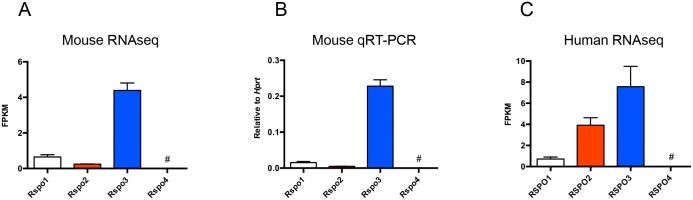
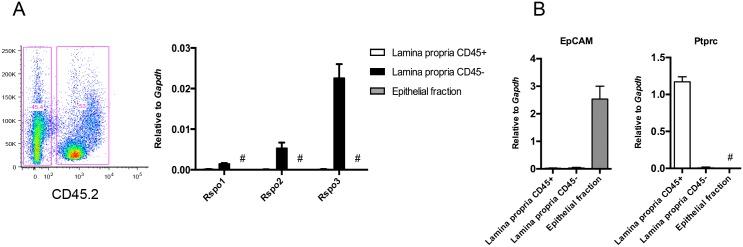
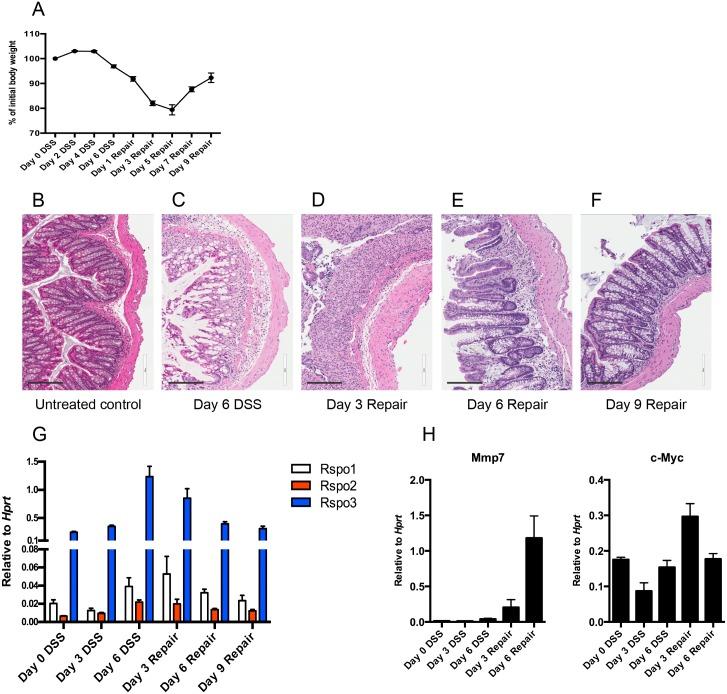
The R-spondin family of proteins has recently been described as secreted enhancers of β-catenin activation through the canonical Wnt signaling pathway. We previously reported that Rspo2 is a major determinant of susceptibility to Citrobacter rodentium-mediated colitis in mice and recent genome-wide association studies have revealed RSPO3 as a candidate Crohn's disease-specific inflammatory bowel disease susceptibility gene in humans. However, there is little information on the endogenous expression and cellular source of R-spondins in the colon at steady state and during intestinal inflammation. RNA sequencing and qRT-PCR were used to assess the expression of R-spondins at steady state and in two mouse models of colonic inflammation. The cellular source of R-spondins was assessed in specific colonic cell populations isolated by cell sorting. Data mining from publicly available datasets was used to assess the expression of R-spondins in the human colon. At steady state, colonic expression of R-spondins was found to be exclusive to non-epithelial CD45- lamina propria cells, and Rspo3/RSPO3 was the most highly expressed R-spondin in both mouse and human colon. R-spondin expression was found to be highly dynamic and differentially regulated during C. rodentium infection and dextran sodium sulfate (DSS) colitis, with notably high levels of Rspo3 expression during DSS colitis, and high levels of Rspo2 expression during C. rodentium infection, specifically in susceptible mice. Our data are consistent with the hypothesis that in the colon, R-spondins are expressed by subepithelial stromal cells, and that Rspo3/RSPO3 is the family member most implicated in colonic homeostasis. The differential regulation of the R-spondins in different models of intestinal inflammation indicate they respond to specific pathogenic and inflammatory signals that differ in the two models and provides further evidence that this family of proteins plays a key role in linking intestinal inflammation and homeostasis.
R-spondin蛋白家族最近被描述为通过经典Wnt信号通路激活β-连环蛋白的分泌增强子。我们之前报道过Rspo2是小鼠对鼠柠檬酸杆菌介导的结肠炎易感性的主要决定因素,最近的全基因组关联研究表明RSPO3是人类克罗恩病特异性炎症性肠病易感性基因的候选基因。然而,关于稳态和肠道炎症期间结肠中R-spondin的内源性表达和细胞来源的信息很少。我们使用RNA测序和qRT-PCR评估稳态和两种结肠炎症小鼠模型中R-spondin的表达。通过细胞分选分离出的特定结肠细胞群体中评估R-spondin的细胞来源。利用公开数据集的数据挖掘评估人类结肠中R-spondin的表达。在稳态下,发现R-spondin的结肠表达仅限于非上皮CD45-固有层细胞,并且Rspo3/RSPO3是小鼠和人类结肠中表达最高的R-spondin。发现在鼠柠檬酸杆菌感染和葡聚糖硫酸钠(DSS)结肠炎期间,R-spondin表达具有高度动态性且受到差异调节,在DSS结肠炎期间Rspo3表达水平显著升高,在鼠柠檬酸杆菌感染期间,特别是在易感小鼠中,Rspo2表达水平升高。我们的数据与以下假设一致:在结肠中,R-spondin由上皮下基质细胞表达,并且Rspo3/RSPO3是最参与结肠稳态的家族成员。R-spondin在不同肠道炎症模型中的差异调节表明它们对两种模型中不同的特定致病和炎症信号作出反应,并进一步证明该蛋白家族在连接肠道炎症和稳态中起关键作用。


 Zotero 插件