
还原性羧化作用在非锚定依赖性生长过程中维持氧化还原稳态。
Reductive carboxylation supports redox homeostasis during anchorage-independent growth.
作者信息
Jiang Lei, Shestov Alexander A, Swain Pamela, Yang Chendong, Parker Seth J, Wang Qiong A, Terada Lance S, Adams Nicholas D, McCabe Michael T, Pietrak Beth, Schmidt Stan, Metallo Christian M, Dranka Brian P, Schwartz Benjamin, DeBerardinis Ralph J
机构信息
Children's Medical Center Research Institute, UT Southwestern Medical Center, Dallas, Texas 75390-8502, USA.
Department of Radiology, University of Pennsylvania School of Medicine, 3620 Hamilton Walk, Philadelphia, Pennsylvania 19104, USA.
出版信息
Nature. 2016 Apr 14;532(7598):255-8. doi: 10.1038/nature17393. Epub 2016 Apr 6.
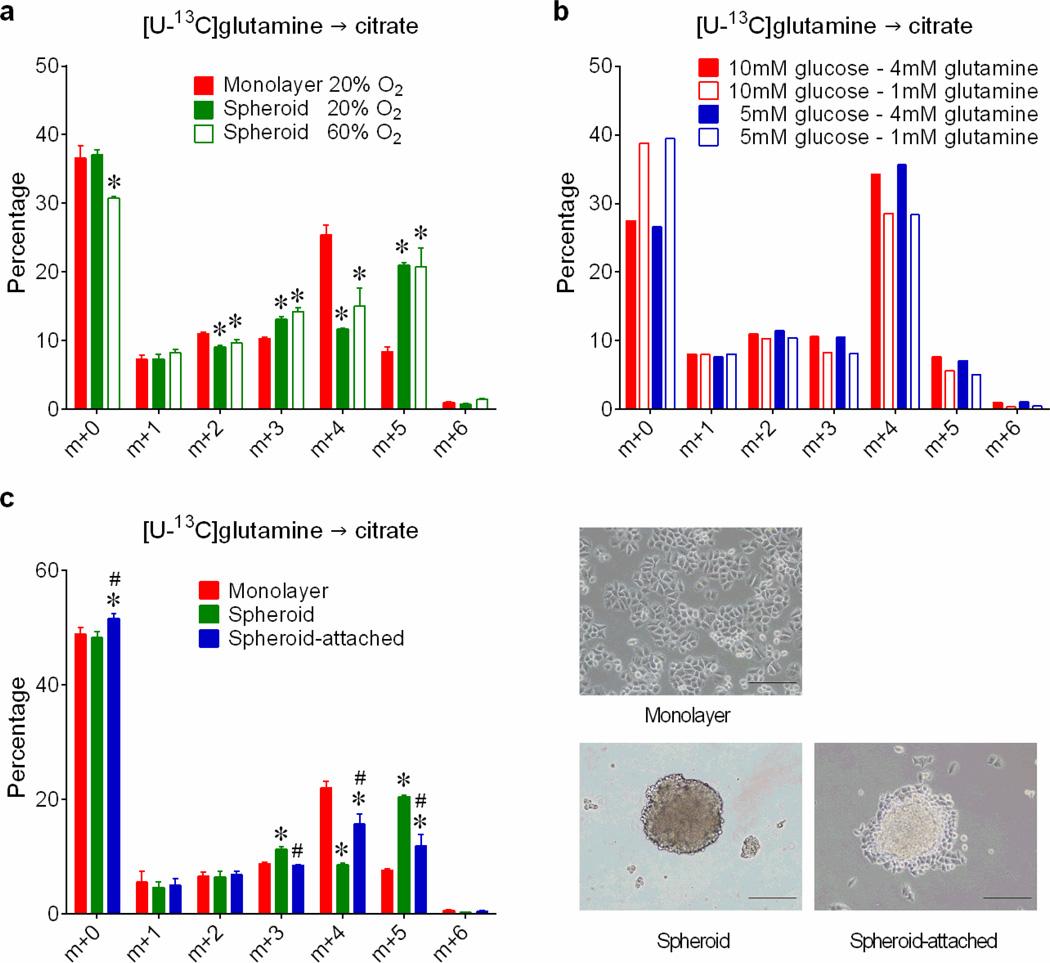
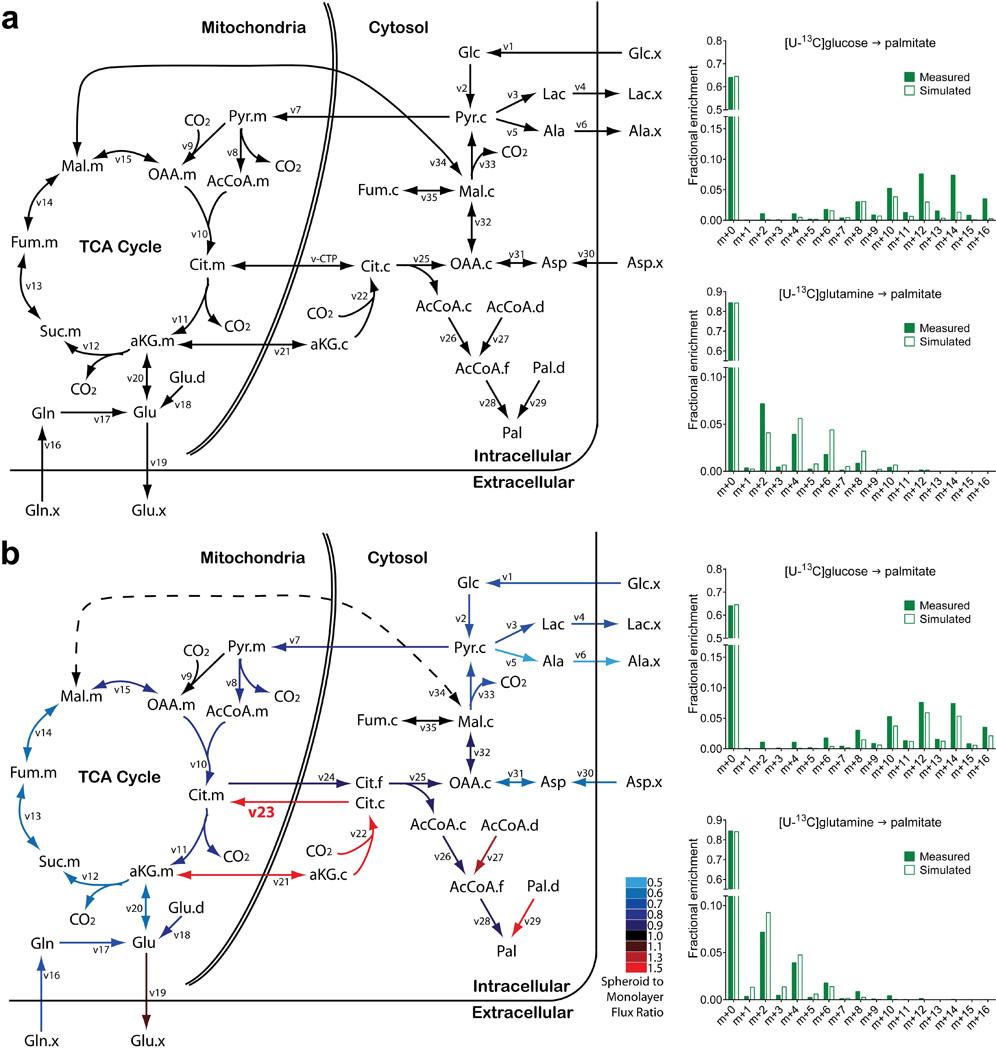
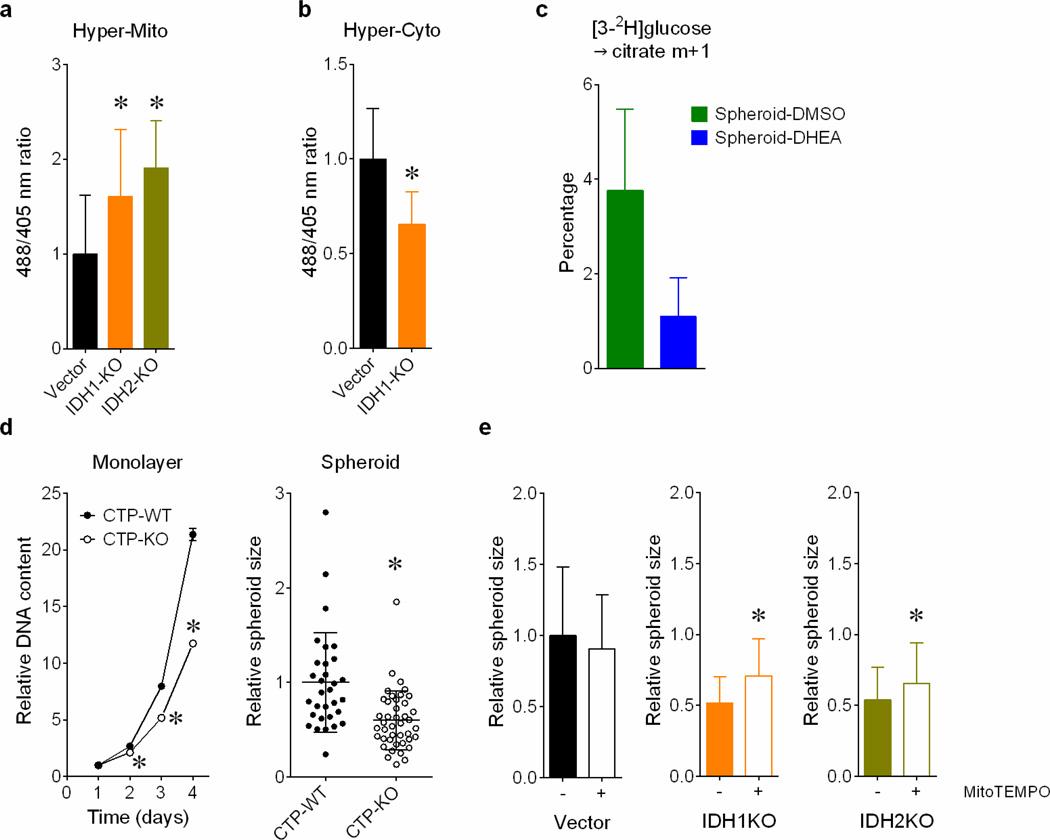
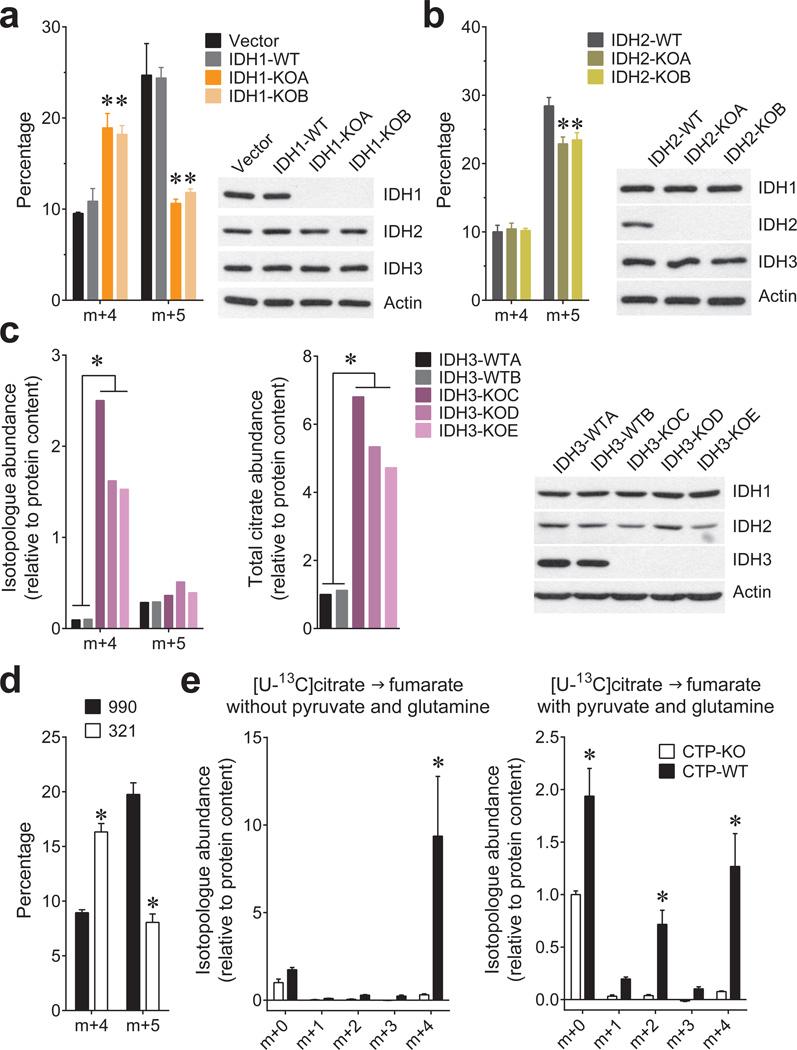
Cells receive growth and survival stimuli through their attachment to an extracellular matrix (ECM). Overcoming the addiction to ECM-induced signals is required for anchorage-independent growth, a property of most malignant cells. Detachment from ECM is associated with enhanced production of reactive oxygen species (ROS) owing to altered glucose metabolism. Here we identify an unconventional pathway that supports redox homeostasis and growth during adaptation to anchorage independence. We observed that detachment from monolayer culture and growth as anchorage-independent tumour spheroids was accompanied by changes in both glucose and glutamine metabolism. Specifically, oxidation of both nutrients was suppressed in spheroids, whereas reductive formation of citrate from glutamine was enhanced. Reductive glutamine metabolism was highly dependent on cytosolic isocitrate dehydrogenase-1 (IDH1), because the activity was suppressed in cells homozygous null for IDH1 or treated with an IDH1 inhibitor. This activity occurred in absence of hypoxia, a well-known inducer of reductive metabolism. Rather, IDH1 mitigated mitochondrial ROS in spheroids, and suppressing IDH1 reduced spheroid growth through a mechanism requiring mitochondrial ROS. Isotope tracing revealed that in spheroids, isocitrate/citrate produced reductively in the cytosol could enter the mitochondria and participate in oxidative metabolism, including oxidation by IDH2. This generates NADPH in the mitochondria, enabling cells to mitigate mitochondrial ROS and maximize growth. Neither IDH1 nor IDH2 was necessary for monolayer growth, but deleting either one enhanced mitochondrial ROS and reduced spheroid size, as did deletion of the mitochondrial citrate transporter protein. Together, the data indicate that adaptation to anchorage independence requires a fundamental change in citrate metabolism, initiated by IDH1-dependent reductive carboxylation and culminating in suppression of mitochondrial ROS.
细胞通过附着于细胞外基质(ECM)来接收生长和存活刺激。大多数恶性细胞具有不依赖锚定生长的特性,而克服对ECM诱导信号的依赖是实现这一特性所必需的。由于葡萄糖代谢改变,与ECM脱离会导致活性氧(ROS)生成增加。在此,我们发现了一条非常规途径,该途径在适应非锚定生长过程中支持氧化还原稳态和细胞生长。我们观察到,从单层培养中脱离并以非锚定肿瘤球体形式生长时,葡萄糖和谷氨酰胺代谢都会发生变化。具体而言,球体中这两种营养物质的氧化均受到抑制,而谷氨酰胺向柠檬酸的还原生成则增强。还原性谷氨酰胺代谢高度依赖于胞质异柠檬酸脱氢酶-1(IDH1),因为在IDH1纯合缺失的细胞或用IDH1抑制剂处理的细胞中,该酶的活性受到抑制。这种活性在缺氧(一种众所周知的还原代谢诱导剂)不存在的情况下也会发生。相反,IDH1减轻了球体中的线粒体ROS,抑制IDH1会通过一种需要线粒体ROS的机制降低球体生长。同位素示踪显示,在球体中,在胞质中还原生成的异柠檬酸/柠檬酸可进入线粒体并参与氧化代谢,包括被IDH2氧化。这在线粒体中产生NADPH,使细胞能够减轻线粒体ROS并最大化生长。IDH1和IDH2对于单层生长都不是必需的,但敲除其中任何一个都会增强线粒体ROS并减小球体大小,敲除线粒体柠檬酸转运蛋白也是如此。总之,这些数据表明,适应非锚定生长需要柠檬酸代谢发生根本性变化,这种变化由IDH1依赖的还原羧化引发,并最终导致线粒体ROS的抑制。







 Zotero 插件